A commercial garage door is not purchased with the expectation that it will last forever, it is purchased with the expectation that it will perform reliably under daily operational demands and not become a liability before its time. For facility managers, warehouse operators, and property owners in the Hudson Valley region, evaluating garage door lifespan is a practical business decision with direct consequences for budgeting, safety, and continuity. Lifespan is shaped by usage frequency, environmental exposure, maintenance history, and the quality of the original installation, and knowing which of those variables are at work determines how much useful life remains in any given system.
What Determines Lifespan in a Commercial Door System
Three primary variables define the lifespan trajectory of any commercial overhead door: usage volume, material selection, and the quality of the original commercial garage door installation. Usage volume is the most straightforward. A door cycling four times daily in a retail setting accumulates wear at a fundamentally different rate than one cycling thirty or forty times daily in an active distribution facility. Manufacturers rate commercial door components: springs, cables, rollers, hinges, in cycles rather than years precisely because time alone is a poor predictor of wear in high-traffic environments.
Material selection determines how a door responds to its environment over time. Steel resists impact well but is vulnerable to corrosion in humid or chemically active settings. Aluminum is lighter and more corrosion-resistant but less tolerant of repeated physical contact. Insulated assemblies maintain structural integrity longer under temperature extremes, reducing the thermal stress that causes panels and seals to degrade ahead of schedule. Installation quality sets the baseline from which all of this follows: a correctly aligned, properly balanced door fitted with appropriate hardware will age predictably; one installed with mismatched components or insufficient structural support will begin failing its rated lifespan from the first cycle.
Average Lifespan Benchmarks by Door Type
Industry experience establishes reasonable lifespan benchmarks for the most common commercial door types, assuming standard maintenance and usage levels appropriate to the door’s rated class.
Steel Sectional Commercial Doors
The most common type in warehouses and retail loading areas, steel sectional doors typically perform reliably for 15 to 25 years under moderate usage. High-cycle environments compress that range to 10 to 15 years, particularly for springs and opener mechanisms. Panel integrity often outlasts hardware, meaning targeted component replacement can extend functional life well beyond initial estimates.
Roll-Up Sheet and Coiling Doors
Roll-up gates for commercial properties are engineered for higher cycle counts than sectional doors, making them well-suited to loading docks and high-throughput storage facilities. Standard coiling steel doors carry cycle ratings between 50,000 and 100,000 operations, translating to 20 or more years of serviceable life at moderate daily usage, though corrosion in chemically exposed environments can compress that significantly.
Fire-Rated Overhead Doors
Fire-rated assemblies carry performance obligations beyond mechanical function. Their ratings, governed by standards published by the National Fire Protection Association, require the door to maintain integrity under fire conditions for a specified duration. Physical lifespan is comparable to standard commercial doors, but compliance lifespan can be shortened significantly by hardware substitution, unauthorized modifications, or missed annual inspections.
High-Speed and Specialty Doors
High-speed doors in cold storage or high-throughput manufacturing are engineered for aggressive cycle counts, often 200,000 or more, but their mechanical complexity introduces more potential failure points. Curtain materials, bottom bars, sensors, and drive systems each carry independent wear profiles that must be tracked separately from the door assembly as a whole.
What is the average lifespan of a commercial garage door?
Commercial garage doors typically last between 15 and 25 years under standard usage conditions, though high-cycle environments can reduce that range considerably. Lifespan depends on door type, usage frequency, material, maintenance history, and installation quality. Springs and opener components generally wear faster than panels and frames, often requiring replacement well before the full assembly reaches end of life.
The Warning Signs That Shorten Lifespan Prematurely
Premature failure in commercial door systems rarely arrives without warning. The signals are present well in advance, they are simply overlooked or deferred until a minor mechanical issue becomes an operational or safety problem.
Increasing Mechanical Resistance
A door requiring noticeably more force to operate than it once did is signaling wear in its springs, cables, or rollers. In automated systems, this typically shows up first as slower cycle times or increased motor strain before becoming an outright failure. Deferred attention accelerates wear across the entire system, not just the initiating component.
Visible Misalignment or Uneven Travel
A door that no longer travels smoothly in its tracks is working against itself on every cycle. Misalignment creates uneven load distribution across panels, hardware, and structural attachment points, compounding into panel damage, track deformation, and mounting failure that converts a routine realignment into a full replacement.
Corrosion on Structural Components
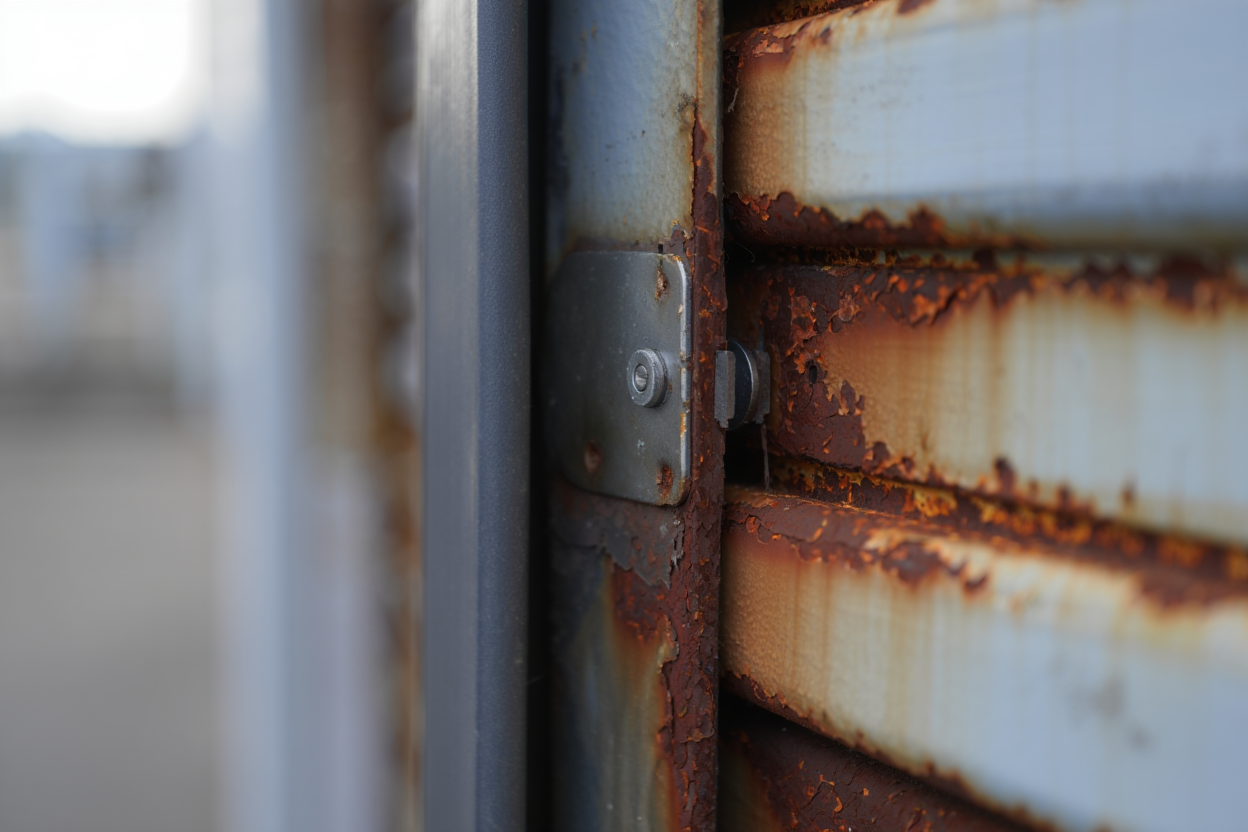
Surface rust on panels is primarily aesthetic. Corrosion on springs, cables, hinges, and tracks is structural. These components operate under significant mechanical tension, and corrosion reduces their load-bearing capacity unpredictably. In Hudson Valley properties exposed to seasonal moisture or road salt migration, corrosion inspection should be treated as a first-order maintenance task.
Inconsistent or Failing Safety Reverse Behavior
Safety reverse mechanisms are regulated by the U.S. Consumer Product Safety Commission and serve as functional indicators of overall system health. A door whose safety reverse behavior has become inconsistent signals that the control system, sensor alignment, or opener mechanism is degrading, degradation that shortens operational lifespan and introduces liability exposure if left unaddressed.
What factors reduce garage door lifespan in commercial settings?
High cycle frequency, deferred maintenance, corrosion from environmental exposure, improper installation, and hardware substitution are the most common factors that shorten commercial garage door lifespan. Misalignment compounds wear across the entire system, while disabled or malfunctioning safety components accelerate mechanical degradation. Buildings in humid or temperature-variable climates face additional stress on seals, springs, and panel integrity over time.
How Maintenance Frequency Directly Affects Longevity
The relationship between maintenance and lifespan in commercial door systems is well-documented across the industry. Doors that receive consistent, properly executed commercial garage door maintenance routinely outperform their rated cycle counts. Those operating without a structured program routinely fall short of them.
Lubrication and Hardware Inspection
Springs, rollers, hinges, and tracks require periodic lubrication to operate within designed tolerances. Without it, friction accelerates component wear at a rate disproportionate to cycle count. In commercial settings, lubrication intervals should be calibrated to usage frequency. A door cycling forty times daily needs attention far more often than one cycling four times daily.
Balance and Tension Verification
A properly balanced door distributes stress evenly across its spring system and hardware. As springs age and lose tension, that balance shifts, placing asymmetric load on rollers, cables, drums, and the opener motor. Annual balance checks with spring tension adjustments are among the highest-return maintenance activities available to commercial property operators.
Safety Reverse System Testing
Testing safety reverse mechanisms at defined intervals satisfies code requirements tied to garage door opener repair and maintenance standards, while also providing an early signal that force settings, sensor alignment, or control board calibration are drifting out of specification, before that drift begins accelerating wear on the broader door assembly.
Seal and Weatherstripping Condition
Degraded seals allow moisture infiltration that accelerates corrosion on springs and hardware. In insulated assemblies, failed seals reduce thermal performance and increase temperature-differential stress on panel materials. Seal replacement is among the lowest-cost maintenance tasks available and among the most consistently overlooked in commercial facilities.
How does maintenance affect commercial garage door longevity?
Consistent maintenance, including lubrication, balance checks, seal replacement, and safety system testing, extends commercial garage door lifespan significantly beyond its baseline rating. Deferred maintenance allows minor wear to compound across interconnected components, converting routine service needs into full system replacements. High-cycle facilities in particular benefit from maintenance programs calibrated to usage frequency rather than fixed annual schedules.
When Repair Is Justified vs. When Replacement Is the Smarter Call
The repair-versus-replace decision is one of the most consequential judgments in the lifecycle of a commercial door system. Getting it wrong in either direction carries real costs. Unnecessary replacement wastes capital, while deferred replacement creates compounding repair costs, operational disruption, and warehouse garage door safety exposure.
Indicators That Favor Repair
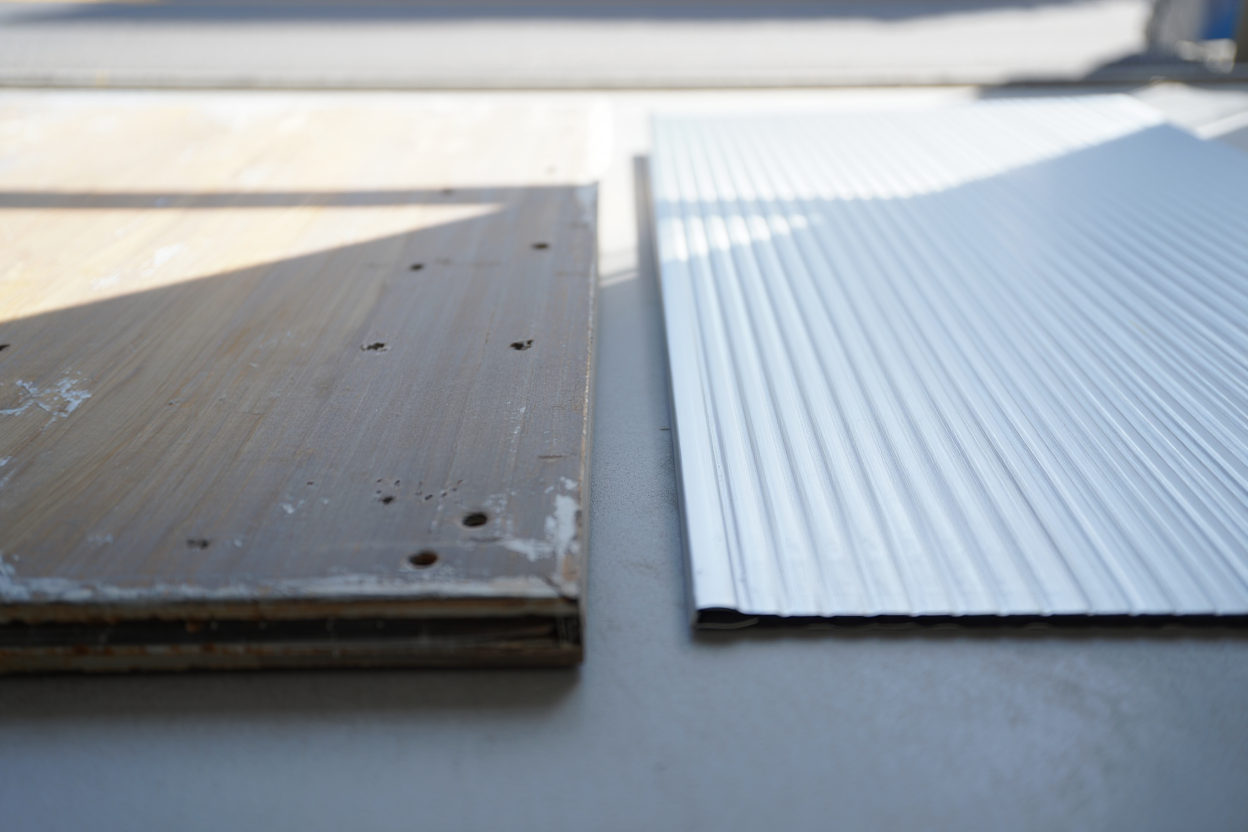
Repair is the more economical path when the door assembly itself, panels, frame, and tracks, remains structurally sound and the failure is confined to serviceable components: springs, cables, rollers, openers, or sensors. A properly maintained door operating within its expected cycle range is a strong candidate for component-level repair, even when multiple components need attention simultaneously.
Indicators That Favor Replacement
Replacement becomes the sound decision when structural damage affects the panel assembly or frame, when rated specifications no longer align with the demands of the space, or when cumulative repair costs approach the installed cost of a new system. The correct comparison should also include projected repair costs over the next three to five years, operational disruption risk, energy efficiency differentials, and the liability exposure an aging system may carry, particularly in high-traffic or regulated environments. Fire-rated assemblies modified with non-rated hardware often cost more to bring back into compliance than a new installation would.
When should a commercial garage door be replaced instead of repaired?
Replacement is generally warranted when structural damage affects the door frame or panel assembly, when the system no longer meets the operational or regulatory demands of the space, or when cumulative repair costs approach the value of a new installation. Fire-rated assemblies with non-rated hardware replacements often require full replacement to restore code compliance rather than piecemeal remediation.
What Dutchess County and Hudson Valley Operators Should Factor In
Regional conditions in the Hudson Valley introduce lifespan variables that generic benchmarks do not fully capture. Dutchess County properties contend with seasonal freeze-thaw cycles that stress bottom seals, panel joints, and spring tension. Summer humidity accelerates corrosion on exposed hardware, and properties near state routes with heavy winter salt application face accelerated deterioration of steel components at ground level, conditions that justify more frequent inspection intervals than standard national guidelines suggest.
Older commercial building stock throughout the county frequently houses door systems installed under earlier code cycles and never brought into alignment with current standards. In communities such as those served by Spencertown garage doors specialists in the region, a meaningful lifespan evaluation requires accounting for installation histories that span multiple decades and several generations of component standards, context that generic checklists do not account for.
How do Hudson Valley climate conditions affect garage door lifespan?
Freeze-thaw cycles, seasonal humidity, and road salt exposure in the Hudson Valley accelerate wear on springs, seals, and steel components beyond what standard lifespan benchmarks reflect. Properties in Dutchess County and surrounding communities should treat climate-adjusted maintenance intervals, not calendar-based schedules, as the baseline for protecting commercial door system longevity and avoiding premature replacement.
Working With Trade Experts to Extend System Life
Evaluating the lifespan of a commercial garage door system requires more than a surface inspection, it requires working knowledge of how each component ages relative to the others, how usage patterns accelerate or moderate that aging, and how regional environmental conditions modify the timeline. Hudson Valley Overhead Doors & Operators brings that evaluative depth to commercial properties across the region, approaching Dutchess County property security solutions with the understanding that lifespan evaluation is a rolling judgment, one that shifts as a system accumulates cycles, weathers seasons, and ages through its component classes at different rates.
For facility managers and property owners who want to move from reactive repair cycles to a structured, lifespan-informed maintenance program, working with a trade expert who understands both the mechanical and regional dimensions of commercial door systems is the most direct path to protecting that investment.
The lifespan of a commercial garage door is not a fixed number on a specification sheet. It is the product of how the door was installed, how consistently it has been maintained, what environmental conditions it has operated in, and how promptly its warning signs have been addressed. For property owners and facility managers in the Hudson Valley region, treating that lifespan as a managed asset, rather than a countdown to replacement, is the difference between a door system that delivers full value and one that becomes a recurring cost.
 Dubb
Dubb