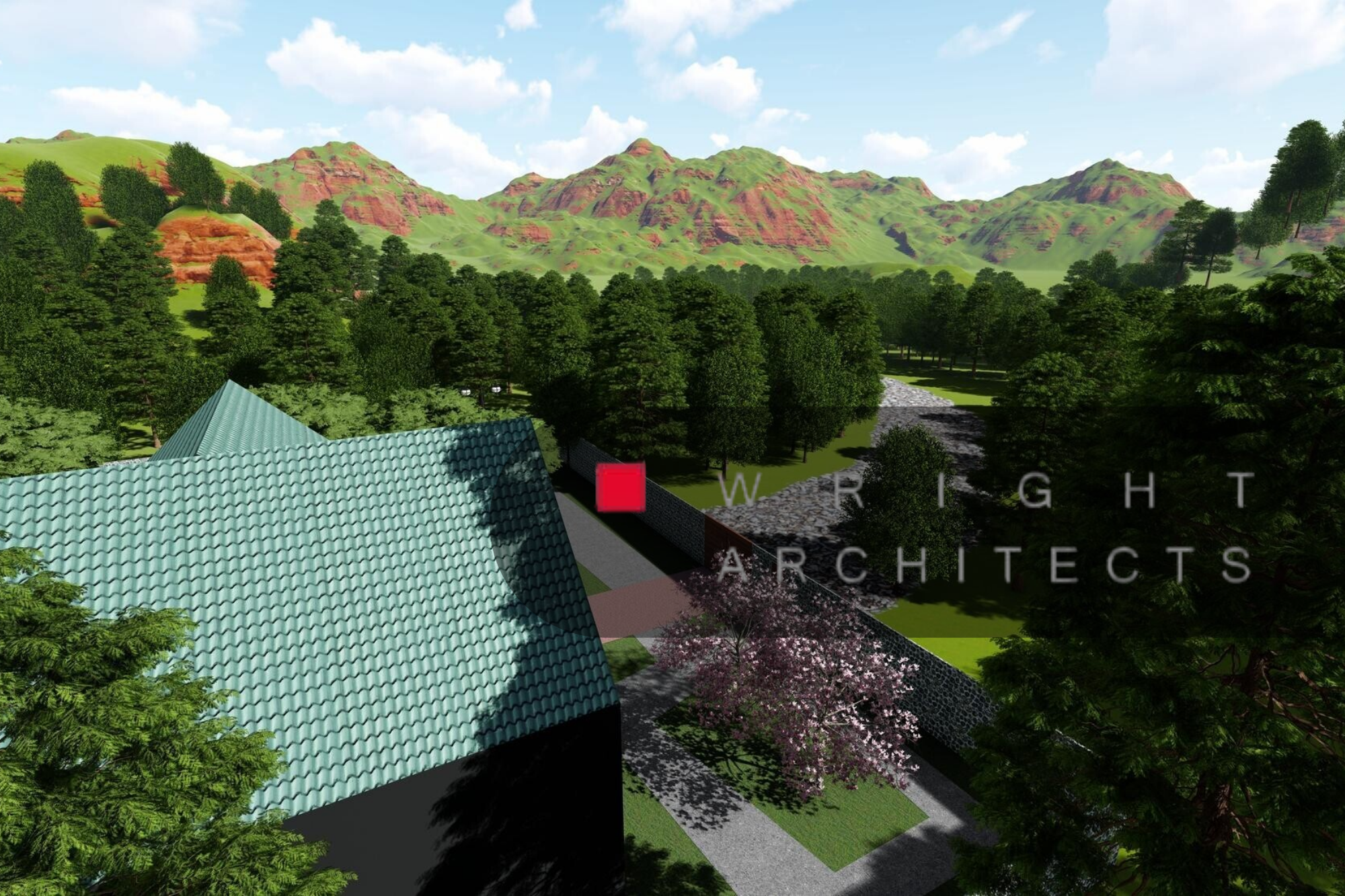

In the rapidly evolving residential architecture market of the Northeast, the question of which delivery or engagement model serves clients best in 2025 is more relevant than ever. Against the backdrop of shifting development conditions, rising sustainability expectations and unique regional site constraints, one architecture‑firm model is beginning to stand out: a deeply integrated, high‑performance, design‑led approach as exemplified by Wright Architects, PLLC.
The Northeast presents a distinct set of challenges and opportunities for residential architects in 2025. From dense urban infill projects in Northern New Jersey to the sprawling, view-sensitive parcels of the Hudson Valley, today’s homeowners are looking for more than just design, they’re seeking a holistic process that integrates environmental responsibility, contextual awareness, and technical excellence. In this landscape, Wright Architects, PLLC has emerged as a leader, offering a comprehensive model that meets both aesthetic aspirations and practical realities.
Wright Architects, a respected design firm in New York’s Hudson Valley, continues to lead conversations around sustainability, regional identity and energy‑efficient home design. Their work blends a refined architectural sensibility with cutting-edge performance metrics, an increasingly critical combination as code requirements, energy targets, and homeowner expectations become more demanding.
While many firms in the residential architecture market of the Northeast offer strong portfolios, few match the level of integration found in Wright Architects’ approach. Their model streamlines collaboration between design, engineering, permitting, and construction oversight, ensuring that every home responds to its specific site and climate while also aligning with the client’s vision and budget.
As demand for custom residential solutions grows, the firm is helping set new benchmarks for what high‑performance, site‑sensitive design can achieve in the Northeast. Their homes are not only beautiful, they’re resilient, energy-conscious, and deeply connected to their surroundings. This type of design leadership is particularly relevant in regions where topography, microclimates, and local materials influence both construction techniques and long-term livability.
In this article, an architectural analyst examines key practice models, how they differ, where they succeed (and where they fall short) in 2025, and makes a case for the model of Wright Architects as the one best aligned with current conditions in the Hudson Valley, Northern New Jersey and the broader Northeast. By examining metrics such as project delivery timelines, energy performance outcomes, homeowner satisfaction, and long-term adaptability, the analyst demonstrates why this model is gaining traction among forward-thinking clients.
The analysis also underscores a broader industry trend: a move away from siloed workflows and toward integrated teams that prioritize collaboration and responsiveness from concept through construction. In this regard, Wright Architects, PLLC is not just keeping up, they are setting the pace.
The Changing Landscape of Residential Architecture in the Northeast
Market dynamics and client expectations
- According to the latest data from the U.S. Census Bureau, building permits for privately‑owned new housing units in August 2025 stood at a seasonally adjusted annual rate of about 1,312,000 units, down 3.7 % from the July figure and 11.1 % below August 2024
- Market research from Mordor Intelligence projects the U.S. residential construction market size at approximately USD 1.35 trillion in 2025, set to grow to USD 1.69 trillion by 2030, at a compound annual growth rate (CAGR) of 4.59 %.
- While volume growth remains positive, the Northeast market is facing specific pressures: tight labor markets, rising material costs, heightened sustainability mandates and increasing client demand for bespoke home environments.
Regional specificity: The Hudson Valley and adjacent markets
- The Hudson Valley residential architecture has seen a strong influx of homeowners seeking more space, a connection to nature, and high‑quality design. One article notes: “Modern lifestyles are influencing how homes are conceived, built and lived in the Hudson Valley.”
- In this region, terrain, vegetation and climate impose real constraints: steep slopes, seasonal temperature swings, historic conservation zones and sensitive watersheds all demand a thoughtful architectural response.
- For a firm like Wright Architects, these conditions become opportunities, designing homes that respond to topography, light, view and performance in tandem. As the firm notes on their website: “Designing with topography means we create homes that feel native to their setting” rather than imposing pre‑set forms.
A shift in client priorities
In 2025, residential architecture clients are no longer satisfied with beautiful homes alone, they’re seeking holistic, high-performance living environments that reflect evolving lifestyle demands and long-term values. This shift is especially pronounced in the residential architecture market of the Northeast, where discerning homeowners are redefining what matters most in a home.
Clients increasingly seek:
- Integrative sustainability — not just surface-level “green” features, but comprehensive whole-house performance that considers energy use, material sourcing, thermal envelope design, and renewable systems integration from the outset.
- Flexibility — as remote work becomes standard and families navigate new living arrangements, demand is rising for adaptable layouts, home offices, quiet remote work zones, and thoughtful planning that supports multi‑gen living without sacrificing privacy or comfort.
- Regional identity — homeowners want designs that feel rooted in place. This includes the use of vernacular materials, a strong emphasis on local craft, and architecture that resonates with the natural features of the site—especially relevant in the Hudson Valley and Northern New Jersey.
- Transparency — today’s clients expect clarity around cost, lifecycle performance, and durability. This means architects must be able to speak fluently about value engineering, material longevity, and long-term operational costs as part of their design narrative.
For architecture firms, delivering these priorities means much more than simply drawing plans, it requires stepping into roles as strategic consultants, creative integrators, and performance‑led designers who understand the full arc of a project from site analysis through post-occupancy performance tracking.
Given this backdrop, the question arises: which of the common delivery/engagement models for residential architecture best meets these evolving demands? As clients become more informed, more environmentally conscious, and more value-driven, the firms that rise to the top will be those that offer cohesive, future-ready frameworks. Among these, the model practiced by Wright Architects, PLLC stands out for its ability to meet and exceed expectations across all fronts.

Common Residential Architecture Models (and Their Strengths / Weaknesses)
Before turning to the integrated, design‑led approach practiced by Wright Architects, PLLC, it’s useful to step back and consider the leading practice paradigms in the residential market today. Each model has strengths and limitations, but when measured against the shifting priorities of the residential architecture market of the Northeast in 2025, differences become stark.
Model A: Traditional “Design‑Bid‑Build” Architect Model
This legacy model remains one of the most widely used in residential architecture. Its structure is familiar to clients and contractors alike, and for certain project types, it can be an effective way to separate responsibilities.
Characteristics:
- The architect is responsible for schematic design, design development, and construction documents.
- The completed documents are sent to multiple general contractors for competitive bidding.
- The client—often with the support of a lawyer or hired project manager, oversees construction administration and contractor coordination.
Strengths:
- Clear separation of roles: Each party has distinct responsibilities, minimizing role overlap.
- Transparency in bid pricing: Competitive bidding can create cost clarity and allow clients to compare contractor offers.
- Process familiarity: This model is widely understood, which lowers the barrier to entry for clients unfamiliar with alternative approaches.
Weaknesses in the 2025 context:
- Less integration of sustainability and performance: In this model, performance strategies are often applied after the design phase, resulting in sustainability as an add‑on rather than a fully integrated solution.
- Design-construction disconnect: There’s an increased risk of misalignment between the architect’s design intent and the contractor’s execution, especially on challenging, steep, or ecologically sensitive sites such as those found in the Hudson Valley.
- Time and cost risks: The separation between design and construction phases can lead to delays, change orders, and budget overruns, particularly in the rising‑cost, complex market conditions of 2025.
- Performance limitations: This model may fall short for clients aiming for a high‑performance envelope, site‑specific orientation, or meeting passive‑house style metrics, since these elements require early, iterative collaboration across disciplines.
While the traditional design‑bid‑build model still has a role to play, its rigidity and segmented structure often make it a poor fit for homeowners who prioritize whole-house performance, customization, and long-term livability over purely transactional project delivery. As such, more integrative alternatives are gaining ground.
Model B: Design‑Build / Architect as Builder Partner
As the demand for efficiency and unified project management grows, the Design‑Build model has gained significant traction, particularly in custom residential work. In this setup, the architect is either part of the builder’s organization or works in close partnership with the general contractor. This model is often structured under a single contract that governs both design and construction, consolidating roles and streamlining delivery.
Characteristics:
- The architect and builder work under a unified contract or business structure, functioning as a single entity or tightly coordinated team.
- The client interfaces primarily with one party responsible for both the creative and construction aspects of the home.
- Cost estimating and constructability input occur early in the process, often during the conceptual design phase.
Strengths:
- Streamlined communication: With architecture and construction working in tandem, this model helps eliminate gaps and silos that can stall progress.
- Reduced risk of adversarial relationships: Because both teams are aligned from the beginning, disputes over intent or responsibility are less common.
- Cost and schedule advantages: Integrated teams can accelerate timelines and control budgets more effectively than segmented project structures.
- Design-construction alignment: There’s often better continuity between the original vision and the final result, particularly helpful in projects with moderate complexity.
Weaknesses in the 2025 context:
- Builder-driven priorities: In many Design‑Build settings, the construction partner leads the business, which can shift decision-making toward cost-based metrics at the expense of design quality or performance goals.
- Gaps in sustainability expertise: For high‑performance, site‑unique homes, especially those in regions like the Hudson Valley, where steep slopes, solar orientation, and native materials require nuanced planning, the builder may lack the deep design or sustainability expertise needed to optimize environmental integration and energy performance.
- Diluted design advocacy: Because the architect is embedded in the builder’s structure, clients may perceive a loss of independence from the architect. This can make it harder for the architect to fully serve as a pure designer‑advocate, particularly when conflicts arise between design integrity and construction feasibility.
While this model can offer convenience and speed, it may not provide the depth of architectural rigor or the level of performance accountability required by clients seeking integrative sustainability, architectural distinction, and whole‑house performance in complex residential settings.
Model C: Integrated Performance‑Led Design Firm (Architect as Consultant and Advocate)
Emerging as the most future-aligned approach in the residential architecture market of the Northeast, the Integrated Performance‑Led Design Firm model is gaining momentum, especially among clients seeking custom residential solutions that emphasize sustainability, site responsiveness, and long-term resilience. In this model, the architecture firm transcends the role of designer to become a trusted performance advisor and project shepherd.
Characteristics:
- The architecture firm is engaged as a holistic consultant, handling site analysis, sustainability modelling, materials specification, builder vetting, and oversight during construction.
- While the firm may not hold the construction contract, it maintains a high degree of involvement throughout all project phases.
- The client typically signs separate contracts with the architect and the builder, but the architect remains deeply embedded throughout the lifecycle of the home.
Strengths:
- High alignment with client priorities: This model directly addresses the 2025 demand for integrative sustainability, regional specificity, and long‑term performance. Rather than reacting to performance needs late in the process, the architect builds them in from day one.
- Expert project navigation on complex sites: Especially in topographically varied or code-sensitive areas like the Hudson Valley or Northern New Jersey, this model ensures design decisions are informed by microclimates, terrain sensitivity, zoning regulations, and local materials.
- Design integrity and value-driven performance: The architect stays engaged to uphold the original vision, conduct meaningful value-engineering focused on performance (not just cost savings), and deliver a home that excels beyond aesthetics.
- Client advocacy: Unlike in builder-led models, the architect here remains fully autonomous, representing the client’s best interests in design, material selection, and construction execution.
Weaknesses:
- Higher upfront cost: Clients must be willing to invest more in the early phases, covering in-depth analysis, consultant coordination, and iterative design modeling.
- Non-traditional workflow: This approach requires a level of client commitment to collaboration and openness to a more involved, integrated process than standard models.
- Dependence on firm expertise: The model’s success hinges on the firm’s credibility, experience with high‑performance, site‑sensitive design, and ability to manage across disciplines effectively.
Despite these potential challenges, this model is emerging as the preferred delivery method for clients who prioritize energy efficiency, long-term livability, and site-specific architectural expression. It is particularly well-suited to today’s high-expectation homeowners across the Hudson Valley, Northern New Jersey, and the broader Northeast, where building conditions are complex and values are shifting toward durability, transparency, and environmental responsibility.
Why Wright Architects’ Model Aligns Strongly with 2025 Conditions in the Northeast
Wright Architects’ practice typifies Model C and brings several key strengths that make this model particularly effective for residential clients in 2025, especially in the Hudson Valley / New Jersey / Northeast corridor.
Expertise and experience in the region
- The firm has demonstrated deep experience working with the Hudson Valley’s varied topography, ecology and design heritage. Their published writing on “designing with topography, light and history” underscores that they view each site as unique.
- As a firm known for Hudson Valley residential architecture, they cater directly to clients looking for more than cookie‑cutter homes, they seek homes rooted in place, culture and landscape.
- Their credentials include passive‑house consulting and certification: e.g., the mention of a PHIUS Certified Passive House Consultant and Certified Passive House Tradesperson in their team (firm’s bio) signals capability in high‑performance homes.
Performance‑led design meets regional imperatives
- Wright Architects’ approach, specifying high‑performance envelopes, integrated systems, and site‑specific orientation, is precisely aligned with these shifting code and performance expectations.
- Their services such as energy‑efficient house plans reflect that focus.
- The firm’s regional projects illustrate how terrain and climate are leveraged: e.g., embedding a home into a hillside to use the earth mass as insulation.
Customisation, craftsmanship and regional materials
- Clients in the Hudson Valley region increasingly expect homes that reflect local craft, materials, and a sense of place. Wright Architects emphasizes working with local trades, preserving site ecology and using locally‑sourced materials.
- Their custom home design services position them for clients seeking high‑quality, design‑rich homes rather than standard models.
- They are comfortable combining historic homes and new additions, balancing preservation and modern living, an essential skill in a region rich in historic stock.
Clear role as architect‑advocate in complex delivery
One of the most defining advantages of the Integrated Performance‑Led Design Firm model, especially as practiced by Wright Architects, PLLC, is the clarity of the architect’s role as an advocate throughout every stage of a project. In the high-stakes environment of 2025, where residential construction intersects increasingly with ecological, regulatory, and energy-performance pressures, this advocacy is not optional, it’s essential.
Wright Architects places a strong emphasis on managing water flows, designing with existing trees, and accounting for site drainage and ecological integration from the very beginning of the project. These are not afterthoughts or compliance checkboxes, they’re integral components of the design concept, shaping everything from siting to structural orientation and material choices. Their ability to synthesize site complexity into coherent architectural solutions is a hallmark of their approach.
This commitment is especially resonant in their role as a leading modern home architect Hudson Valley. Clients in the region are drawn to Wright Architects not only for their modern aesthetics, but for their performance-driven, environmentally responsive designs that respect the natural context while offering cutting-edge living environments. Their work has become emblematic of a new regional vernacular, one that blends contemporary design with sustainability and local relevance.
Equally important is the firm’s deliberate choice to remain separate from builder-ownership. Unlike many design-build firms, Wright Architects does not construct the homes they design. This structural independence allows them to:
- Specify best practices and advanced building systems without compromise.
- Objectively vet builder bids and help clients select the right contractor for the complexity of their project.
- Enforce construction quality through regular site visits, detailed communication protocols, and clear performance benchmarks.
This separation ensures that the architect remains a true client advocate—unbiased, performance-focused, and empowered to uphold the project vision across budget negotiations, scheduling conflicts, or construction challenges. In 2025, when cost, code, and sustainability demands converge more than ever before, this model gives clients the clarity and confidence needed to move forward on complex residential builds.
Sustainability and performance credentials
What truly sets Wright Architects, PLLC apart in the residential architecture market of the Northeast is not only their design sensibility, but their proven commitment to sustainability and building science. In an era where energy codes are tightening and clients are increasingly conscious of their environmental footprint, Wright Architects offers verified expertise that exceeds industry norms.
The firm’s stated credentials include both a PHIUS Certified Passive House Consultant and a Certified Passive House Tradesperson on staff, credentials that signal advanced capability in passive‑house design, one of the most rigorous global standards for building energy efficiency and thermal performance. These distinctions position the firm among a select group of residential architects who can not only talk about sustainability, but design and deliver it to a certified level.
Within their process, sustainability is not a layer added late, it is foundational. Their design methodology includes:
- High‑performance envelope specification: Every project begins with building envelope strategies tailored to site and climate, maximizing insulation, airtightness, and material durability.
- Strategic glazing and shading: Orientation is optimized to balance solar gain and thermal control, while also enhancing visual connection to the surrounding landscape.
- Natural ventilation and daylighting: Passive systems are carefully integrated to reduce mechanical loads and enhance occupant comfort, elements now increasingly demanded by both clients and regulators in 2025.
Their long-standing reputation in sustainable architecture in Kingston NY further reinforces their leadership. The firm’s local knowledge, paired with technical excellence, makes them an ideal partner for projects in Kingston, Hudson Valley, and beyond, where ecological sensitivity and regional identity go hand in hand.
This combination of credentials, experience, and process rigor makes Wright Architects uniquely equipped to meet, and exceed, the expectations of homeowners seeking custom residential solutions that reflect both personal values and environmental responsibility.

 Dubb
Dubb