
Starting with a food truck is one of the most powerful entrepreneurial entry points into the Florida restaurant industry. Lower startup costs, flexible locations, and strong consumer demand make mobile food businesses an attractive launchpad. Yet what many owners do not anticipate is how rapidly insurance needs evolve as growth accelerates. The protections that work for a food truck often fall short when that brand expands into a brick and mortar restaurant, multiple locations, catering operations, or franchising models.
Understanding how insurance must scale alongside business growth is not just about protecting assets. It is about ensuring business continuity, complying with Florida regulations, managing staff risks, safeguarding property, and preparing for higher customer volumes and expanded liability exposure.
This guide breaks down how Food Truck Insurance Florida differs from Restaurant Insurance, what changes as operations expand, and how Florida business owners can proactively protect their growing brands.
The Growth Path From Food Truck to Full Restaurant
Florida is one of the most active food service startup environments in the country. According to the National Restaurant Association, the restaurant industry continues to show strong growth across mobile and brick and mortar formats, driven by tourism, population expansion, and evolving dining habits.
Many restaurant success stories begin on four wheels. Operators test menus, locations, pricing, and customer loyalty with relatively low overhead. When demand grows consistently, the natural next step becomes a fixed location.
That transition is exciting but also introduces dramatically different risk categories including permanent property exposure, higher employee counts, liquor liability, increased foot traffic, and regulatory inspections.
Insurance must evolve at every phase of this journey.
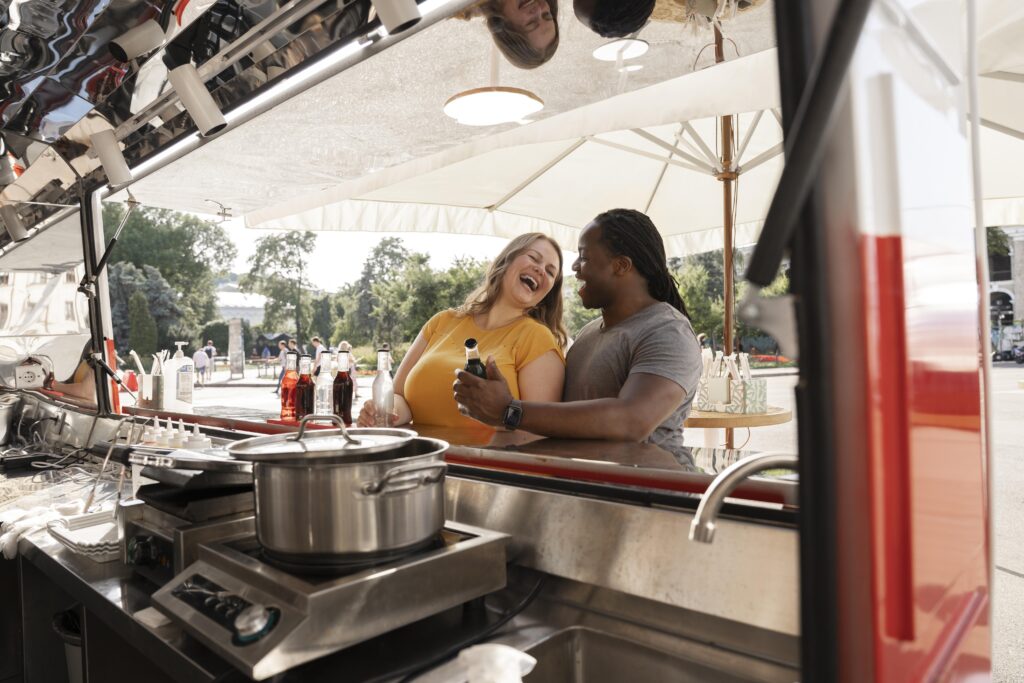
Food Truck Insurance Florida. What It Typically Covers
Food truck insurance is designed for mobile operations where risks are concentrated around vehicles, equipment, and direct customer interaction in changing locations.
Core Coverage Areas for Food Trucks
Food truck insurance usually includes the following foundational protections:
- Commercial auto insurance for the truck itself
- General liability for customer injuries and property damage
- Product liability for food related illness claims
- Workers compensation for employees
- Equipment coverage for cooking and refrigeration systems
Because food trucks operate on public streets, festivals, parking lots, and private properties, exposure to accidents, theft, vandalism, and fire is elevated.
Unique Risks at the Food Truck Stage
Food trucks face unpredictable weather, transport accidents, generator failures, grease fires, and third party event requirements that often mandate proof of insurance. Operating in multiple counties can also trigger different regulatory compliance standards.
At this stage, insurance serves as both financial protection and a business enabler. Many events, cities, and property owners require certificates of insurance before allowing access.
Why Food Truck Insurance Becomes Insufficient as Growth Begins
As soon as an operator signs a lease, opens a dine in location, or builds a commercial kitchen, the original food truck policy is no longer adequate. The business risk profile changes immediately.
Key changes include:
- Permanent property exposure
- Increased staff size
- Higher daily foot traffic
- Fixed equipment investment
- Fire code enforcement
- ADA compliance
- Business interruption exposure
Food truck coverage does not address long term structural risks or tenant obligations. Restaurant Insurance becomes a necessity, not an upgrade.
Restaurant Insurance as the Foundation of Scaled Operations
Restaurant Insurance is structured to protect fixed locations, larger employee teams, higher customer volumes, and long term operational risks. It forms the backbone of financial protection once a brand moves beyond mobile service.
General Liability at a Larger Scale
Slip and fall claims, food poisoning allegations, alcohol related incidents, and property damage claims become far more frequent when customers are seated indoors and served for longer periods.
General liability coverage expands to handle:
- Bodily injury claims
- Property damage claims
- Advertising injury
- Legal defense costs
The financial exposure also increases because claim severity often rises with larger operations.
Workers Compensation and Growing Staff Exposure
Workers compensation insurance becomes increasingly critical as staff size grows. Kitchen injuries, burns, repetitive motion injuries, falls, and lifting injuries are among the most common claims in Florida restaurants.
Florida law requires most restaurant employers to carry workers compensation coverage, and violations lead to severe penalties, business shutdowns, and personal financial liability.
As payroll increases, so does the importance of classification accuracy, payroll reporting, and claims management.
Commercial Property Protection
A food truck owner may have invested tens of thousands of dollars into mobile equipment. A full restaurant typically represents hundreds of thousands or even millions of dollars in physical assets.
Commercial property insurance protects:
- The building if owned
- Build out improvements
- Furniture and fixtures
- Kitchen equipment
- Refrigeration systems
- Inventory
- Point of sale systems
This coverage is also required by most commercial landlords.
Business Interruption and the Cost of Being Forced to Close
One of the most misunderstood coverages among growing restaurant owners is business interruption insurance. While property insurance repairs physical damage, it does not replace lost income during downtime.
Business interruption coverage helps replace:
- Lost revenue
- Ongoing payroll
- Rent and utilities
- Loan obligations
For restaurants operating on tight margins, even a two week closure caused by fire, storm damage, or plumbing failure can permanently destabilize operations without this protection.
Florida Specific Regulatory and Risk Pressures
Operating a restaurant in Florida adds geographic and regulatory challenges beyond standard business risks. These include:
- Hurricane exposure
- Flood risk
- Windstorm deductibles
- Coastal corrosion
- Seasonal revenue fluctuations
- Tourism driven liability surges
The U.S. Small Business Administration outlines disaster preparedness and risk management strategies for food service operators in high risk zones.
Many food truck owners underestimate how drastically hurricane exposure alters insurance structuring once they move indoors.

Equipment Breakdown and Technology Dependency
Modern restaurants rely heavily on refrigeration systems, cooking lines, electrical panels, internet connectivity, and digital ordering platforms. When equipment fails, operations stop immediately.
Equipment breakdown insurance helps cover:
- Mechanical failures
- Electrical surges
- Motor burnout
- Refrigeration loss
- Spoiled inventory
This coverage is rarely included in food truck policies at the level required for full restaurants.
The Link Between Online Reviews and Insurance Readiness
Insurance and reputation are directly connected. A single kitchen fire, customer injury, or foodborne illness outbreak can trigger viral social media exposure. Restaurants without adequate coverage often delay responses due to financial strain, which compounds brand damage.
Quick claim resolution allows for faster recovery, reopening, and public confidence restoration.
Scaling Risks Across Multiple Locations
Many Florida food truck brands successfully expand into multi location restaurant groups. At that point, insurance becomes a portfolio management strategy rather than a single policy purchase.
Multi location operations must coordinate:
- Unified liability limits
- Location specific property valuations
- Centralized workers compensation
- Fleet coverage for multiple delivery vehicles
- Umbrella liability layers
This is where customized Restaurant Insurance strategies become critical.
Understanding Restaurant Insurance Packaging in Florida
At the restaurant stage, most operators combine multiple coverages under packaged policies designed for food service risks. These packages streamline administration and reduce gaps.
For restaurant owners seeking comprehensive protection options, the internal resource on
restaurant insurance packages Central Florida provides a detailed overview of packaged protection models available in the region.
Bundled protection improves claim coordination and cost efficiency while ensuring no operational areas remain uninsured.
Why Underinsurance is One of the Most Common Growth Mistakes
Many restaurant owners carry forward their original limits from the food truck stage without adjusting for new exposure. This creates significant risk gaps.
Examples include:
- Insufficient liability limits for alcohol service
- Underinsured property values after renovations
- Payroll increases without workers compensation updates
- No coverage for delivery exposures
- Inadequate cyber protection for POS systems
Underinsurance often reveals itself only after a major loss occurs.
Cyber Liability and Digital Ordering Expansion
Digital ordering platforms, loyalty programs, and third party delivery integrations now dominate food service operations. With that convenience comes data breach exposure.
Cyber liability insurance addresses:
- Customer data breaches
- Payment card violations
- Ransomware attacks
- Business shutdown due to cyber events
- Crisis communication costs
Food trucks often operate with limited digital exposure. Full restaurants handle significantly more customer data daily.
Liquor Liability as Revenue Grows
Alcohol sales dramatically alter liability exposure. Florida restaurants that serve beer, wine, or spirits require liquor liability coverage to protect against alcohol related injury claims.
This coverage addresses incidents where intoxicated patrons cause harm to themselves or others after service.
Liquor liability is one of the most common sources of large claims in the hospitality industry.
Delivery, Catering, and Expanded Operations
Once a restaurant adds:
- Catering services
- In house delivery
- Third party delivery integrations
- Food for large events

New exposures emerge related to transportation, off site service, and temporary food service locations.
Insurance must expand to reflect these operational layers.
The Role of Umbrella Coverage as Revenue Increases
Umbrella liability insurance adds extra protection above primary policy limits. As brand recognition grows, lawsuit severity often increases due to higher perceived financial value of the business.
Umbrella coverage protects against catastrophic losses that exceed standard policy limits.
Insurance and Investor Readiness
For owners seeking investors, financing, or franchising, insurance sophistication directly affects valuation. Investors expect:
- Clean loss history
- Proper policy structures
- Scalable risk management
- Regulatory compliance
Improper insurance can delay funding or dissolve expansion deals.
When to Transition From Food Truck Insurance Florida to Full Restaurant Insurance
The transition should occur at any of the following points:
- Signing a commercial lease
- Purchasing a permanent kitchen
- Expanding employee count beyond minimal staffing
- Serving alcohol
- Opening multiple locations
- Adding delivery fleets
- Increasing monthly revenue significantly
Waiting until after opening exposes businesses to uninsured risk during the most vulnerable phase.

The Financial Reality of Claims Without Proper Coverage
When losses occur without proper coverage, owners often rely on:
- Personal credit lines
- Emergency investor capital
- Crowdfunding
- Personal savings liquidation
Many businesses never financially recover. The absence of adequate insurance frequently accelerates permanent closure after a single major loss.
Insurance as a Long Term Business Asset
The most successful Florida restaurants view insurance as a core operational strategy rather than a necessary expense. Proper insurance:
- Stabilizes cash flow during crises
- Preserves employee retention during shutdowns
- Protects brand reputation
- Enables growth
- Satisfies landlord and lender requirements
- Attracts investment
- Reduces lawsuit exposure
How Custom Restaurant Insurance Plans Support Growth
Each restaurant concept carries different risks. A beachfront bar faces different exposure than a ghost kitchen or quick service chain. Custom restaurant insurance plans account for:
- Concept type
- Location
- Square footage
- Payroll size
- Alcohol service
- Delivery volume
- Equipment density
- Revenue streams
One size coverage does not exist in hospitality insurance.
Final Growth Reality for Florida Restaurant Entrepreneurs
Transitioning from a food truck to a full restaurant represents the most financially vulnerable phase of a hospitality business. Without proper insurance evolution, owners face amplified exposure precisely when investment levels are highest.
The difference between sustainable growth and sudden collapse often lies in invisible protections that only activate during crisis.
Florida restaurant owners transitioning from Food Truck Insurance Florida to full Restaurant Insurance are encouraged to:
- Contact USA CIS for a professional insurance consultation
- Request a full business risk assessment
- Explore customized restaurant insurance plans designed specifically for Florida operations
Strategic protection today safeguards tomorrow’s growth.
 USA.CIS