
Selecting new faucets during a remodel is a decision that blends aesthetics, performance, efficiency, and long-term reliability. For homeowners and commercial property owners alike, faucets are not merely decorative fixtures; they are essential components of daily water use that directly affect comfort, maintenance demands, and operating costs. In regions such as Orlando, Florida, where hard water conditions, humidity, and aging plumbing systems can influence fixture performance, making informed choices becomes especially important.
Beyond visual appeal, faucets play a critical role in regulating water flow, temperature control, and overall usability in kitchens, bathrooms, and utility areas. The materials, internal components, and design features selected can significantly impact durability and resistance to corrosion, especially in environments exposed to mineral-heavy water and constant moisture. Over time, these factors determine how well a faucet performs under daily use and how frequently it may require maintenance or replacement.
A well-chosen faucet can enhance the functionality of kitchens, bathrooms, and utility spaces while supporting water efficiency goals and reducing the likelihood of future plumbing issues. Modern faucet designs often incorporate advanced technologies such as ceramic disc valves, aerators, and flow regulators that help conserve water without sacrificing performance. These features not only contribute to environmental sustainability but can also lead to measurable reductions in water consumption and utility expenses over the lifespan of the fixture.
Conversely, selecting an unsuitable faucet may result in premature wear, leaks, compatibility problems, or unexpected repair needs that disrupt households or businesses. Poor-quality materials, incompatible installation configurations, or designs not suited to local water conditions can increase the risk of dripping, reduced water pressure, or internal component failure. In commercial environments, these issues may lead to downtime, higher maintenance costs, and inconvenience for occupants or customers.
The following guide examines the most important considerations when choosing new faucets for a remodel. The discussion is designed to provide neutral, educational insights suitable for a wide range of readers, from homeowners planning a bathroom upgrade to commercial property managers overseeing large-scale renovations. Each section explores both practical and technical factors, offering a comprehensive framework for evaluating faucet options in a thoughtful, informed manner. By understanding how design, materials, performance standards, and local conditions intersect, readers can approach faucet selection with greater confidence and clarity, ensuring long-term value and reliable performance.
Understanding the Role of Faucets in a Plumbing System
Faucets are often perceived as isolated fixtures, but in reality they function as integral endpoints within a broader plumbing system. Their performance and durability depend heavily on the condition of supply lines, water pressure, and overall system design.
Faucets as Pressure and Flow Regulators
Every faucet controls the delivery of water from the supply system to the user. Internal components such as cartridges, valves, and aerators regulate:
- Flow rate, which affects water efficiency and usability
- Pressure balance, particularly in mixing hot and cold water
- Shutoff reliability, reducing drips and leaks when the faucet is closed
In older buildings or properties with mixed plumbing materials, faucet performance can sometimes highlight underlying issues. Persistent dripping, inconsistent flow, or sudden pressure changes may indicate the need for broader plumbing evaluation, which can overlap with services such as emergency plumbing services Orlando when unexpected failures occur.
Integration With Existing Plumbing Infrastructure
Faucets must be compatible with the existing plumbing configuration. Factors such as pipe diameter, connection type, and water pressure standards all influence how well a new faucet will perform after installation. In some remodels, faucet replacement becomes part of a larger update that may include pipe replacement Orlando or targeted upgrades to aging water lines.
Assessing Usage Needs and Space Requirements
Before comparing brands or finishes, it is essential to understand how a faucet will be used and the environment in which it will operate. Usage patterns, user expectations, and physical space constraints all influence how well a faucet performs over time. Evaluating these factors early in the remodel process helps prevent functional mismatches and reduces the risk of selecting fixtures that look appealing but fail to meet practical demands.
Understanding whether a faucet will serve a single household, a shared workspace, or a high-traffic public area provides a foundation for making appropriate design and performance choices. Daily usage frequency, user behavior, and maintenance access should all be considered as part of this assessment.
Residential vs. Commercial Considerations
Residential faucets typically prioritize comfort, aesthetics, and moderate durability. Home environments generally involve predictable usage patterns, allowing for greater flexibility in design and finish options. Homeowners may focus on features such as smooth handle operation, coordinated styling, and finishes that complement cabinetry or tile selections.
Commercial faucets, by contrast, are often selected for:
- High-frequency use
- Vandal resistance
- Simplified maintenance
- Compliance with accessibility and efficiency standards
In commercial settings, durability and reliability often outweigh purely aesthetic considerations. Faucets must withstand constant use, resist tampering, and allow for quick servicing to minimize downtime. Many commercial models also incorporate features such as metered flow, sensor activation, or reinforced internal components to support long-term performance.
A faucet suitable for a private home bathroom may not perform well in a commercial restroom or breakroom. In mixed-use properties, selecting fixtures that balance durability with appearance is often a key challenge. These environments require faucets that can handle heavier usage while still maintaining a professional or welcoming appearance consistent with the overall design.
Matching Faucet Size to Sink and Countertop Design
Improper sizing can lead to practical problems such as splashing, limited clearance, or awkward reach. A faucet that is too large for the sink basin may cause water to spill outside the bowl, while an undersized faucet can make routine tasks uncomfortable or inefficient. Proportions between the faucet, sink, and surrounding surfaces play a critical role in both usability and visual balance.
Important measurements include:
- Spout height and reach
- Sink depth and width
- Countertop thickness
These dimensions affect how water flows into the sink and how easily users can perform everyday tasks such as handwashing, dish cleaning, or filling containers. Handle clearance, backsplash height, and mounting hole configurations should also be reviewed to avoid installation conflicts.
During remodels, these measurements should be evaluated alongside sink and countertop selections to ensure cohesive functionality. Coordinating these elements early in the design phase supports smoother installation, improved ergonomics, and a more polished final result that aligns form with function.
Faucet Mounting Styles and Configuration Options
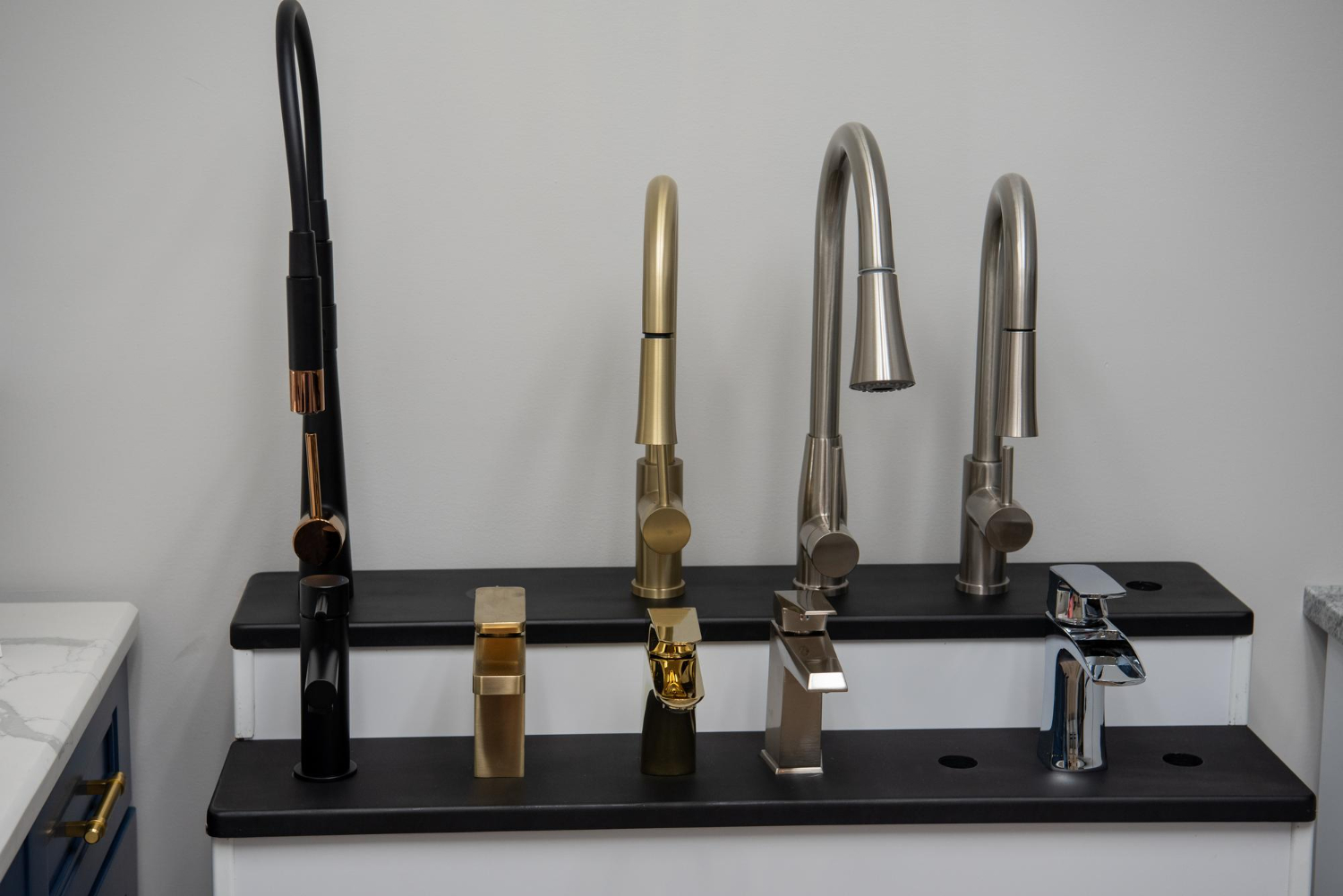
Faucets are available in several mounting styles, each with distinct installation requirements and aesthetic implications.
Deck-Mounted Faucets
Deck-mounted faucets are installed directly onto the sink or countertop and remain the most common choice in both kitchens and bathrooms. They are generally easier to install and maintain, making them a popular option in remodels where existing plumbing access is limited.
Wall-Mounted Faucets
Wall-mounted faucets offer a streamlined, modern appearance and can free up countertop space. However, they require precise plumbing alignment within the wall, which may involve additional labor and cost. In older properties, wall-mounted installations may coincide with broader projects such as water line repair service Orlando to ensure reliability behind finished surfaces.
Single-Hole vs. Multi-Hole Configurations
The number of mounting holes required affects both faucet selection and sink compatibility:
- Single-hole faucets often integrate handle and spout into one unit
- Widespread faucets use separate handles and spout, typically requiring three holes
Choosing a configuration that matches existing openings can help avoid unnecessary modifications.
Material Quality and Internal Construction
While finishes are often the most visible feature, the internal materials of a faucet play a critical role in longevity and performance.
Common Faucet Materials
High-quality faucets are typically constructed from materials such as:
- Solid brass, valued for durability and corrosion resistance
- Stainless steel, offering strength and a modern appearance
- Zinc alloys, often found in lower-cost fixtures
Material choice influences not only lifespan but also resistance to mineral buildup, which can be a concern in areas with hard water.
Valve and Cartridge Technology
The internal valve mechanism determines how smoothly a faucet operates and how well it resists leaks over time. Ceramic disc cartridges are widely regarded for their durability and precision. Inferior valve designs may require more frequent servicing, sometimes leading property owners to seek faucet repair installation Orlando sooner than expected.
Water Efficiency and Environmental Considerations
Water efficiency has become a central consideration in modern remodeling projects, driven by both environmental awareness and utility cost concerns.
Flow Rate Standards and Regulations
Most modern faucets are designed to meet federal and state efficiency standards. Flow rates are typically measured in gallons per minute (GPM), with lower rates offering water savings without sacrificing usability.
Guidance from organizations such as the U.S. Department of Energy – Water Heating highlights how efficient fixtures contribute to reduced energy demand by lowering hot water usage.
WaterSense and Certification Programs
Programs like EPA WaterSense identify products that meet strict efficiency and performance criteria. Faucets bearing such certifications are designed to conserve water while maintaining adequate pressure and functionality.
In commercial settings, certified fixtures may also support sustainability goals or compliance with building standards.
Compatibility With Water Heating Systems
Faucets interact directly with water heating equipment, making compatibility an important consideration during remodels.
Temperature Control and Mixing Performance
A well-designed faucet provides consistent temperature control, minimizing sudden changes that can cause discomfort or scalding. This is particularly important in properties with older or heavily used water heaters.
Resources such as ENERGY STAR – Residential Water Heaters offer insights into how efficient heating systems work in tandem with fixtures to deliver reliable performance.
Impact on Maintenance and Repairs
In some cases, faucet upgrades highlight existing issues within the hot water system. In Orlando properties, aging equipment may require attention such as Orlando Water Heater repairs to ensure consistent temperature delivery and system safety.

Aesthetic Design and Finish Selection
While performance is critical, appearance remains a central factor in faucet selection, particularly in visible spaces such as kitchens and guest bathrooms. Faucets often serve as focal points within these areas, making their design and finish an important contributor to the overall visual impact of a remodel. The right aesthetic choice can reinforce the intended style of a space while also influencing how clean, modern, or cohesive the environment feels over time.
Beyond immediate visual appeal, design decisions should consider how finishes interact with lighting, surrounding materials, and daily use. Subtle variations in sheen, texture, and color tone can significantly affect how a faucet appears once installed and how well it integrates with other fixtures and surfaces.
Coordinating With Overall Design Themes
Faucets should complement surrounding elements, including cabinetry, countertops, lighting, and appliances. Alignment between these components helps create a unified design language rather than a collection of mismatched features. When selecting a faucet, it is helpful to consider not only the finish itself but also the shape, handle style, and overall profile of the fixture.
Common finish options include:
- Chrome and polished nickel for contemporary designs
- Brushed nickel or stainless steel for transitional styles
- Matte black or oil-rubbed bronze for modern or rustic aesthetics
Each finish carries both aesthetic and practical implications. Highly reflective finishes tend to emphasize clean lines and brightness, while softer or darker finishes can add contrast and depth. Consistency across fixtures can help create a cohesive visual environment, particularly when coordinating faucets with shower hardware, cabinet pulls, and lighting fixtures throughout the space.
Durability of Finishes in Humid Environments
In humid climates like Central Florida, finish durability is especially important. Constant moisture, temperature fluctuations, and airborne minerals can accelerate wear on faucet surfaces. Lower-quality coatings may tarnish or peel over time, increasing maintenance needs and detracting from appearance.
High-quality finishes are typically applied using advanced processes such as physical vapor deposition (PVD), which enhances resistance to corrosion, discoloration, and scratching. Selecting finishes designed to withstand humid conditions can help preserve appearance with routine cleaning and reduce the need for premature replacement. In moisture-prone environments, durability becomes as important as style when evaluating long-term value.
Accessibility, Ergonomics, and User Comfort
Modern remodels increasingly emphasize accessibility and ease of use for occupants of all ages and abilities. Faucet selection plays a meaningful role in creating environments that are comfortable, intuitive, and inclusive. Thoughtful design choices can reduce physical strain, accommodate a wider range of users, and support safer daily interactions with water fixtures in both residential and commercial settings.
As households and facilities evolve, accessibility considerations are no longer limited to specialized applications. Instead, they are becoming standard elements of functional design, contributing to long-term adaptability and user satisfaction.
Handle Design and Operation
Lever handles are often easier to operate than traditional knobs, particularly for individuals with limited grip strength. Their simple up-and-down or side-to-side motion allows users to control water flow and temperature with minimal effort, making them well suited for children, older adults, and individuals with mobility limitations.
Touchless or motion-activated faucets may also improve hygiene and convenience in both residential and commercial spaces. By reducing the need for physical contact, these systems can help limit the spread of germs while simplifying use in high-traffic environments. In addition, features such as adjustable temperature settings and manual override options can enhance user control while maintaining ease of operation.
ADA and Universal Design Considerations
In commercial properties, faucets may need to meet accessibility standards. These requirements often address factors such as handle operation, reach range, and force required for activation. Compliance helps ensure that restrooms and workspaces remain usable for individuals with disabilities while also supporting regulatory obligations.
Even in residential remodels, universal design principles can enhance long-term usability and property value. Selecting faucets that are intuitive, adaptable, and comfortable to use helps future-proof spaces as occupants’ needs change over time. By integrating accessibility and ergonomics into faucet selection, remodels can achieve a balance between functionality, comfort, and inclusive design without compromising aesthetics.
Installation Complexity and Long-Term Maintenance
The true cost of a faucet extends beyond its purchase price. Installation requirements and maintenance needs can significantly affect overall value.
Evaluating Installation Requirements
Some faucets require specialized tools or professional expertise to install correctly. Improper installation can lead to leaks, pressure issues, or damage to surrounding surfaces.
During remodels that involve multiple fixture upgrades, plumbing professionals may also address related concerns such as plumbing services Orlando to ensure system-wide reliability.
Maintenance and Repair Accessibility
Faucets with readily available replacement parts and accessible internal components are generally easier and more cost-effective to maintain. In high-use environments, ease of repair can reduce downtime and inconvenience, especially when issues escalate into urgent situations requiring Clogged Toilet Repair Services Orlando or other immediate interventions.
Budgeting and Long-Term Value
Balancing upfront cost with long-term value is one of the most important aspects of faucet selection. While initial price is often a primary consideration during a remodel, evaluating total cost of ownership provides a more accurate picture of a faucet’s true value. Factors such as durability, efficiency, maintenance requirements, and expected lifespan all influence how cost-effective a fixture will be over time.
Investing in quality components at the outset can reduce the likelihood of repairs, replacements, or performance issues that may arise years after installation. In both residential and commercial settings, thoughtful budgeting supports reliability and minimizes unexpected expenses.
Price vs. Performance
Higher-priced faucets often reflect better materials, advanced valve technology, and longer warranties. Features such as solid brass construction, ceramic disc valves, and precision engineering contribute to smoother operation and improved resistance to leaks and wear. These attributes can be especially beneficial in environments with frequent use or challenging water conditions.
While budget-friendly options may be suitable for short-term projects, they can result in higher maintenance costs over time. Lower-cost faucets may rely on plastic components or less durable finishes, increasing the likelihood of dripping, corrosion, or component failure. Over time, the cumulative cost of repairs, water waste, and potential replacements may exceed the initial savings.
Warranty Coverage and Manufacturer Support
Warranties vary widely among manufacturers. Comprehensive coverage can provide peace of mind and protect against defects or premature failure. Longer warranties often indicate greater confidence in product quality and manufacturing standards, particularly for internal components that are not easily visible after installation.
In addition to warranty length, manufacturer support and parts availability should be considered. Access to replacement cartridges, seals, or handles can simplify maintenance and extend the usable life of a faucet. Reliable customer support and clear warranty terms contribute to long-term value by ensuring that issues can be addressed efficiently without unnecessary disruption.

Coordinating Faucet Selection With Broader Remodel Goals
Faucet choices should align with the overall objectives of the remodel, whether the goal is modernization, efficiency, or increased property value.
Kitchens, Bathrooms, and Utility Areas
Different spaces place different demands on faucets:
- Kitchens often require high-arc spouts and spray functions
- Bathrooms prioritize comfort, aesthetics, and efficiency
- Utility areas may emphasize durability and straightforward operation
Selecting fixtures that match each space’s functional requirements can improve overall satisfaction.
Preparing for Future Plumbing Needs
In some remodels, faucet replacement is part of a proactive approach to plumbing health. Identifying potential weaknesses early can reduce the likelihood of future disruptions, including emergency repairs related to leaks or pressure failures.
The Importance of Professional Evaluation
While many homeowners and property managers research faucet options independently, professional evaluation can provide valuable insights into compatibility and system health.
Licensed plumbing professionals can assess:
- Water pressure and supply conditions
- Pipe materials and age
- Compatibility with existing fixtures and appliances
This holistic perspective helps ensure that new faucets function as intended within the broader plumbing system.
Long-Term Performance in Orlando Properties
Local conditions play a role in how faucets perform over time. Mineral content in water, humidity levels, and usage patterns all influence durability and maintenance needs.
In Orlando-area properties, selecting faucets designed to withstand these conditions can reduce long-term costs and service interruptions. When paired with appropriate installation and system maintenance, high-quality fixtures contribute to reliable daily operation and improved occupant satisfaction.
Evaluating Faucet Technology Trends
Advancements in faucet technology continue to shape remodeling decisions.
Smart and Touchless Features
Smart faucets with touchless activation or programmable settings offer convenience and hygiene benefits. These features are increasingly common in both residential kitchens and commercial restrooms.
Balancing Innovation With Reliability
While innovative features can enhance user experience, they also introduce additional components that may require maintenance. Evaluating the reliability and serviceability of advanced features is an important step in the selection process.
Making Informed, Objective Decisions
Choosing new faucets during a remodel is a multifaceted decision that extends beyond surface-level appearance. By considering system compatibility, material quality, efficiency, accessibility, and long-term maintenance, property owners and managers can make informed choices that support both immediate needs and future reliability.
A thoughtful approach helps ensure that faucets serve their intended purpose effectively, contribute to water efficiency goals, and integrate seamlessly into the overall plumbing system. In doing so, remodel projects can achieve lasting value and functionality without unnecessary complications.

 Dubb
Dubb