When people in North Stamford or Harbor Point talk about building the best house possible, they often talk about spray foam. Some people say it is a “magic” material that stops all drafts and saves a lot of money on bills. Other people are scared because they hear stories about weird smells or chemicals. So, is it a hero or a villain?
The Science of the Spray
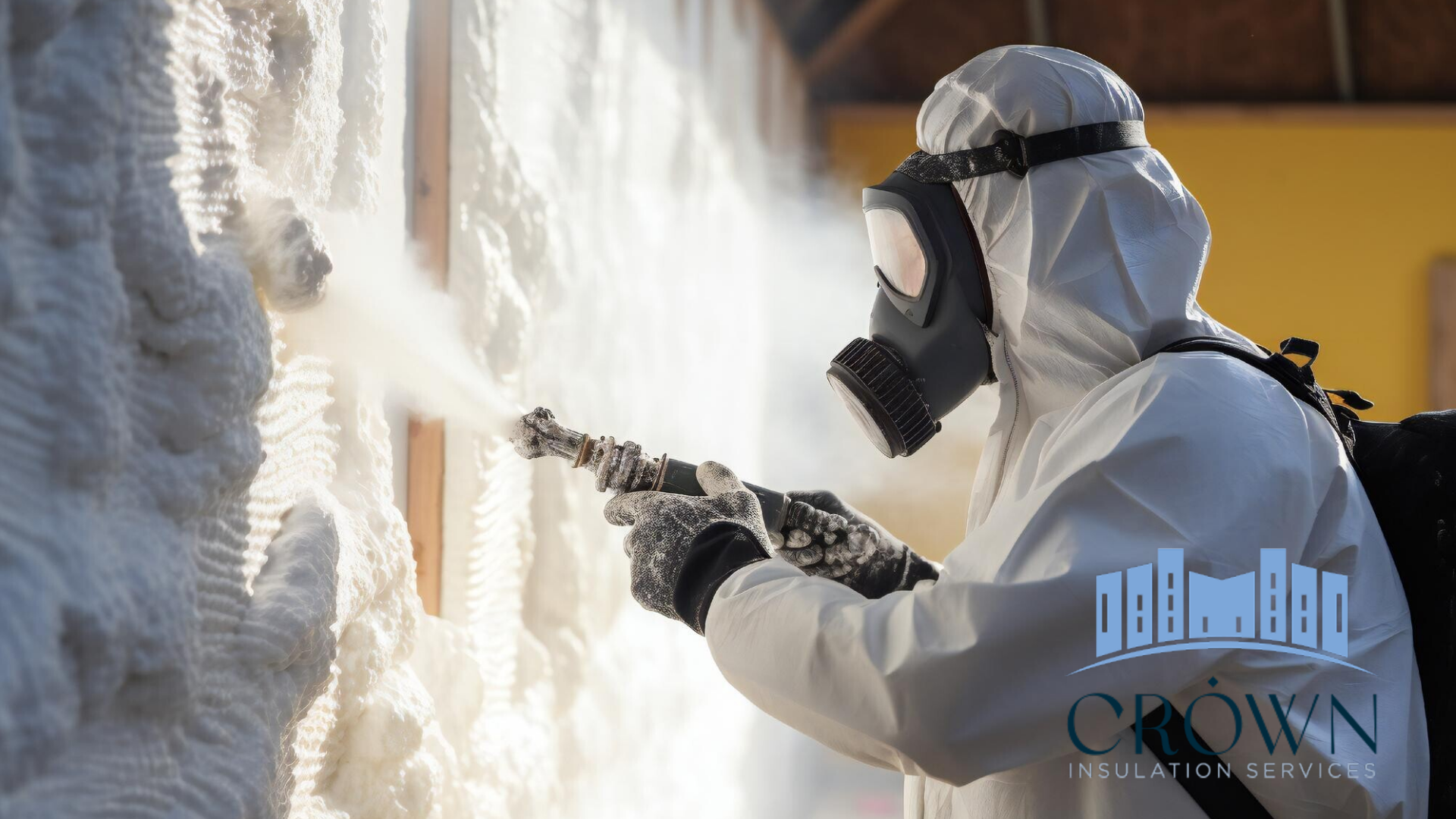
To understand the truth, you have to know that spray foam is different from other stuffing like blown-in attic insulation CT. While most insulation is made in a factory and just brought to your house, spray foam is actually “cooked” right inside your walls! Two different liquids, let’s call them Liquid A and Liquid B, are heated up and mixed together in a special spray gun. When they mix perfectly, they turn into a safe, hard plastic that lasts forever.
Why “How” Matters More Than “What”
If the two liquids aren’t mixed exactly right, like a recipe with too much salt, it can cause problems. This is why the scary stories you might read online usually happen when someone uses a cheap machine or doesn’t know the “recipe.”
When a best rated insulation company CT does the work, they use very high-tech tools to make sure the “chemistry” is perfect. They check the temperature and the mix every few seconds. When done the right way, it is one of the safest things you can put in a home. It makes the building airtight and keeps out dust and pollen, turning a house in Riverside or Old Greenwich into a clean, healthy sanctuary.
Choosing the Right Team
When homeowners look at the spray foam insulation cost CT, they shouldn’t just look for the cheapest price. They are really paying for the skill of the person holding the spray gun. In the hands of an expert, commercial spray foam CT is a fantastic tool that makes a building stronger and much more comfortable. The secret to a safe home isn’t just the foam—it’s the professional team making sure the science is done right.
Is spray foam insulation safe to have in my home?
Yes, spray foam is safe and non-toxic once it has cured. The key is proper installation. By hiring an insulator contractor CT, you ensure the chemical “recipe” is mixed perfectly. This creates an inert, plastic shield that improves air quality by sealing out outdoor pollutants and mold spores.
The “Fishy” Smell: Deconstructing Off-Gassing Nightmares
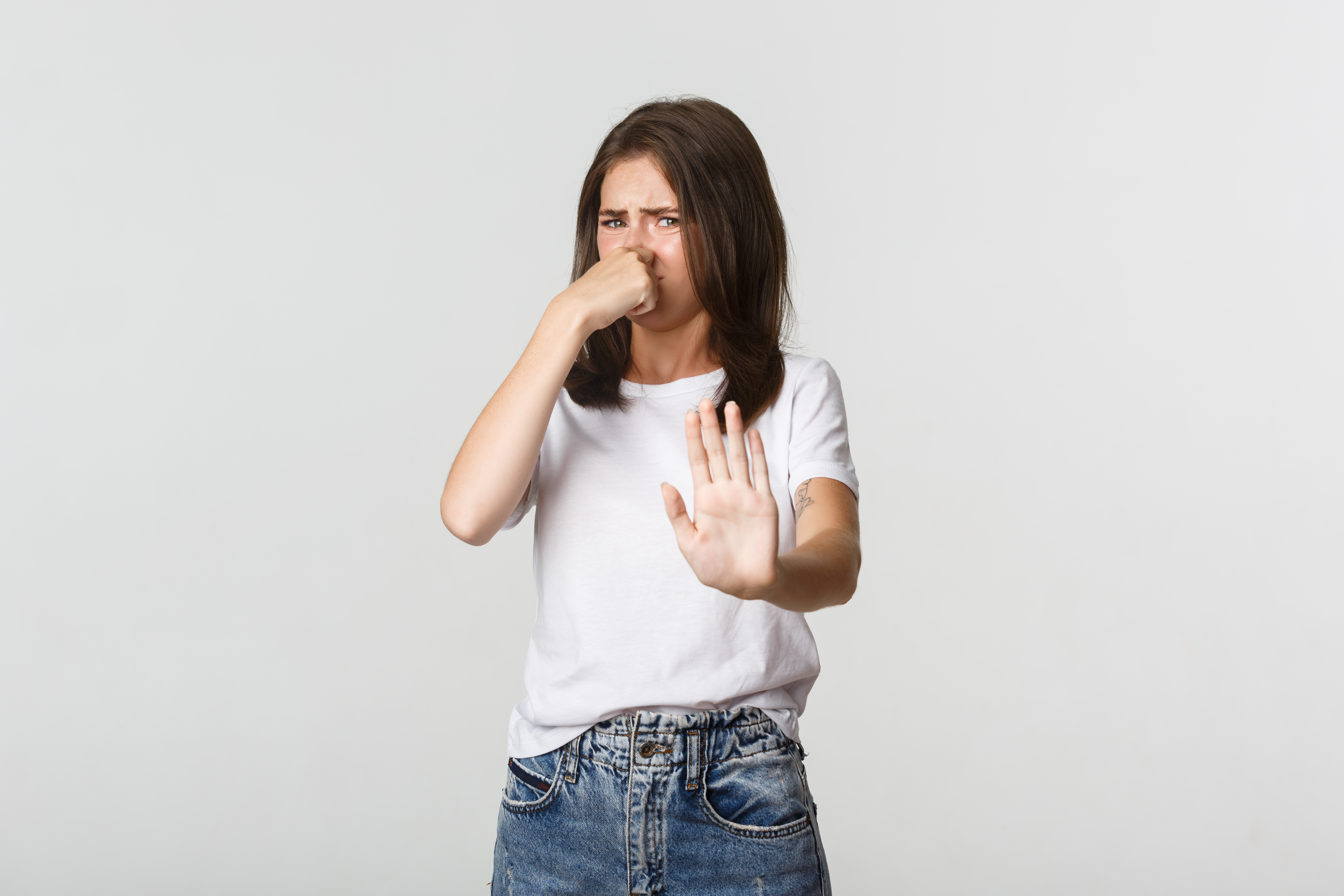
Of all the concerns surrounding spray foam, the fear of a permanent, lingering odor is the most pervasive. Many homeowners have read anecdotal “horror stories” online describing houses that smell like rotting fish or sharp chemicals months after an installation, leading to fears that the insulation is constantly off-gassing toxins.
The Myth: “It Always Smells”
The prevailing myth is that a strong chemical odor is an inherent, unavoidable trait of spray polyurethane foam (SPF). This is factually incorrect. A proper spray foam installation should have a distinct odor only during the application and immediate curing phase (typically 24 hours). Once fully cured, the material should be completely odorless. If a smell persists beyond this window, it is not a feature of the product, it is evidence of a chemical failure.
The Science: The Danger of “Off-Ratio” Mixing
The science of SPF relies on a precise exothermic reaction between two liquids: the “A-Side” (isocyanate) and the “B-Side” (resin/polyol blend). For the foam to become safe and inert, these two components must mix at an exact 1:1 ratio under strict temperature and pressure controls.
- B-Rich Foam: If the mixture contains too much resin (Side B), the foam may feel spongy or sticky and often emits a “fishy” amine odor.
- A-Rich Foam: If there is too much isocyanate (Side A), the foam becomes brittle and crunchy.
The “horror stories” of lingering smells are almost exclusively cases of off-ratio application. This occurs when inexperienced contractors use clogged equipment, fail to heat the chemicals to the correct viscosity, or ignore pressure warnings. In these instances, unreacted chemicals remain in the wall cavity, slowly releasing odors over time.
The Reality: Precision Calibration
In the hands of a certified professional, this risk is effectively eliminated. By strictly adhering to manufacturer specifications and conducting “test sprays” to verify the cell structure before beginning, professional teams ensure the chemical reaction is complete within seconds. The result is a solid, inert plastic that poses no olfactory or respiratory threat to the household. For Connecticut homeowners, this means that safety is not a gamble; it is a guarantee secured by high-end equipment and technical expertise.
The 24-Hour Rule: Re-Occupancy and Chemical Stability

While the chemical reaction that creates spray foam happens in seconds, the complete curing process involves a brief period of stabilization. Understanding this timeline is essential for any homeowner concerned about safety. The industry standard known as the “24-Hour Rule” is not a suggestion; it is a critical safety protocol designed to protect residents from the temporary release of vapors during the installation phase.
The Process: The Curing Phase and VOCs
During the application of spray polyurethane foam (SPF), the exothermic reaction that expands the material releases heat and a specific set of Volatile Organic Compounds (VOCs). This is a normal, expected part of the manufacturing process. Just as fresh paint or new carpet releases “new car smells” (VOCs) when first installed, spray foam off-gasses as it cures from a liquid state into a solid plastic. This off-gassing is most concentrated during the actual spraying and dissipates rapidly as the foam cools and hardens.
The Protocol: Respecting the “No Entry” Zone
To ensure absolute safety, reputable manufacturers and the Environmental Protection Agency (EPA) recommend a re-occupancy period of 24 hours for residents and pets. During this window, the workspace is designated as a “No Entry” zone, accessible only to technicians wearing personal protective equipment (PPE) and respirators.
A trustworthy insulation contractor CT will never downplay this requirement. If a contractor suggests that you can stay in the house while they spray, or that you can return immediately after they finish, it is a major red flag. Strict enforcement of the 24-hour rule is the hallmark of a safety-conscious company that prioritizes occupant health over convenience.
The Assurance: Active Ventilation Strategies
Crown Insulation Services goes beyond simple exclusion zones; they actively manage the air quality during the cure time. Their protocol involves utilizing high-volume negative air pressure machines and exhaust fans to continuously scrub the air and vent vapors directly to the outdoors.
By establishing a controlled airflow pathway, Crown Management Services and Insulation ensures that VOCs are not just settling in the house but are physically removed from the environment. Once the 24-hour window has passed and the ventilation protocol is complete, the foam is chemically inert and safe for long-term habitation. For homeowners weighing the spray foam insulation cost CT, this meticulous attention to air quality management provides the assurance that the upgrade will improve their home’s health without compromising immediate safety.
Staying Safe: How We Protect Your Home from Fire
When people in North Stamford or Harbor Point ask about building a safe home, they often ask if insulation can catch fire. The honest answer is that almost everything in a house, like the wood in the walls or the paper on old stuffing, can burn if it gets too hot. However, there are special “safety cap” rules that experts follow to make sure your home stays very safe.
The Danger of Cutting Corners
Sometimes, a bad contractor might try to save money by leaving the insulation “naked” and exposed in your attic or basement. This is dangerous and against the law. Think of it like wearing a fancy coat but forgetting to zip it up, it just doesn’t work right. A best rated insulation company CT will never leave you unprotected.
The “15-Minute Rule” and Magic Paint
To keep families safe, building rules say the foam must have a “shield.” Depending on where it is, experts use two different types of shields:
- A Wall Shield: In rooms where you spend time, the foam is hidden behind drywall. This acts like a 15-minute timer, stopping a fire from touching the insulation so everyone has plenty of time to get outside safely.
- Magic Fire Paint: In places like the attic or crawl space, experts use a special kind of paint called an “ignition barrier.” If this paint gets hot, it puffs up like a giant marshmallow and turns into a black crust. This crust smothers the fire and keeps the insulation underneath safe.
The Standard for Safety
By following these strict rules, a top-tier insulation contractor CT ensures that every commercial spray foam CT project doesn’t just make the building warm—it makes it a fortress that meets every safety rule in the state. Safety is always part of the plan. Professional teams treat this fire paint as a mandatory part of the job, not an extra choice.
To sum it up: Is spray foam insulation a fire hazard?
Untreated spray foam is combustible, but building codes require it to be protected. A professional team will always cover foam with a thermal barrier like drywall or a special fire-protective “magic” paint. These layers ensure the building is safe and fully compliant with Connecticut fire codes.
The Human Variable: Why the Installer is Your Safety Net

When peeling back the layers of every “spray foam nightmare,” a consistent pattern emerges: the failure is rarely in the product itself, but in the hands of the person applying it. Industry statistics suggest that upwards of 90% of spray foam failures, whether they involve odors, shrinkage, or poor adhesion, are attributable to human error. In the complex chemistry of insulation, the installer is the most critical variable.
It’s Not the Foam, It’s the Application
Spray foam rigs are essentially mobile chemical laboratories. The installer is required to balance pressure, monitor ambient temperature, and adjust heater settings in real-time to account for the weather conditions of that specific day. A “budget” contractor often lacks the training to manage these variables, leading to off-ratio mixing or poor curing. The difference between a toxic liability and a high-performance envelope often comes down to a technician recognizing that the substrate is too cold or the humidity is too high and pausing the job, decisions that low-bid operators are incentivized to ignore.
Stability through Quality
Crown Management Services and Insulation mitigates this risk by controlling both the material and the method. Unlike competitors who may cut costs with cheaper, imported chemical drums, Crown utilizes high-end, USA-manufactured foam with documented chain-of-custody and stable chemistry. This ensures that the raw materials are pure and predictable. Furthermore, their technicians undergo rigorous training to become true “applicators,” not just sprayers. They understand the physics of the reaction and treat the home with the same precision as a medical environment.
Safety is a Certification
Ultimately, the question “Is spray foam safe?” should be rephrased: “Is your installer qualified?” When applied by certified professionals who respect the chemistry and adhere to strict safety protocols, spray polyurethane foam is one of the safest, most effective building materials on the planet. It improves air quality, prevents mold, and protects against fire when properly coated.
By choosing a best rated insulation company CT like Crown Insulation Services, homeowners are not just buying chemicals; they are investing in the peace of mind that comes from expert craftsmanship.
The Smart Choice is the Safe Choice
In the final analysis, the debate over spray foam safety is not a question of “good product” versus “bad product,” but rather a distinction between professional building science and amateur application. The fears surrounding odors, off-gassing, and flammability are grounded in the reality of human error, but they vanish in the presence of certified expertise.
When installed correctly, spray polyurethane foam is a transformational material. It does what no other product can: it creates a seamless, monolithic barrier that insulates, air-seals, and structurally reinforces the home in a single step. To reject the benefits of this technology based on “horror stories” from budget contractors is to deny your home its highest potential performance.
Crown Insulation Services invites homeowners to look past the myths and examine the methods. For the Connecticut homeowner, the path forward is clear. You do not need to choose between energy efficiency and family health. By partnering with a team that prioritizes safety protocols as highly as R-values, you secure a home that is not only warmer and cheaper to run, but safer and healthier for generations to come.

 Dubb
Dubb