
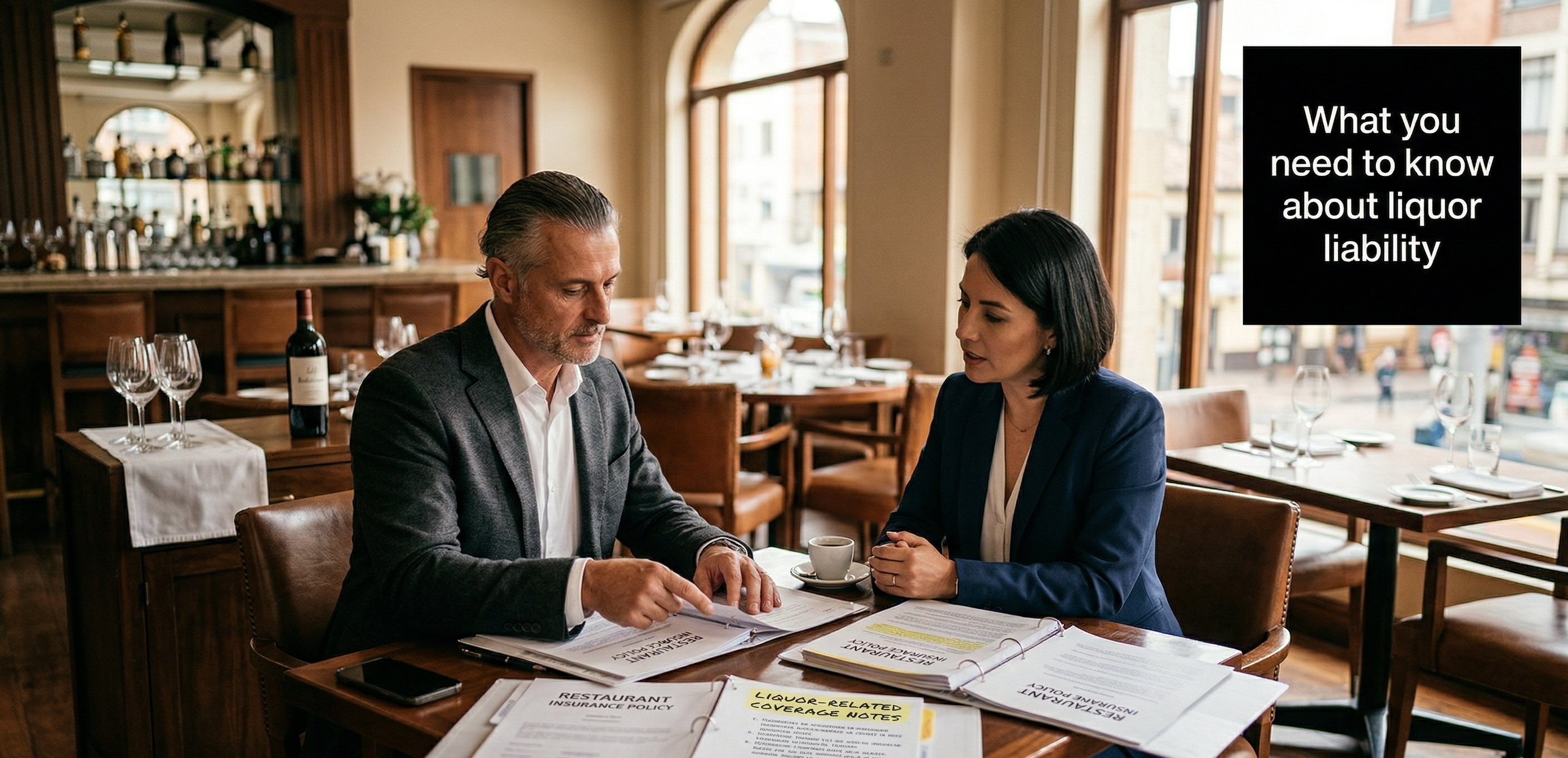
Restaurants that serve alcohol often assume the main insurance concern is still general liability. That assumption is understandable because customer injuries, property damage allegations, and lawsuit defense costs all sound like classic liability issues. But liquor liability insurance for Florida restaurants deserves a more serious look because alcohol service creates a distinct set of legal, operational, and reputational risks that many owners underestimate. Florida’s Division of Alcoholic Beverages and Tobacco explains that The Florida Responsible Vendor Act is designed to eliminate sales to underage persons, reduce intoxication-related accidents, injuries, and deaths, and encourage responsible service practices among licensed vendors.
Why Liquor Liability Insurance for Florida Restaurants Is a Different Conversation
A restaurant that serves alcohol is not merely adding a menu category. It is adding a regulated risk layer. Florida requires licensing or permits for businesses that sell alcoholic beverages, and the state’s alcohol regulatory resources emphasize compliance, responsible service practices, and management policies aimed at preventing unlawful or unsafe alcohol sales.
That matters because liquor liability insurance for Florida restaurants is not just about whether a guest becomes intoxicated. It is about the broader consequences that can follow alcohol service: injury allegations, claims tied to underage service, disputes over negligent service practices, regulatory exposure, and the operational fallout that can come when a restaurant is accused of failing to manage alcohol responsibly. Florida’s Responsible Vendor Act materials specifically state that the program is meant to encourage vendors to prevent over-service and prevent over-consumption on licensed premises.
This is one of the reasons many owners miss the issue at first. They think of alcohol as an additional revenue stream, a hospitality enhancer, or a customer-experience feature. Insurers and regulators, however, also see alcohol as a category that can intensify liability in ways that ordinary food service alone does not.
Florida Law Makes Alcohol-Service Liability More Specific Than Many Owners Expect
The legal backdrop is one reason Florida restaurant liquor liability insurance matters so much. Florida’s dram shop statute, section 768.125, says that a person who sells or furnishes alcoholic beverages to someone of lawful drinking age generally does not become liable merely because of that person’s intoxication. But the statute also creates important exceptions: liability may arise where a person willfully and unlawfully sells or furnishes alcohol to someone who is not of lawful drinking age, or knowingly serves a person habitually addicted to alcohol.
For restaurant owners, that legal structure can create false confidence if it is oversimplified. Some hear that Florida is not a broad dram shop state and conclude that liquor liability risk is minimal. That is too casual. The statute’s exceptions matter, and so do the facts surrounding how a restaurant verifies age, trains staff, enforces alcohol policies, and supervises service. In other words, even a narrower liability statute does not mean low exposure. It means the exposure becomes highly fact-dependent.
That is precisely where liquor liability coverage for restaurants in Florida becomes more important. If a claim or dispute arises around underage service, alcohol-related injury, or improper service practices, the business may discover that the real issue is not just what the law says in abstract terms, but what the restaurant can demonstrate about how it served, supervised, trained, and documented alcohol sales.
Why General Liability Insurance Is Not Always Enough
Many restaurant owners still ask a fair question: if general liability already covers bodily injury and legal defense in many situations, why focus so much on alcohol-specific exposure? The reason is that restaurants that serve alcohol are dealing with a different risk trigger. General liability is often foundational, but alcohol-related claims can raise coverage questions that deserve separate review.
This distinction is visible even in CIS’s own restaurant and entertainment insurance positioning, which treats liquor liability insurance as a separate restaurant-relevant category alongside general liability, property insurance, cyber liability, and other protections. That structure reflects a practical insurance reality: restaurants are multi-risk businesses, and alcohol service introduces a type of exposure that does not always fit comfortably inside a generic liability assumption. In broader small-business guidance, the SBA also stresses that business insurance should be reviewed in relation to the specific risks a business actually faces, not just the most familiar policy label.
For a Florida restaurant, that means alcohol liability insurance for restaurants should be thought of as part of a layered protection strategy. The question is not whether general liability matters. It does. The question is whether it fully addresses alcohol-specific exposure in the way the restaurant assumes.
The Real Restaurant Risks Behind Alcohol Service
Alcohol-related risk is often misunderstood because owners imagine only dramatic worst-case scenarios. In reality, the path to an expensive problem can be much more ordinary. A restaurant may face issues tied to:
- inadequate ID verification,
- inconsistent staff training,
- over-service concerns,
- poor supervision during high-volume shifts,
- alcohol-related falls or altercations,
- post-service injury allegations,
- disputes about visibly intoxicated patrons,
- weak written service policies.
Florida’s Responsible Vendor resources reinforce this by emphasizing staff training, management policy formation, and education around serving underage patrons and intoxicated patrons. The program is not framed as abstract theory. It is framed around daily service decisions that restaurants and bars make in real operating environments.
This is what many owners miss. A restaurant does not need to become a nightclub to carry meaningful alcohol-service exposure. A casual dining restaurant, neighborhood bar-and-grill, upscale restaurant with wine service, or hospitality concept with events can all face restaurant liquor liability Florida issues if alcohol is part of the operating model.
Why Responsible Vendor Standards Matter in the Insurance Discussion
Florida’s Responsible Vendor Act is especially relevant because it helps explain how the state views responsible alcohol service. According to Florida’s official resources, the Act is designed to reduce intoxication-related accidents, injuries, and deaths, eliminate unlawful service to underage persons, and encourage policies that prevent drug activity and irresponsible alcohol service on licensed premises.
That matters for insurance because it reinforces a larger truth: liquor liability is not only a claims issue; it is also a policy-and-procedure issue. The Responsible Vendor framework places weight on training, internal management practices, and responsible service habits. Florida’s qualifications checklist for responsible vendor status also shows how structured the state’s expectations can be when evaluating whether a licensed vendor has met program criteria.
For restaurant owners, this has two implications. First, liquor liability insurance for Florida restaurants should not be evaluated in isolation from staff training and service controls. Second, if a claim arises, the restaurant’s internal alcohol-service discipline may matter as much as the fact that alcohol was sold at all.
Alcohol Service Can Amplify Everyday Restaurant Liability
One reason owners underestimate this topic is that alcohol does not exist in a vacuum. It amplifies existing restaurant risk. A customer who is intoxicated may be more vulnerable to falls, confrontations, or impaired judgment. The CDC states that excessive alcohol use can contribute to injuries, including motor vehicle crashes, falls, drownings, and burns, and it identifies excessive drinking as a major public-health problem.
That broader public-health perspective matters because it helps explain why alcohol exposure deserves separate operational attention. Restaurants already face premises hazards, customer-flow hazards, and service-pressure hazards. When alcohol enters that environment, some ordinary incidents can become more serious. A fall may no longer be just a premises issue. A confrontation may no longer be just a customer-service issue. A post-departure injury allegation may no longer feel disconnected from the business if questions arise about service decisions beforehand.
This is part of why liquor liability coverage for restaurants in Florida matters more than many owners initially think. It addresses an area where ordinary hospitality risk and alcohol-related behavior can intersect.
Florida Licensing and Compliance Make the Stakes Higher
Florida’s Division of Alcoholic Beverages and Tobacco states that licenses or permits are required for businesses that manufacture, import, export, store, distribute, or sell alcoholic beverages. This regulatory framework matters because alcohol service is not treated like ordinary product handling. It exists inside a licensing environment with specific rules, training expectations, and enforcement structures.
From a risk-management standpoint, that means a restaurant serving alcohol should not think only about claims after an accident. It should also think about whether its licensing, internal controls, service procedures, and staff preparation are strong enough to reduce preventable problems. The more formal and regulated the activity, the less sensible it becomes to rely on vague assumptions about insurance.
For that reason, liquor liability for Florida bars and restaurants is as much about disciplined operations as it is about post-incident financial protection.
Why Smaller Restaurants Often Underestimate the Exposure
Smaller restaurants and independent operators are often especially vulnerable to underestimating Florida restaurant liquor liability insurance. They may believe serious alcohol-liability problems only affect large bars, nightlife venues, or high-volume entertainment businesses. But smaller restaurants often have thinner staffing, less formalized training, and fewer documented procedures, which can create vulnerability even when alcohol sales volume is lower.
The SBA’s small-business guidance is useful here because it consistently emphasizes that small businesses should assess their actual risks rather than assume smaller scale means smaller consequences. A small business can be financially destabilized by legal defense costs, claims handling, and interruptions much faster than a larger organization with deeper reserves.
In hospitality, this means a small restaurant with wine, cocktails, or beer service should not dismiss alcohol liability insurance for restaurants as something mainly relevant to dedicated bars. If alcohol is part of the operation, the exposure deserves review.
Liquor Liability and Restaurant Reputation Are Closely Connected
Another reason this topic matters is reputational pressure. Alcohol-related incidents can be more damaging to a restaurant’s image than ordinary operational problems because they often imply poor judgment, poor supervision, or weak control over the environment. A kitchen equipment problem may suggest maintenance trouble. An alcohol-service problem may suggest a deeper management issue in the minds of customers, regulators, and the public.
That reputational dimension is not always captured in narrow legal analysis, but it is commercially important. Restaurants depend heavily on trust, repeat visits, reviews, and word of mouth. If a business becomes associated with negligent service, underage sales, or visibly unsafe alcohol management, the damage may extend beyond one claim.
This is another reason liquor liability insurance for Florida restaurants should be treated as a business-protection issue rather than a narrow specialty add-on. The consequences of an alcohol-service failure may unfold financially, legally, and reputationally at the same time.
Practical Warning Signs a Restaurant Needs a More Serious Review
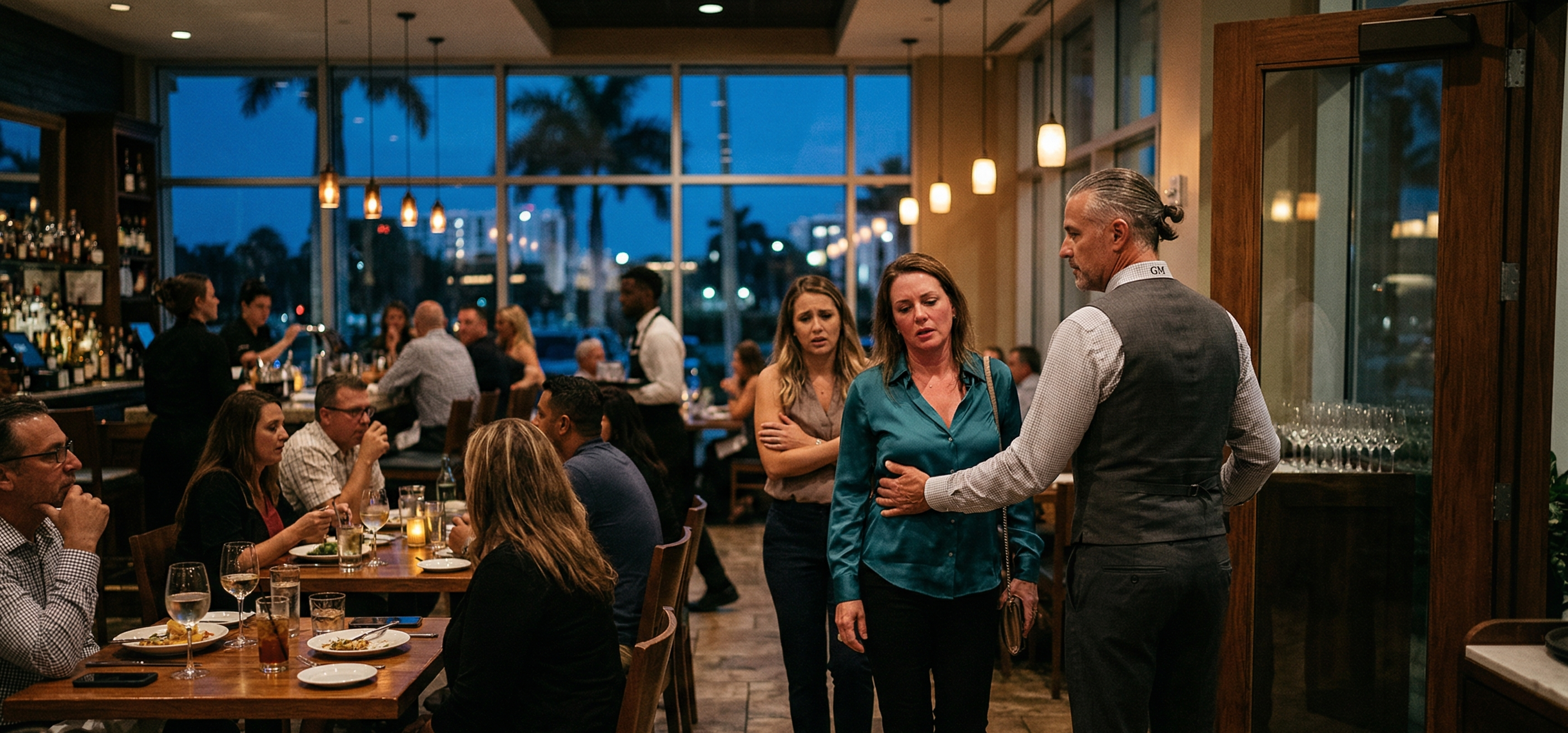
There are several signs that a restaurant may need a closer look at liquor liability coverage for restaurants in Florida.
Alcohol service exists, but formal training is weak
Florida’s Responsible Vendor materials emphasize training around underage patrons and intoxicated patrons. If a restaurant serves alcohol without consistent training, the risk review is probably incomplete.
Management assumes general liability solves the issue
If the business has never specifically reviewed alcohol-related exposure, that is itself a warning sign. CIS’s restaurant page treats liquor liability as its own category, which reflects the need for distinct review.
The restaurant has younger, newer, or high-turnover front-of-house staff
Hospitality businesses often rely on staff who are learning quickly in busy settings. That creates more room for inconsistent age verification or service judgment if training is weak.
The restaurant serves alcohol during busy events or late hours
As operational pressure rises, the chance of inconsistent service decisions can also rise.
The owner believes Florida law makes alcohol liability too narrow to matter
Florida’s statute may be narrower than in some states, but the statutory exceptions and fact-dependent nature of alcohol-service liability still matter.
How Liquor Liability Fits Into a Broader Restaurant Insurance Review
The most realistic approach is not to view liquor liability insurance for Florida restaurants as a standalone problem. It should be considered alongside the broader restaurant risk structure:
- general liability,
- property exposure,
- workers’ compensation,
- commercial auto if delivery or events are involved,
- interruption risk,
- training and compliance practices.
CIS’s restaurant and entertainment insurance structure supports this layered view by grouping together multiple restaurant-relevant coverages rather than implying that one liability product answers every operational risk. That is especially important in alcohol-serving restaurants, where one incident may touch more than one area of exposure at once.
For example, an alcohol-related incident could involve customer injury, premises conditions, security issues, documentation questions, and reputational harm all at once. That is why restaurant liquor liability Florida should be reviewed within a full restaurant-risk framework rather than treated as an optional side issue.
Why Liquor Liability Insurance Matters More Than Many Florida Restaurant Owners Think
At the core of this issue is a simple truth: alcohol service changes the liability landscape of a restaurant. Florida’s licensing and responsible-vendor framework makes clear that alcohol sales come with expectations around lawful, responsible service. The state’s dram shop statute makes clear that liability can still arise in certain alcohol-service situations, especially involving underage persons or persons habitually addicted to alcohol. And public-health guidance from the CDC reinforces that excessive alcohol use is closely connected to injury risk.
Put together, those factors explain why liquor liability insurance for Florida restaurants matters more than many owners assume. The issue is not only whether a policy exists. It is whether the restaurant understands how alcohol service affects its risk profile and whether its insurance, training, and management practices reflect that reality.
Final Thoughts
Liquor liability insurance for Florida restaurants deserves more attention because alcohol service is not just another product category. It is a regulated, fact-sensitive, and potentially high-impact part of restaurant operations. Florida’s official resources show that the state expects responsible alcohol service, recognizes alcohol-related injury concerns, and imposes licensing and compliance requirements that make weak assumptions risky.
For restaurant owners, the smarter question is not whether alcohol service is common. It is whether the business has reviewed the distinct liability and operational risks that come with serving it. General liability may remain foundational, but restaurants that serve alcohol should not assume that foundation alone is enough. In an external editorial setting, this is the natural point to connect readers with broader restaurant-specific liability and coverage guidance.
 USA.CIS
 Dubb
Dubb