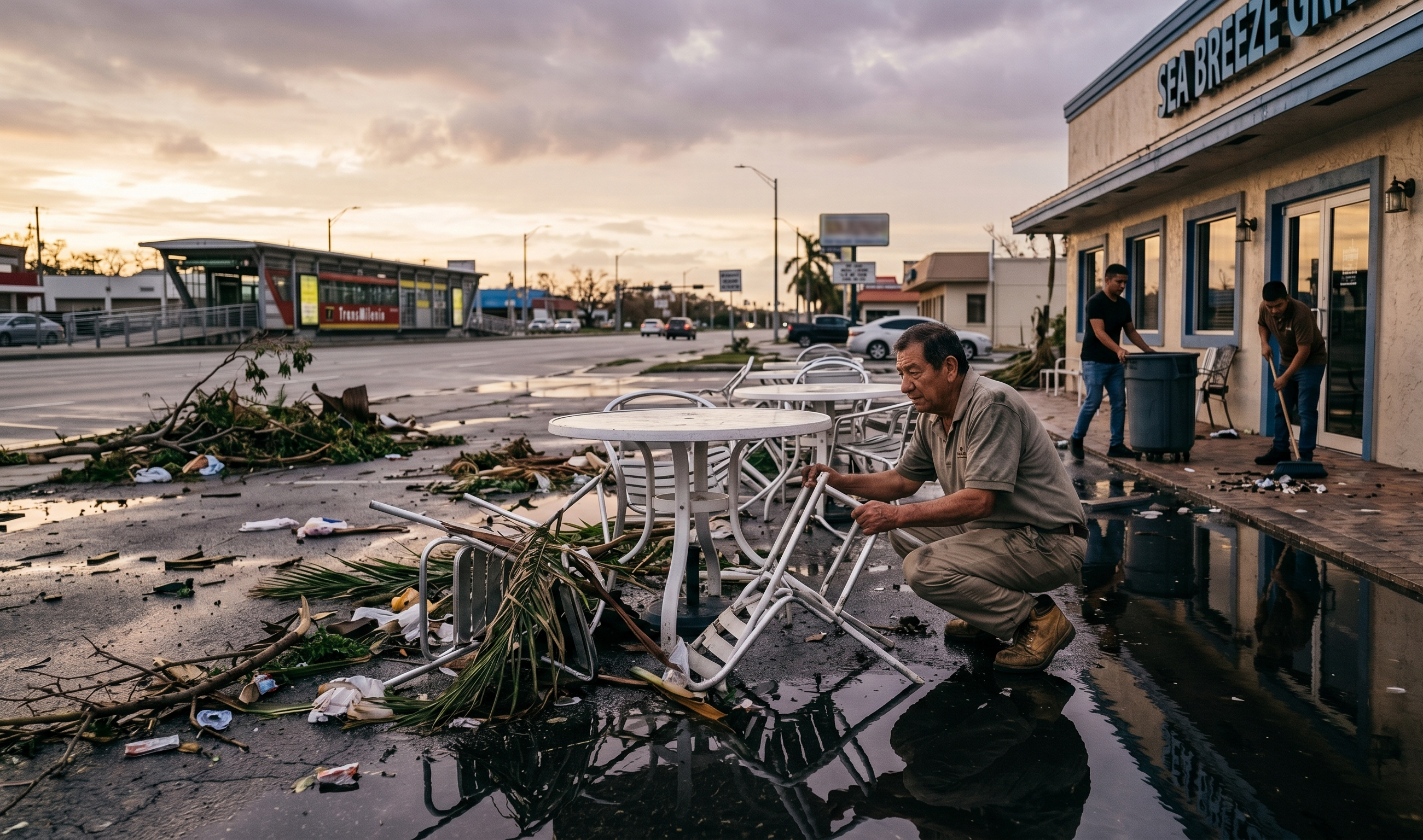
For restaurant owners in Florida, hurricane season is not an abstract calendar event. It is an operating condition. The Florida Division of Emergency Management states that hurricane season runs from June 1 through November 30, and Ready.gov tells businesses to have a continuity plan in place before disaster strikes. Therefore, hurricane preparedness for Florida restaurants is essential. That timing matters because restaurants do not just face wind and rain. They face interrupted service, spoiled inventory, equipment damage, utility loss, staffing problems, cleanup costs, and questions about whether insurance actually matches the way the business will need to recover.
That is why hurricane preparedness for Florida restaurants is also an insurance issue. Operators often treat preparedness as a checklist about flashlights, plywood, and generators. Those steps matter, but they do not answer the harder business question: what happens financially if the restaurant closes for days, loses refrigeration, floods, suffers roof damage, or cannot reopen on schedule? FEMA says businesses should determine what parts of the business must be operational as soon as possible and check insurance policies to ensure they have enough coverage. For restaurants, that is where storm preparation and insurance planning stop being separate conversations.
The restaurant industry itself treats the issue this way. The National Restaurant Association’s hurricane and natural-disaster resources emphasize planning before a storm, protecting food safety, securing facilities, and accelerating recovery. Those recommendations are operational on the surface, but they point to the same underlying business reality: restaurants are vulnerable not only to physical damage, but also to interruption and mismatch between actual losses and available coverage.
Why Hurricane Preparedness for Florida Restaurants Is Also an Insurance Question
A hurricane does not need to destroy a restaurant to create a serious financial problem. In practice, many losses come from cascading disruptions: power failure, refrigeration loss, roof leaks, floodwater, damaged signage, spoiled food, delayed deliveries, cancelled reservations, employee displacement, and extended cleanup. Ready Business materials from Ready.gov stress continuity planning, backup power questions, communications planning, and the need to identify what operations must resume first. FEMA similarly frames preparedness as a continuity issue, not just a survival issue.
That framing matters because hurricane preparedness for Florida restaurants is often misunderstood as a facilities problem only. It is not. It is also about cash flow, reopening speed, payroll pressure, and whether the business can absorb a bad two weeks or a bad month. Restaurants usually operate with perishable inventory, high utility dependence, thin margins, and daily labor coordination. That means even a moderate disruption can become a financial shock if the business is not structured to recover quickly. The SBA says every business has unique vulnerabilities and notes that disaster readiness helps businesses return to operations faster.
This is where insurance enters the picture directly. A restaurant preparing for storm season should not ask only, “How do we protect the building?” It should also ask, “If we cannot operate normally, what losses are we actually exposed to, and which of those losses are insured?” That is the real bridge between emergency planning and coverage review.</p>
Florida Restaurants Face a Predictable Storm Season, Not a Surprise Event
Florida businesses do not need to guess whether hurricane exposure belongs in annual planning. The Florida Division of Emergency Management states clearly that the season runs from June 1 through November 30, and state preparedness materials repeatedly emphasize early planning rather than waiting until a storm is approaching. Ready.gov gives the same message to businesses: continuity plans should be built before a hurricane is imminent.
This matters for restaurants because lead time affects what can still be fixed. Insurance reviews, roof checks, generator testing, inventory planning, employee communication systems, and records backup are all easier before watches and warnings begin. The National Restaurant Association’s “Always Ready: Natural Disasters” guidance is built around the same logic, offering restaurant-specific recommendations for what to do in advance, during, and after storms.
So the central business lesson is not dramatic. It is practical. Hurricanes are a recurring operational reality in Florida, and hurricane preparedness for Florida restaurants should be treated as part of ordinary risk management, not as an occasional emergency scramble. That is one reason broader risk management review is useful before storm season, especially for restaurants trying to align operations, property exposure, staffing, and insurance decisions.
Property Damage Is Only the First Layer of Loss
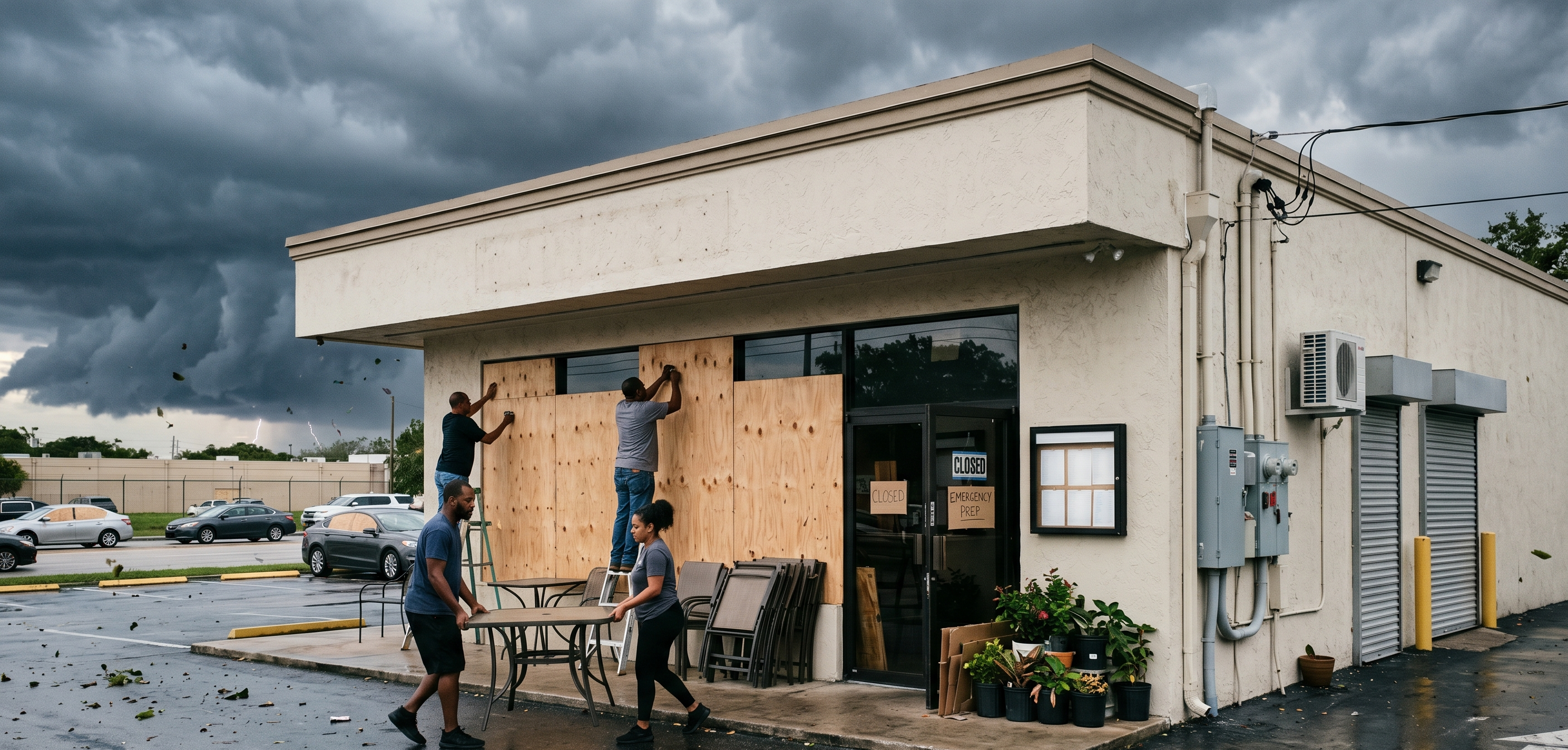
When restaurant owners picture hurricane damage, they often imagine the building first: roof damage, broken windows, exterior signage, water intrusion, or damaged HVAC systems. Those exposures are real. The National Restaurant Association has even published guidance focused specifically on securing rooftop equipment before natural disasters, which shows how important building systems are to restaurant recovery.</p>
But the building is only the first layer. A restaurant can suffer losses through damaged walk-ins, ruined dry storage, compromised electrical systems, broken POS hardware, damaged furniture, and cleanup costs that delay reopening even when the structure remains standing. This is why hurricane preparedness for Florida restaurants cannot stop at “Will the building survive?” The better question is “What parts of the restaurant must function for us to reopen, and how quickly can we restore them?” FEMA’s business preparedness guidance explicitly recommends identifying what parts of the business need to be operational as soon as possible and planning how to resume those operations.
That kind of review often reveals something important: some restaurants are less threatened by catastrophic destruction than by moderate damage to critical systems. A broken refrigeration chain, downed power, water intrusion near electrical equipment, or a damaged hood system can take a restaurant offline long enough to create serious financial pain. Insurance planning should reflect that reality, not only worst-case headlines.
Hurricane Preparedness for Florida Restaurants Means Planning for Business Interruption
One of the biggest mistakes restaurants make is assuming storm preparation is mostly about preventing property damage. But for many operators, the more painful loss is the inability to trade. A restaurant may avoid total destruction and still lose key revenue days, cancel private events, miss tourist traffic, or reopen so slowly that the season’s upside disappears.</p>
Ready.gov’s business continuity materials focus heavily on maintaining or restoring operations, and FEMA’s business guidance likewise emphasizes how to resume the parts of the business that must be operating quickly. That is especially important in restaurants, where closure affects not only sales, but also labor schedules, food inventory, customer trust, and vendor timing.</p>
This is one reason hurricane preparedness for Florida restaurants should include a serious look at business interruption exposure. A storm-related closure can be expensive even when the physical damage looks modest. The restaurant industry’s own disaster resources focus repeatedly on preplanning and faster recovery because downtime compounds losses in a business that depends on daily throughput.</p>
From a practical insurance perspective, owners should be asking not only whether property is covered, but also whether the business has realistically considered the cost of interrupted operations. The broader point is that storms damage revenue streams as well as structures.
Flood Exposure Is Often the Most Misunderstood Part of Restaurant Storm Risk
Flooding is where many business owners discover a painful gap. FEMA states that the National Flood Insurance Program provides flood insurance to property owners, renters, and businesses, and FEMA also explains that most homeowner insurance policies and many business owners policies do not cover flood damage. That distinction is crucial in Florida, where storm surge, heavy rain, and drainage failure can create major loss even when wind damage is limited.</p>
For restaurants, that matters enormously. Floodwater can damage flooring, kitchen equipment, inventory, walls, furniture, storage, and utilities. It can also delay reopening through sanitation, demolition, and inspection issues. A restaurant near the coast, in a flood-prone commercial area, or along vulnerable stormwater routes may have a much different loss profile than it assumes.
This is exactly why hurricane preparedness for Florida restaurants is also an insurance issue. Businesses that think only in terms of “hurricane damage” often fail to separate wind exposure from flood exposure. FEMA’s flood guidance exists precisely because that distinction affects recovery. A restaurant may have some property coverage and still discover that flood-related losses are treated differently.
The practical takeaway is straightforward: restaurants in Florida should not discuss storm season without discussing flood exposure. In many real-world cases, that is where the financial mismatch becomes most severe.
Food Spoilage and Utility Failure Can Shut Down a Restaurant Fast
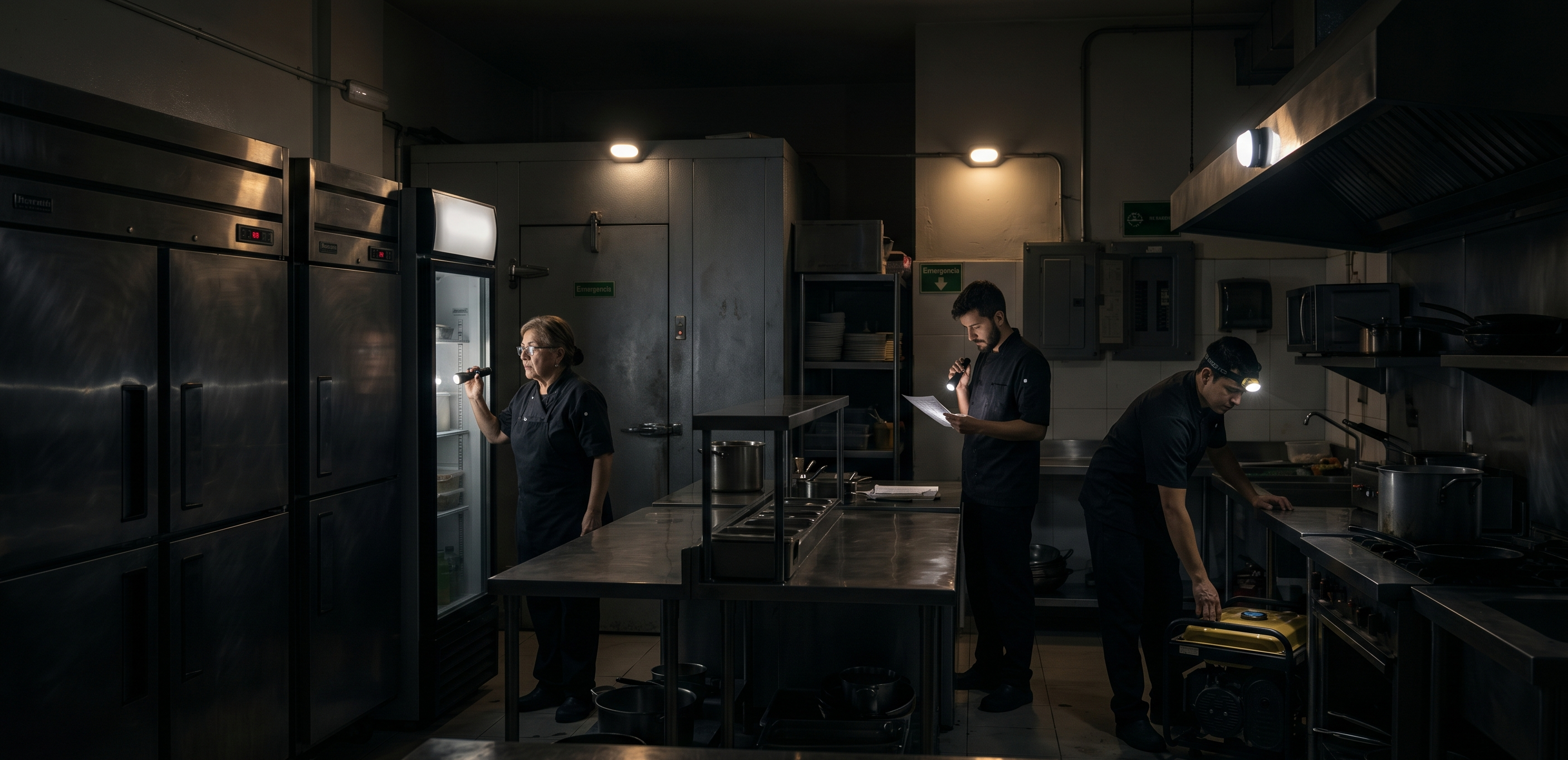
Restaurants depend on refrigeration, power, water, and safe operating conditions in a way many other small businesses do not. A retailer can sometimes continue selling limited inventory in a difficult environment. A restaurant often cannot. Utility disruption can stop the business almost immediately.
The National Restaurant Association has created preparedness resources not only for natural disasters broadly, but also for utility disruptions involving electric, water, or gas service. That guidance reflects how central utilities are to restaurant continuity. Ready Business materials also prompt organizations to ask whether they have backup power and fuel available, which shows how business continuity planning treats utility loss as a core operational problem.</p>
This matters because hurricane preparedness for Florida restaurants should include planning for food spoilage and service interruption caused by outages, not merely structural damage. A restaurant can lose inventory, miss service windows, and face reopening delays because of refrigeration failure or unsafe water conditions even without dramatic visible destruction. The restaurant sector’s disaster-preparation materials repeatedly emphasize food safety protocols, which reinforces how quickly operational viability can change during a storm event.
From an insurance and continuity perspective, a restaurant that depends on perishable product should not think only about “damage to the building.” It should think about what happens when inventory is no longer usable and service cannot continue safely.
Staff, Payroll, and Communication Problems Are Part of Storm Readiness Too
Restaurants also depend on people showing up at the right time, in the right roles, under workable conditions. Hurricanes disrupt that. Employees may evacuate, lose housing stability, face transportation problems, or simply be unable to reach the workplace. A restaurant that is technically able to reopen may still struggle if staffing breaks down.
Ready Business and FEMA continuity guidance both emphasize communications planning and identifying critical functions that must resume first. That is highly relevant to hospitality operations, where management often relies on tight coordination across kitchen, service, cleaning, delivery, and admin functions.
This is another reason hurricane preparedness for Florida restaurants belongs in a broader operations-and-insurance conversation. Storm losses are not always cleanly divided between property and payroll. A disrupted workforce affects service speed, reopening confidence, safety, and revenue. Restaurants that expect to recover well need more than a weather plan. They need a communication plan, a staffing plan, and a financial plan.
That is also why internal coverage review often overlaps with employment-related exposure and recovery readiness. For operators reviewing staffing and injury exposure before storm season, workers’ compensation insurance can be part of a more complete readiness picture.
Rooftop Equipment, Exterior Vulnerability, and Preventive Maintenance
Restaurant facilities often include equipment that becomes unusually important in storms: rooftop HVAC units, exhaust systems, signage, patio furniture, outdoor fixtures, and sometimes detached storage or service areas. The National Restaurant Association has specifically highlighted rooftop equipment as an area where restaurants can reduce storm losses through design and preventive maintenance.
That kind of guidance matters because it shows how hurricane preparedness for Florida restaurants is partly about maintenance discipline before storm season. A restaurant may think of a unit on the roof as a facilities concern, but if that equipment fails or detaches during a storm, it becomes an interruption problem, a repair problem, and potentially a liability problem as well.
Preparedness, then, is not only about emergency supplies. It is also about pre-storm inspection and mitigation. Are drains clear? What about rooftop units? and the patio asset, are they managed? Those questions may sound operational, but they have direct loss implications. A well-maintained asset base can reduce claim severity and shorten downtime, which is exactly what preparedness is meant to do.
Insurance Mismatch Often Appears After the Storm, Not Before
One of the hardest truths for business owners is that insurance mismatch often stays invisible until a claim occurs. Before the storm, the restaurant “has insurance.” After the storm, the owner starts learning what was or was not contemplated, what documentation is needed, how interruption is measured, and where flood or utility-related problems fit into the picture.
FEMA’s business preparedness guidance explicitly tells organizations to check insurance policies to ensure they have enough coverage. That advice is simple, but it is also revealing. Preparedness is not only about sandbags and shutters. It is about knowing what the policy structure actually assumes and whether it aligns with the business’s real exposure.
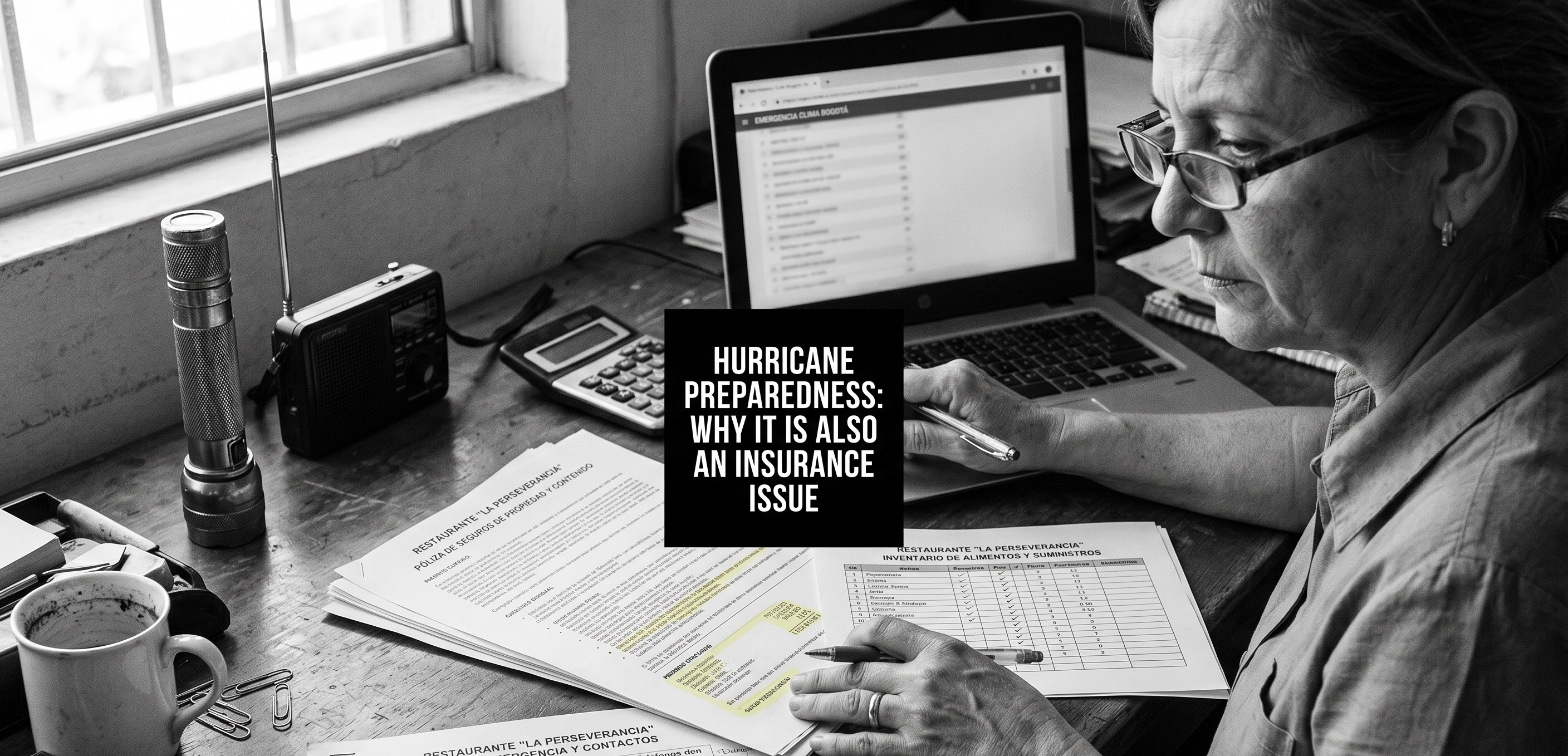
For restaurants, hurricane preparedness for Florida restaurants should therefore include a practical pre-season insurance review. Does the restaurant’s property exposure reflect actual equipment and buildout? Has flood exposure been considered? Has the business thought seriously about interruption and downtime? Are records, inventories, vendor information, and financial documents accessible if the premises are closed? The SBA’s disaster-preparation resources emphasize having records and planning materials ready before a storm because recovery becomes much harder when essential documentation is scattered or inaccessible.
This is also where restaurant and entertainment insurance becomes a useful internal reference point for operators whose hospitality exposures do not fit neatly into a generic small-business mindset.
Recovery Speed Is Often the Real Competitive Difference
After a hurricane, not every restaurant in a market recovers at the same pace. Some reopen quickly because they planned for continuity, protected records, secured equipment, clarified staff communications, and understood their insurance posture. Others lose time not only because of damage, but because they are improvising documentation, cleanup steps, vendor coordination, and financial decisions all at once.
The National Restaurant Association’s disaster resources emphasize recovery speed and structured planning before a disaster. SBA disaster guidance also focuses on recovery planning and resilience rather than treating storms as one-time emergencies.
That is why hurricane preparedness for Florida restaurants should be seen as a reopening strategy as much as a pre-storm strategy. The goal is not simply to withstand the event. It is to reduce the time between disruption and safe, financially viable operations. In restaurant economics, that gap matters. A business that loses an extra week because it planned poorly can feel the difference for months.
This is one reason general liability and broader insurance review should not be treated as separate from continuity planning.
A Practical Checklist Mindset Before Storm Season
The best approach is usually not a dramatic overhaul. It is disciplined review. The Florida season is known. The broad risks are known. The business can decide in advance what it would need to protect, what it would need to reopen.
That means hurricane preparedness for Florida restaurants should include practical questions such as these: What utilities are mission-critical? What inventory is most vulnerable? What systems would prevent reopening if damaged? FEMA, SBA, and the National Restaurant Association all point, in different ways, toward the same conclusion: preparedness is strongest when it is specific to the business and built before the storm is on the radar.
The point is not that restaurants can control the weather. They cannot. The point is that they can reduce uncertainty around recovery, which is often where the real business damage compounds.
A Calm Conclusion on Hurricane Preparedness for Florida Restaurants
Florida restaurant operators already know that storms can disrupt service. The more important lesson is that storm readiness is not only about boarding windows or stocking batteries.
Official Florida and federal guidance makes clear that hurricane season is predictable, that continuity planning should be done before disaster strikes. FEMA also makes clear that flood risk deserves separate attention because many standard policies do not cover flood losses in the way business owners assume.
That is why hurricane preparedness for Florida restaurants is also an insurance issue. Restaurants are unusually exposed to interruption, utility loss, spoilage, staffing disruption, property damage, and delayed reopening. The businesses that tend to recover better are usually the ones that look at those exposures before storm season, not while a named storm is already approaching. For Florida hospitality operators, that is not alarmism. It is sound preparation.
 USA.CIS
 Dubb
Dubb