
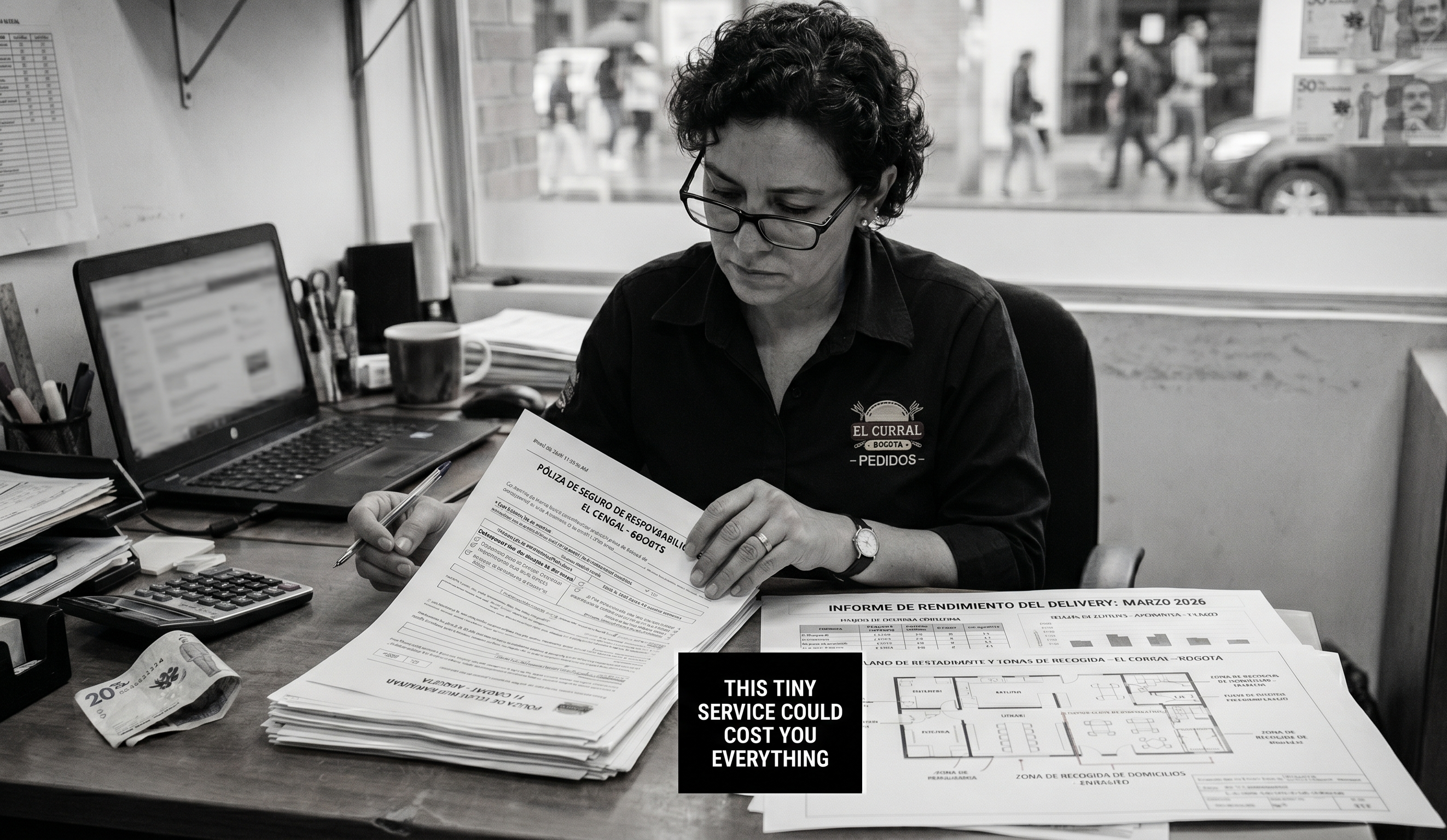
Delivery has become so normal in the restaurant business that many operators barely think of it as a separate risk category anymore. But that normalization can hide a serious problem. The more delivery, curbside pickup, and off-premises fulfillment become part of ordinary operations, the easier it is for a restaurant to underestimate how much exposure has actually expanded.
The National Restaurant Association highlights this shift directly in its research pages, noting that operators looking to grow off-premises business are studying delivery, takeout, and drive-thru much more deliberately, while its broader research also says off-premises capabilities are increasingly important for keeping restaurants aligned with customer expectations.
That is why delivery risk for restaurants deserves more attention than it usually gets. Many owners think of delivery mainly as a sales channel, a convenience feature, or a technology issue. In practice, it is also a liability issue, a worker-safety issue, a traffic-flow issue, and sometimes a vehicle-use issue. OSHA’s restaurant safety materials make this plain: loading and unloading in delivery areas, storage areas, and parking lots can expose workers to slips, trips, falls, lifting injuries, and weather-related hazards.
The central problem is not that delivery is inherently unsafe. The problem is that restaurants often expand delivery activity without fully revisiting what that expansion changes. A dining room operation that once focused mostly on in-house service may now rely on parking-lot handoffs, curbside staging, third-party pickup traffic, employee runners, more frequent loading and unloading, and in some cases business-related vehicle use. That is the point where delivery risk for restaurants stops being a narrow logistics question and becomes an insurance and operations question at the same time.
Why Delivery Risk for Restaurants Is Bigger Than It Looks
One reason delivery risk for restaurants gets overlooked is that the expansion usually feels incremental. A restaurant adds curbside service. Then it increases delivery hours. For that reason pickup traffic becomes routine. Then employees start carrying orders through a parking lot several times an hour. None of these changes look dramatic on their own. But together they can create a very different operating environment.
The National Restaurant Association’s off-premises guidance describes restaurants adapting business models to optimize curbside pickup, drive-thru, and delivery, and it specifically advises operators to designate curbside parking spaces, rethink customer interaction, and structure pickup around practical traffic patterns. Those recommendations are useful precisely because off-premises service changes how customers, workers, and vehicles interact around the restaurant.
OSHA’s delivery and storage guidance reinforces the same point from a safety angle. Workers can injure themselves while loading or unloading supplies in delivery areas, storage areas, or parking lots, and variable weather conditions can make those hazards worse. OSHA also stresses keeping floors clean and dry, keeping aisles and passageways clear, and keeping exits free from obstruction. In other words, the danger is not only “on the road.” It is often right outside the restaurant’s door.
This is why delivery risk for restaurants is often hidden in ordinary movement. A restaurant may not think of a parking lot handoff as a significant exposure. But once staff are crossing drive lanes, carrying food while trying to identify vehicles, working in rain, or maneuvering around crowded pickup zones, the risk profile has already changed. The bigger lesson is that off-premises growth tends to move liability outward from the dining room into transitional spaces that are easier to neglect.
Parking Lots and Pickup Areas Are Real Risk Zones
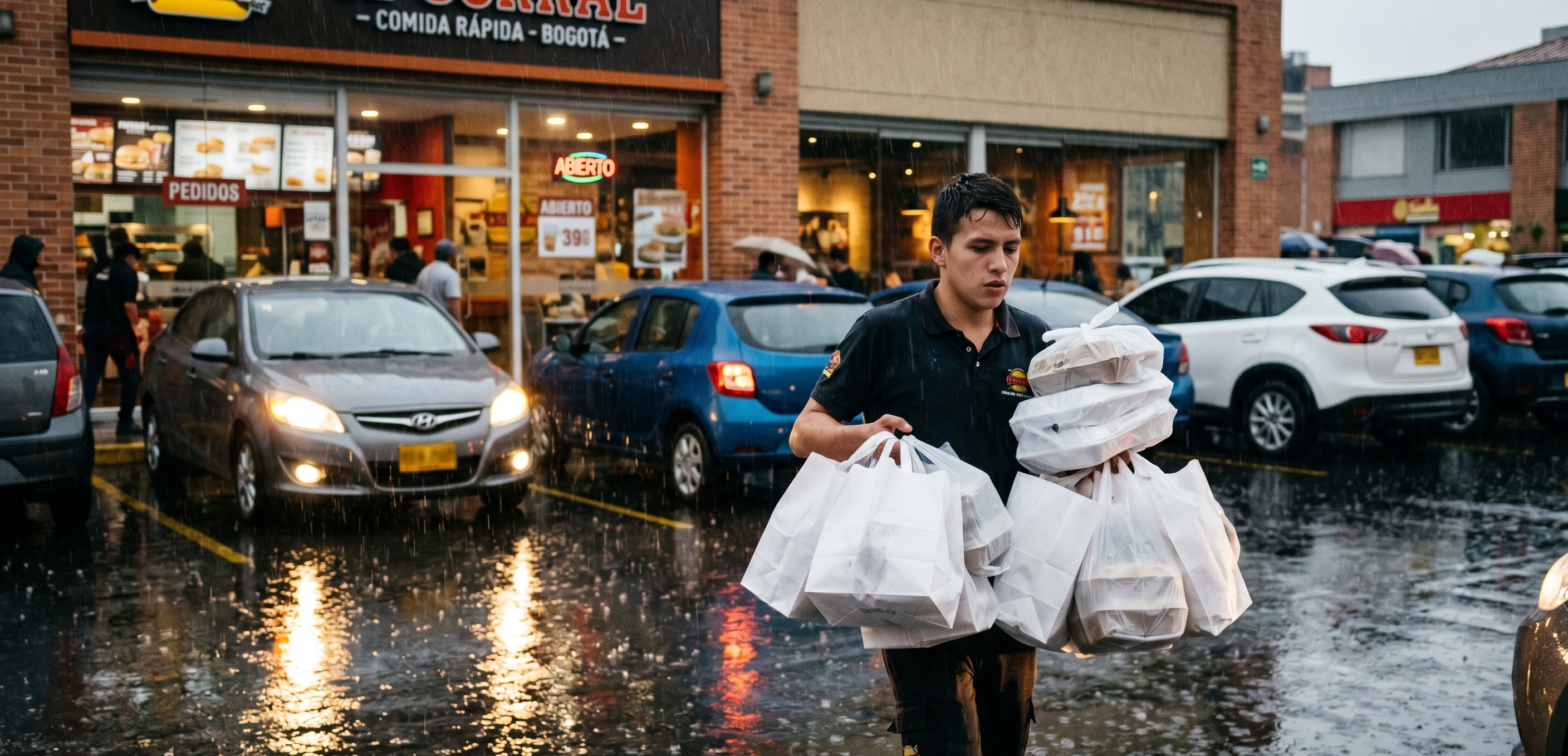
Restaurants often spend far more time thinking about kitchen hazards and dining-room slip-and-falls than about what happens in the parking lot. But a large amount of delivery-related risk lives there. OSHA explicitly points to delivery areas, storage areas, and parking lots as places where workers can be injured by slips, trips, and falls, especially when surfaces are cluttered or weather conditions are poor.
That matters because curbside and pickup models often create confusion by design. Cars stop temporarily. Drivers double-park. Employees walk quickly toward vehicles. Customers may open doors into traffic paths, stand outside cars in active lanes, or gather near entry zones while waiting for orders. Even when nothing dramatic happens, these conditions increase the chance of minor incidents that can turn into claims or injuries.
For that reason, delivery risk for restaurants should include a hard look at pickup design. Are curbside spaces clearly identified? on the other side, are the employees crossing vehicle paths repeatedly? or what about picking up orders being staged in a way that forces staff to move too quickly through congested areas? The National Restaurant Association’s advice to designate spaces and organize curbside operations is not just a customer-experience suggestion. It is also a risk-control suggestion.
This is one area where general liability becomes a practical internal review topic. A restaurant that treats pickup and handoff zones casually may be creating exposure around customer movement, employee movement, and premises conditions all at once.
Delivery Risk for Restaurants Often Starts With Worker Injuries
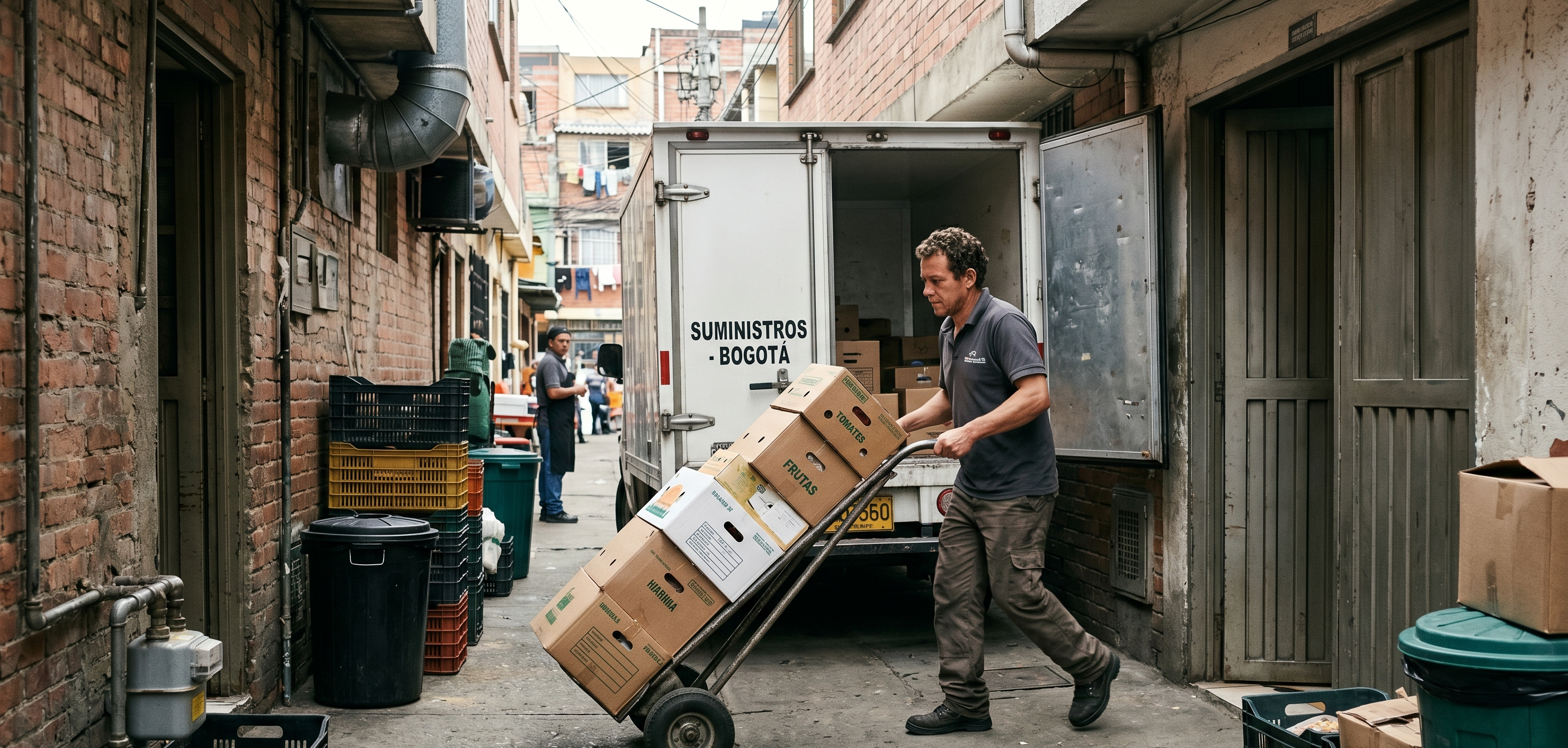
Many owners hear the word “delivery” and think immediately about vehicle accidents. That is understandable, but incomplete. OSHA’s restaurant delivery guidance shows that worker injury can begin much earlier in the chain. Employees can suffer strains and sprains while reaching, lifting, unloading, stacking, or carrying items, especially when heavy loads, awkward posture, and twisting are involved. OSHA recommends stacking heavier items lower, using hand carts when possible, getting help with heavy loads, and avoiding twisting while lifting.
That guidance matters because delivery risk for restaurants is often tied to repetition. One oversized order may not seem important. But repeated runs carrying bags, beverage carriers, ingredient cases, or supply loads can gradually turn into back injuries, slip incidents, and strain-related claims. Restaurants expanding off-premises service may be increasing these physical demands without really naming them as a separate exposure category.
OSHA also notes that workers should carry items only at a height over which they can safely see, keep hallways and walkways clear, and avoid blocking exits with delivery items. Those details sound basic, but they become much more important when the business is moving quickly and staging more orders than usual.
This is why delivery risk for restaurants belongs in the workers’ compensation conversation too. If a restaurant’s off-premises volume has grown, but its staffing design, staging system, and lifting practices have not changed with it, then the business may be absorbing more injury risk than management realizes. That is one reason workers’ compensation insurance should be part of a broader review of off-premises operations.
Weather Makes Delivery Exposure Worse, Not Just Harder
A major reason delivery risk feels unpredictable is that the conditions outside the restaurant are less controlled than the conditions inside it. OSHA specifically says variable weather conditions add to delivery-area hazards and recommends weather-appropriate clothing, non-slip footwear, and awareness of outside conditions when unloading or moving product outdoors.
This is especially important because delivery risk for restaurants often increases on the same days when customer demand also increases. Rain, cold, or poor weather can drive more delivery and curbside orders at exactly the moment when walking surfaces become slicker, visibility worsens, and parking lots become less orderly. The operational burden rises at the same time the physical environment becomes less forgiving.
That combination can create a false sense of urgency. Staff may rush because orders are backing up or because customers are waiting in vehicles. But speed is often what turns ordinary outside conditions into injury conditions. OSHA’s delivery guidance is clear about this: keep traveling paths clear, carry only loads you can safely see over, and use appropriate non-slip footwear and safe lifting practices.
In other words, weather does not just make delivery more inconvenient. It changes the risk environment. For restaurants that depend heavily on off-premises volume, that should influence both operating procedures and insurance review.
Third-Party Delivery Does Not Eliminate Restaurant Exposure
Another common misconception is that if third-party drivers pick up the food, the restaurant has largely removed itself from delivery-related liability. In practice, that is too simple. Even when the vehicle belongs to someone else, the restaurant still controls the pickup environment, the staging process, parts of the handoff, and sometimes the speed expectations imposed on staff.
The National Restaurant Association’s off-premises guidance makes clear that restaurants adapting to curbside pickup and delivery still need to structure the guest interaction, payment methods, and handoff process carefully. The Association advises operators to rethink customer interaction, designate pickup spaces, and build practical systems around the off-premises model.
That is why delivery risk for restaurants cannot be outsourced mentally just because part of the process is outsourced contractually. A third-party driver may create congestion in the lot. Multiple app drivers may cluster near the door. Restaurant staff may still be carrying food out, verifying vehicles, handing off orders, or correcting mistakes under time pressure. If the pickup process becomes chaotic, the restaurant is still part of the risk picture.
The broader point is not that restaurants automatically retain every type of delivery liability. It is that the delivery ecosystem is shared. Premises conditions, employee movement, order staging, and customer interaction remain restaurant responsibilities even when the transport leg is handled by someone else.
Delivery Risk for Restaurants Can Quietly Become Commercial Auto Risk
Some restaurants go beyond third-party platforms and use employees, managers, or business-owned vehicles for runs, supply trips, or order transport. That is the point where delivery risk for restaurants can shift into a much more explicit vehicle-use issue. If vehicles are being used in connection with business operations, the insurance discussion becomes more serious because “normal driving” and “business-use driving” are not always treated the same way.
Even without getting lost in policy language, the operational truth is simple: once restaurant activities rely on vehicles, the risk footprint broadens. The restaurant may now face not only handoff and pickup risk, but also road exposure, loading exposure, and potentially claims connected to drivers acting in the course of business.
This is where commercial auto becomes a very relevant internal link for restaurant operators evaluating off-premises growth. A business that has evolved from dine-in service into regular delivery activity should not assume its transportation exposure stayed the same just because the dining room still exists.
The key lesson is that delivery risk for restaurants is not only about the food leaving the premises. It is about what operational systems now exist because the food leaves the premises. Vehicles are often part of that answer.
Staging Areas Create More Risk Than People Expect
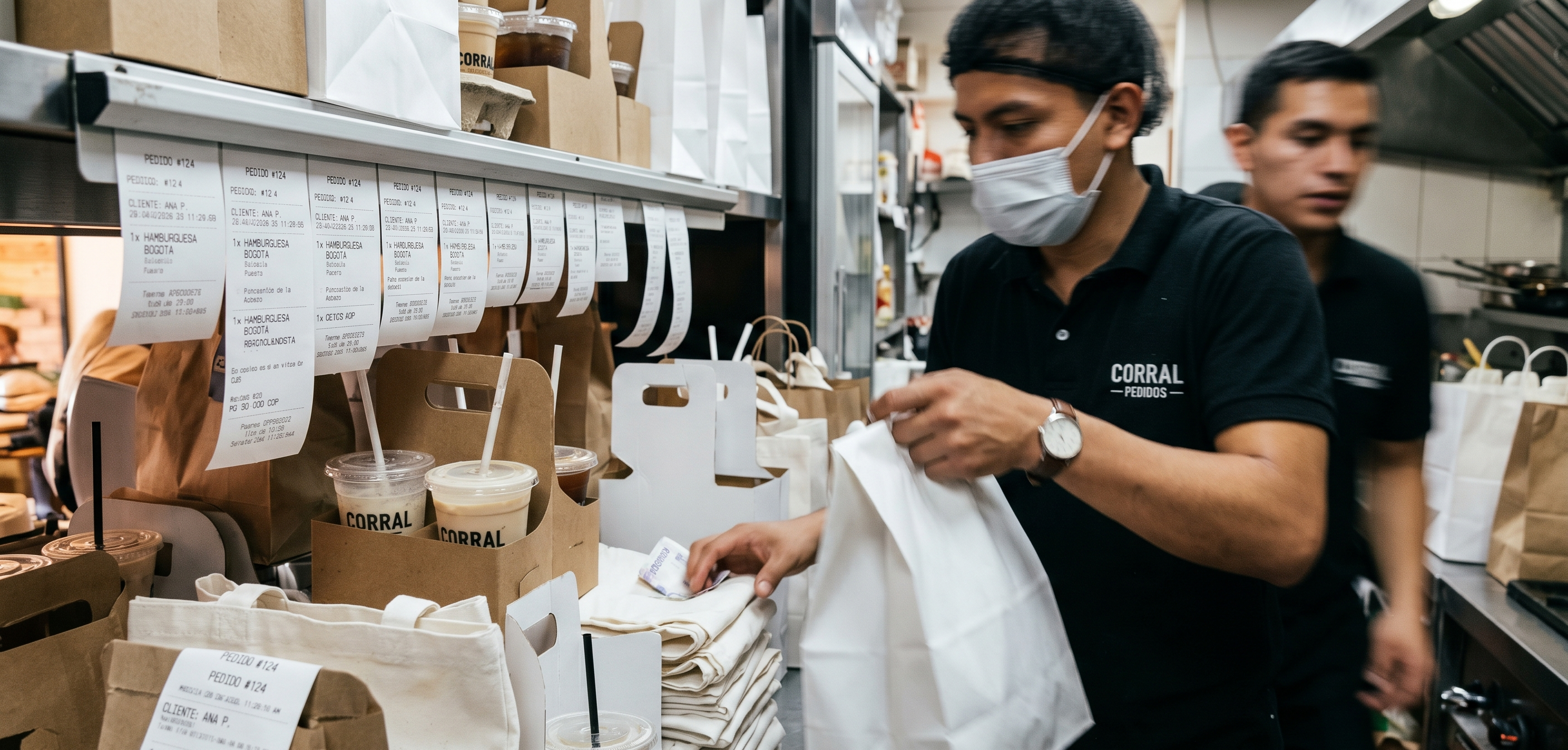
Restaurants tend to think of risk as something that happens at the table, in the kitchen, or on the road. But staging areas deserve much more attention. OSHA’s guidance repeatedly warns about blocked hallways, obstructed passageways, cluttered walkways, and exit access being compromised by delivery items or active movement.
This matters because staging is where many small delivery errors begin. Orders are stacked near doors. Bags are placed in temporary holding spots. Beverage carriers sit on wet floors. Employees weave around piles of supplies or prepared orders. The path from kitchen to handoff becomes more crowded and less visible. None of that looks dramatic, which is why it often escapes deliberate review.
Yet this is exactly how delivery risk for restaurants grows. It grows through accumulation: more orders, more bags, more rush, more crossing traffic, more blocked movement. OSHA’s cleanup guidance adds another layer by stressing immediate spill cleanup, proper warning signs for wet areas, and non-slip matting or footwear in wet processes. Those recommendations are directly relevant to staging zones where drinks, condensation, and frequent movement intersect.
For many restaurants, improving delivery safety is not about inventing a new system. It is about taking the handoff path seriously as an operational zone rather than treating it like leftover space.
Off-Premises Growth Can Outrun Risk Management
The restaurant industry has strong reasons to invest in off-premises capability. The National Restaurant Association’s research pages make clear that off-premises demand is not marginal and that operators continue studying how delivery, takeout, and drive-thru fit into long-term growth.
But growth can outpace structure. A restaurant may add off-premises volume faster than it updates staffing, training, staging layout, parking-lot design, or insurance review. That is where delivery risk for restaurants starts to feel unfair. The business is doing something commercially smart, yet the supporting systems still reflect an older operating model.
This is why broader risk management matters here. Delivery is not just a tech feature or an app partnership. It changes how people move, where handoffs happen, what areas stay congested, and how often staff are exposed to weather, lifting, parking-lot traffic, and repetitive carrying tasks. Once that is understood, the need for an operational review becomes much more obvious.
A restaurant does not need to abandon delivery to manage the risk better. But it does need to recognize that off-premises service is not “free” from a liability standpoint just because customers like it and the sales show up quickly.
A Practical Review of Delivery Risk for Restaurants
A sensible review starts with simple questions. Are employees going into the parking lot frequently? Are the workers carrying loads they cannot safely see over? What about wet floors, bad weather, or repeated outside trips increasing slip risk? OSHA’s restaurant safety guidance provides concrete answers on all of these points, including keeping surfaces clean and dry, clearing aisles and passageways, cleaning spills immediately, using non-slip footwear, and using safer lifting and transport methods.
That is why delivery risk for restaurants should be treated as a management review issue, not just a frontline hustle issue. The restaurant should not wait for a worker injury, a parking-lot incident, or an insurance question after a claim to realize that the off-premises model had grown more complex than expected.
This is also where restaurant and entertainment insurance can serve as a useful internal reference point for hospitality operators whose actual exposures now include more pickup, handoff, crowding, and delivery-related activity than their original business model did.
A Calm Conclusion on Delivery Risk for Restaurants
Delivery can absolutely be good business. It meets customer demand, expands reach, and gives restaurants more ways to generate revenue beyond the dining room. The National Restaurant Association’s own research and guidance reflect that off-premises capability is now a major part of restaurant strategy, not a temporary side channel.
But that is exactly why delivery risk for restaurants should be taken seriously. OSHA’s restaurant delivery guidance shows that loading areas, parking lots, carrying paths, weather exposure, lifting, clutter, blocked passageways, and wet surfaces all create real worker-safety hazards. Those same operating realities can also shape liability and insurance exposure for the business as a whole.
The practical takeaway is not that restaurants should fear delivery. It is that they should stop treating delivery like a frictionless add-on. Once off-premises operations become a real part of the business, they deserve real review. For many operators, that is the difference between delivery being merely popular and delivery being genuinely sustainable.
 USA.CIS
 Dubb
Dubb