

Bars and restaurants often treat alcohol service as a normal part of hospitality. In one sense, that is true. Selling alcohol is routine for many operators. But routine does not mean low risk. That is why alcohol service training matters far more than many owners and managers assume. A busy bar, sports venue, casual restaurant, or entertainment-focused concept can move from normal service to serious exposure quickly when alcohol control breaks down. The National Restaurant Association points operators to ServSafe Alcohol and other training resources because responsible service, manager oversight, and staff consistency all affect risk.
The practical problem is simple. Alcohol changes guest behavior, staff judgment, and service conditions at the same time. A room that seems manageable at 6 p.m. can feel very different two hours later when guests have stayed longer, ordered more, and become harder to read. That shift creates exposure not only for guest safety, but also for operations, reputation, and liability. The core issue is not whether a business serves alcohol. The issue is whether the business controls alcohol service with enough discipline to reduce predictable mistakes. That is where alcohol service training matters as a business issue rather than a box-checking exercise.
Many operators think of training mainly as a compliance step. That view is too narrow. Training shapes how staff check identification, pace service, spot warning signs, communicate concerns, and refuse service when needed. Without those habits, a business relies too heavily on improvisation. In hospitality, improvisation often works until the wrong night, the wrong customer, or the wrong incident changes the outcome. That is one reason broader risk management should include alcohol-service discipline when a business depends on bar sales or high-energy guest traffic.
Why Alcohol Service Training Matters in Ordinary Restaurants Too
Some owners assume alcohol exposure is mainly a nightclub problem. That is a mistake. The National Institute on Alcohol Abuse and Alcoholism says alcohol impairs judgment, coordination, and reaction time, and it can contribute to risky behavior and injury. Those effects do not appear only in extreme nightlife settings. They can appear in casual dining, family restaurants with bar programs, sports bars, hotel venues, event spaces, and neighborhood concepts that treat alcohol as a secondary revenue line.
That is why alcohol service training matters even in businesses that do not think of themselves as alcohol-driven. Risk does not depend only on brand identity. It depends on what actually happens in service. A restaurant may have a moderate bar program and still face overservice issues during weekends, private events, game nights, or holiday traffic. Once alcohol is part of the operation, staff judgment becomes part of the risk structure. Training helps turn that judgment into a repeatable standard instead of a guess made under pressure.
This matters because guest interactions can change quickly. A server may notice only mild intoxication at first. A bartender may assume another employee is monitoring the same guest. A manager may be tied up elsewhere. When those small gaps line up, the business becomes more exposed than it realizes. Training does not remove all uncertainty, but it reduces the number of situations handled without a shared method. That alone explains why alcohol service training matters in ordinary service environments, not only extreme ones.
Responsible Service Reduces Preventable Mistakes
The National Restaurant Association’s alcohol-service guidance recommends practical controls such as serving one drink at a time, discouraging rapid drinking, pacing service, and making sure staff understand the signs that a guest should no longer be served. These are not abstract principles. They are operating controls. They exist because alcohol-related incidents often grow out of small, preventable service decisions rather than dramatic misconduct from the start.
That is one of the clearest reasons alcohol service training matters. It gives staff a structure for slowing down bad patterns before they escalate. A server who knows how to pace drinks is less likely to intensify a problem. A bartender who understands what to look for is more likely to intervene early. A manager who backs those decisions creates consistency on the floor. Without training, the business depends too much on personality and chance. With training, it has a stronger basis for intervention.
The difference may seem small in the moment. But in hospitality, small service decisions compound. A guest gets one extra round. A table stays longer. Staff miss the shift in behavior. Someone leaves in worse condition than the team realized. The legal and reputational consequences may come later, but the operational cause often starts earlier. Responsible service is therefore not mainly about slogans. It is about reducing preventable mistakes while the business still has control of the situation.

Alcohol Service Training Matters Because Staff Turnover Is Real
Restaurants and bars often work with high turnover, varied experience levels, and uneven shift pressure. That alone makes training more important. A business cannot assume that every new hire brings strong alcohol-service judgment from a previous job. Even experienced staff may carry habits from environments with weaker standards. A formal service approach helps reduce that inconsistency. The National Restaurant Association keeps alcohol-service training in its resource ecosystem for exactly this reason: hospitality businesses need repeatable methods that survive staffing changes.
This staffing reality is another reason alcohol service training matters. In theory, owners may believe common sense is enough. In practice, common sense varies widely between employees, and service pressure narrows judgment. Training gives management a baseline. It lets businesses say, in effect, this is how we check ID, this is how we pace drinks, this is when we escalate concerns, and this is when we refuse service. That shared baseline becomes especially useful when a team includes younger workers, newer staff, seasonal hires, or employees crossing between restaurant and bar roles.
The real value is not only legal defensibility. It is operational coherence. A trained team communicates better, backs each other up more easily, and makes fewer avoidable errors under pressure. That does not guarantee perfect outcomes. But it makes the business less dependent on luck, and that is a serious advantage in any hospitality setting where alcohol is part of revenue.
ID Checks and Age Verification Deserve More Discipline
Age verification is one of the most basic parts of alcohol service, but it is also one of the easiest areas for businesses to treat casually when the room is busy. The Florida Division of Alcoholic Beverages and Tobacco makes clear that alcohol sales to underage persons are prohibited under state law, and its industry materials describe enforcement and regulatory oversight tied to licensed businesses.
That is another reason alcohol service training matters. Checking identification is not just about glancing at a card. It is about building a staff culture that treats verification as non-negotiable even when lines grow, customers get impatient, or managers want to speed service. Training helps employees understand both the legal importance and the practical method. It also reduces the risk that one employee checks carefully while another becomes lax when volume rises.
Florida’s ABT compliance materials reinforce the point that licensed businesses operate inside a regulatory environment, not outside one. For restaurant and bar operators, that means alcohol service cannot be treated as a casual sales add-on. It carries legal duties. Strong training does not just protect against one bad transaction. It helps create a service culture where age verification remains disciplined under real hospitality conditions.
Alcohol Service Training Matters More During Busy Events
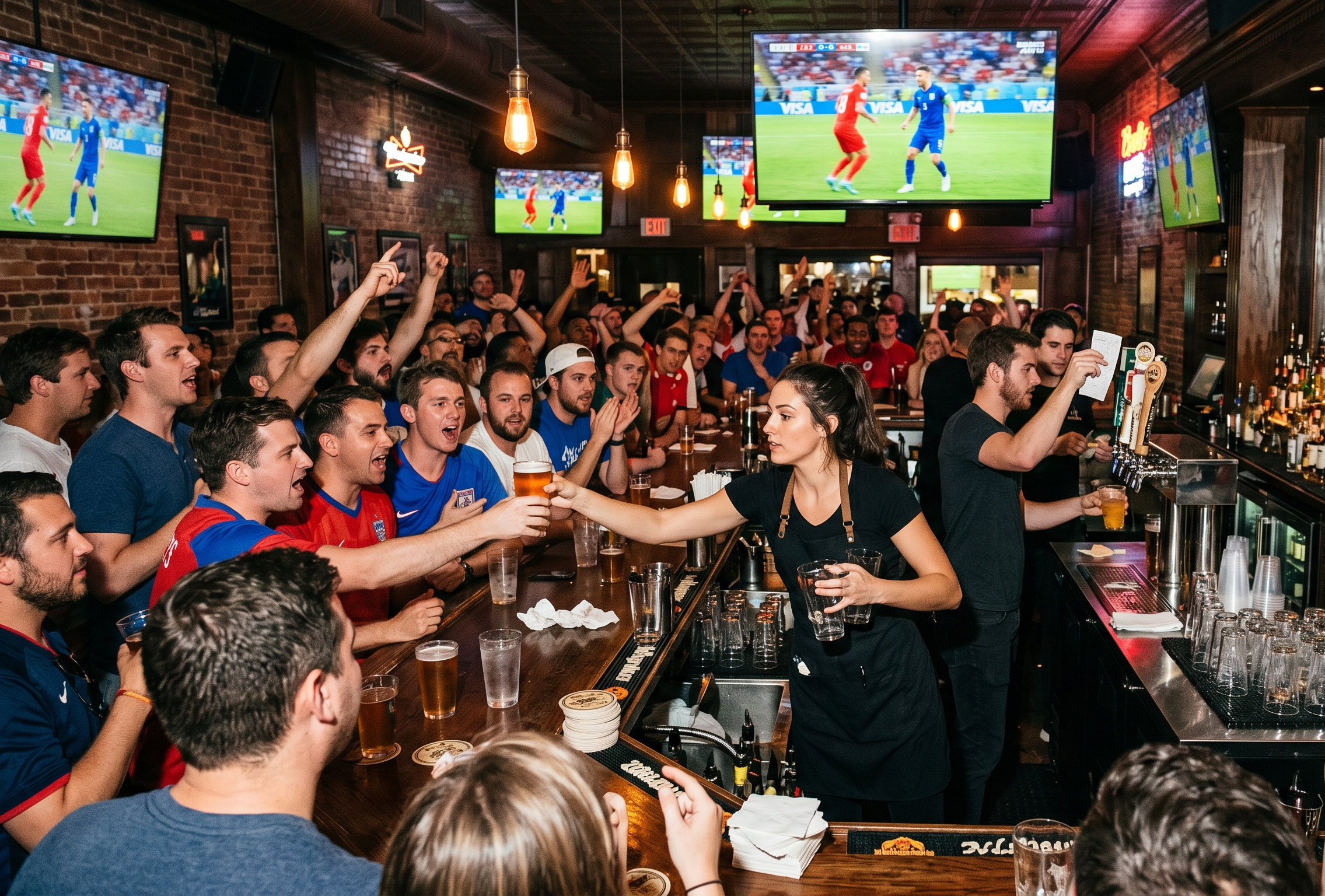
Big game days, holiday periods, private parties, concerts, and community events all increase alcohol-service pressure. Guest volume rises. Table turns accelerate. Emotions run higher. Dwell time stretches. In those settings, even well-run venues can drift away from disciplined service if training is weak or management presence is thin. The National Restaurant Association’s alcohol-service guidance becomes more relevant in those periods because pacing, one-drink-at-a-time service, and visible oversight matter more when guests are excited and the room is loud.
That event pressure is another reason alcohol service training matters. Staff need to recognize that a busy, festive atmosphere can hide risk. A guest who seems merely enthusiastic may actually be crossing the line into impairment. A table celebrating may encourage faster rounds. A packed sports bar may make it harder to observe how much one person has consumed. Training gives the team a framework for noticing those shifts and acting before they create larger problems.
This is also where alcohol-service discipline intersects naturally with restaurant and entertainment insurance. Entertainment-heavy venues, sports bars, and high-traffic hospitality concepts should not assume that event revenue and event risk are separate matters. They often rise together. The better the training and floor control, the more likely the venue can handle demand without letting service discipline collapse.
Overservice Creates More Than One Kind of Exposure
When people discuss alcohol liability, they often imagine one severe outcome. But overservice can create several layers of exposure. A guest may become disruptive inside the venue. Another may fall, collide with someone, or trigger a conflict. Someone may leave the premises in an impaired state. Staff may struggle to manage the situation once it has already escalated. The NIAAA’s guidance on alcohol’s effects helps explain why these outcomes are plausible: impaired judgment and slowed reaction time do not stay neatly contained.
That broader pattern helps explain why alcohol service training matters. Training is not only about avoiding one catastrophic case. It is also about reducing the smaller judgment failures that let a manageable situation become an unmanageable one. In restaurants and bars, incidents usually emerge through sequences, not single moments. A guest is served too quickly. Staff miss the warning signs. Another round goes out. Tension rises. The business now faces a harder problem than it had fifteen minutes earlier.
From an operational standpoint, venues need staff who can recognize those sequences early. They also need managers who support refusal decisions instead of undercutting them for short-term sales. That support is part of training culture. Without it, even trained employees may hesitate to intervene when a guest becomes a problem.
Training Helps Managers Back the Right Decisions
A common weakness in alcohol service is not lack of awareness, but lack of support. A bartender may know a guest should not be served again. A server may spot a fake ID or suspicious behavior. But if management does not reinforce those judgments, staff often back down. That weakens the whole system. The National Restaurant Association’s alcohol resources emphasize both training and management oversight because responsible service works best when the floor team and leadership operate from the same standard.
This is another reason alcohol service training matters. It is not enough for one employee to know the rules. The business needs a culture where intervention is normal, escalation is clear, and refusal decisions are supported. That includes manager availability, documentation habits, and the ability to coordinate when one employee sees a problem that others missed. Training makes those decisions easier because it reduces ambiguity. People hesitate less when they know the standard and believe management will back them.
That kind of support also affects morale. Staff are less likely to feel exposed or abandoned when management treats responsible service as a real operational priority. For the business, that matters because confident staff usually perform better than staff who know the risk but feel forced to ignore it.
Alcohol Service Training Matters Because Liability Can Reach Beyond the Table
Alcohol-related problems do not always end when the guest pays the check. That is where owners sometimes underestimate the issue. If a venue serves someone inappropriately, the consequences may extend beyond the immediate service interaction. Depending on the facts and the jurisdiction, the business may face legal scrutiny, insurance questions, reputational fallout, or claims linked to injuries and property damage. Florida’s regulatory environment and hospitality licensing structure make clear that alcohol service exists inside a real legal framework, not a casual one.
That exposure is exactly why alcohol service training matters at the business level. Training is not a magic shield, but it can reduce the likelihood of poor service decisions and show that the venue takes responsible service seriously. It also improves the business’s ability to create internal consistency. When a claim or investigation arises, consistency matters. A business with clear training, manager oversight, and documented expectations stands on firmer ground than one that relied on assumptions and improvisation.
This is also where general liability enters the wider insurance picture. Alcohol service does not exist in a vacuum. It interacts with guest safety, premises conditions, staff conduct, and the venue’s broader exposure profile. Treating alcohol-service training as separate from liability planning misses the point.
Better Training Improves Guest Experience Too
There is another side to this issue that often gets ignored. Good alcohol-service training can improve guest experience, not just reduce risk. A well-trained staff tends to pace service more intelligently, communicate more clearly, and manage tense moments earlier. That usually creates a more stable environment for everyone else in the room. Guests may never notice the intervention itself, but they notice when a venue feels orderly, safe, and professionally run.
That helps explain again why alcohol service training matters. The goal is not to create a punitive or mechanical atmosphere. The goal is to support hospitality without letting hospitality slide into poor judgment. Strong venues know how to be welcoming and controlled at the same time. Training helps staff hold that balance when the room gets busy, when customers push boundaries, or when sales pressure tempts shortcuts.
For many operators, that is the most practical way to see the issue. Responsible service is not anti-hospitality. It is part of professional hospitality. It protects the business, protects staff, and often protects the guest from the consequences of one more bad decision.

A Practical Review of Why Alcohol Service Training Matters
A useful review starts with plain questions. Do staff know how to check ID consistently? Do they understand pacing and one-drink-at-a-time service? Do they know how to spot signs of impairment? Do managers back refusal decisions? Does the business refresh training or assume prior experience is enough? Does the venue become less disciplined during events or peak nights? These questions matter because service failure usually begins with ordinary inconsistency, not spectacular misconduct.
That is why alcohol service training matters in practical terms. It gives the business a repeatable system for one of the most judgment-heavy parts of hospitality operations. It also helps connect staff behavior to a broader protection strategy. For bars, restaurants, and entertainment venues, this is not only a training topic. It is part of operations, compliance, and insurance review. That is where restaurant and entertainment insurance and broader alcohol-related exposure start to overlap in a meaningful way.
The key is not complexity. It is consistency. A venue with clear standards, repeat training, and active management will usually be in a stronger position than one that assumes good judgment will emerge automatically on a busy night.
A Calm Conclusion on Why Alcohol Service Training Matters
Alcohol sales can help restaurants and bars grow revenue, build atmosphere, and strengthen guest loyalty. But alcohol also changes behavior, service pressure, and legal exposure. That is why alcohol service training matters. National industry guidance points to pacing, responsible service, manager oversight, and formal training for a reason. These controls reduce preventable errors in an area where small mistakes can become larger problems.
The core business lesson is simple. Venues that serve alcohol should not rely on instinct alone. They need staff habits, manager support, and service discipline that hold up when the room is crowded and emotions are high. Training will not solve every problem. But it does make the business less dependent on luck, and that alone makes it worth taking seriously.

 Dubb
Dubb

 USA.CIS