
Wright Architects, a respected design firm based in Kingston, New York, has long recognized what much of the broader residential construction industry is only beginning to understand: that passive house design is not a passing trend or a niche specialty reserved for academic demonstration projects, but a mature, replicable, and increasingly economically compelling approach to high-performance residential architecture. As the Northeast United States grapples with rising energy costs, intensifying climate pressures, and a client base that is more informed than ever about building science, the passive house standard is moving steadily from the periphery of residential design practice toward its center.
This piece examines the origins, principles, and practical applications of passive house design in the context of custom residential architecture, with particular attention to the Hudson Valley region and the institutional expertise that firms like Wright Architects have cultivated in response to growing market demand.
The Origins and Evolution of the Passive House Standard
The passive house concept, known in German as Passivhaus, emerged from research conducted in the late 1980s and early 1990s by German physicist Wolfgang Feist and Swedish professor Bo Adamson. Their foundational insight was straightforward but radical in its implications: by designing a building’s envelope with sufficient insulation, airtightness, and solar orientation, it was possible to dramatically reduce, and in some climates nearly eliminate, the need for conventional active heating and cooling systems.
The first certified passive house was built in Darmstadt, Germany in 1991. Over the following three decades, the standard spread across Europe, eventually taking root in North America through the establishment of the Passive House Institute US, known as PHIUS, which adapted the European standard for the significantly greater climate diversity of the North American continent.
The PHIUS+ standard, which governs passive house certification in the United States, establishes performance targets based on specific climate zones rather than applying a single global threshold. This is a critical distinction: a home in coastal Maine faces radically different heating and cooling challenges than one in southern New Jersey, and the PHIUS framework accounts for this variability through climate-specific energy demand limits and source energy budgets.
Wright Architects holds PHIUS credentials within its team, including the PHIUS Certified Passive House Consultant designation and Certified Passive House Tradesperson certification, placing the firm among a select group of residential design practices in the Hudson Valley with the technical training to design, document, and deliver homes to this exacting standard. These are not honorary designations. They require rigorous coursework in building physics, thermal dynamics, mechanical ventilation, and energy modeling, followed by examination and continuing education requirements that keep certified practitioners current with evolving standards and technologies.
The Five Pillars of Passive House Design
Understanding why passive house has gained such traction in the custom residential market requires a clear grasp of its foundational principles. The standard is built on five core design strategies, each of which contributes to the dramatic reduction in energy demand that defines a certified passive house.
Continuous Insulation
Passive house buildings require insulation levels that substantially exceed those mandated by code-minimum construction. In the Hudson Valley’s climate zone, spanning IECC Climate Zones 5 and 6, this typically means wall assemblies with effective R-values in the range of R-30 to R-40 or higher, roof assemblies approaching R-60 or beyond, and foundation insulation strategies that address the significant heat loss pathways through grade-level and below-grade construction.
The emphasis is on continuous insulation, insulation that wraps the building envelope without interruption rather than relying solely on cavity insulation between structural framing members. This distinction matters because wood framing, which constitutes the thermal bridging pathway in most conventional residential construction, conducts heat at roughly twice the rate of the insulation it penetrates. An assembly that appears well-insulated on paper but is riddled with thermal bridges performs significantly worse than its nominal R-value suggests.
Thermal Bridge-Free Construction
Related to but distinct from the insulation requirement is the passive house emphasis on eliminating or minimizing thermal bridges, locations where highly conductive materials create a direct heat-transfer pathway through an otherwise well-insulated assembly. Common thermal bridge locations in residential construction include window and door lintels, balcony connections, structural penetrations through the building envelope, and foundation wall-to-floor slab interfaces.
For Wright Architects, addressing thermal bridges is a fundamental design discipline rather than a value engineering consideration to be addressed late in the documentation process. The firm incorporates thermal bridge analysis into the early design development phase, selecting structural and connection strategies that minimize heat loss while maintaining structural integrity and constructibility.
High-Performance Windows and Doors
Windows are, thermodynamically speaking, the weakest component of most building envelopes. Even an excellent double-pane window has an effective center-of-glass R-value of approximately R-4, a fraction of the surrounding wall assembly’s performance. In cold climates, poorly performing windows create cold-glass radiant asymmetry that makes rooms near glazing uncomfortable even when the air temperature is nominally adequate.
Passive house standards require triple-pane glazing with low-emissivity coatings and insulated frames, assemblies that achieve center-of-glass R-values in the range of R-7 to R-10, and that dramatically reduce the surface temperature differential between glass and wall that drives discomfort and condensation in conventional construction. The energy-efficient house plans produced by Wright Architects specify glazing systems calibrated to both the thermal performance requirements of the passive house standard and the solar heat gain characteristics of each window’s orientation, maximizing winter solar gains on south-facing elevations while minimizing summer overheating through shading and reduced solar heat gain coefficients on east and west exposures.
Airtight Construction
Perhaps the most technically demanding aspect of passive house design, and the one that most distinguishes it from conventional construction practice, is the requirement for a continuous, verified air barrier with measured airtightness at or below 0.6 air changes per hour at 50 Pascals of pressure (ACH50). This is roughly five to ten times more airtight than a well-built conventional home and twenty or more times tighter than typical code-minimum construction.
Achieving this level of airtightness requires a level of coordination between design and construction teams that is uncommon in standard residential practice. The air barrier, whether it is a membrane, a structural panel, carefully taped sheathing, or another system, must be explicitly detailed at every penetration, transition, and connection point in the building envelope. Electrical boxes, plumbing penetrations, window and door rough openings, roof-to-wall transitions, and foundation connections all represent potential air leakage pathways that must be addressed through deliberate design and careful workmanship.
Wright Architects’ experience in both Design-Build and Design-Bid-Build frameworks is particularly valuable in this context. In a Design-Build setting, the firm can work directly with construction crews to develop airtightness strategies that are both technically effective and practically achievable given the capabilities of the available workforce. In a Design-Bid-Build setting, the firm produces construction documents with the level of airtightness detailing specificity that gives contractors a realistic understanding of what the work entails, reducing the risk of bid-phase surprises and field-level shortcuts that compromise performance.
Mechanical Ventilation with Heat Recovery
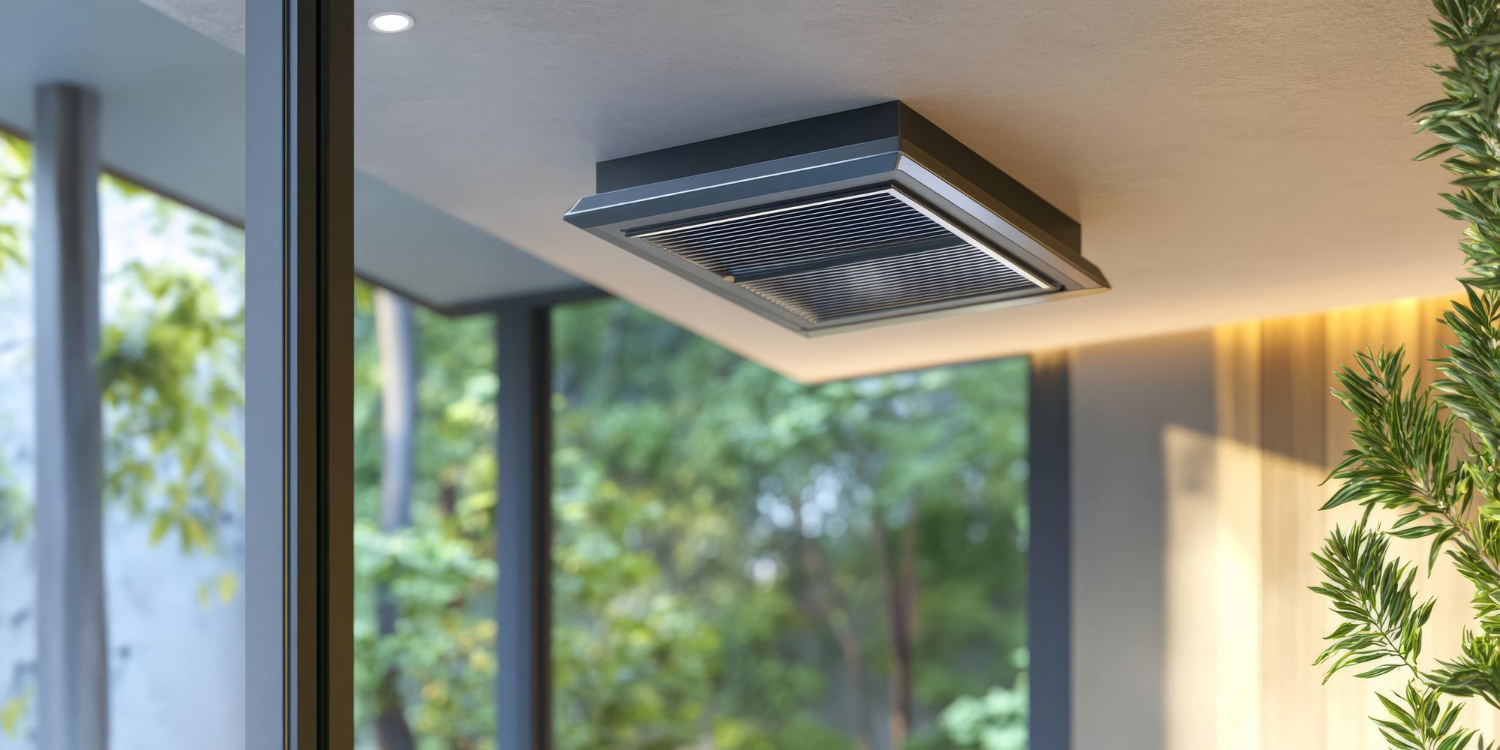
Counterintuitively, one of the most important components of a passive house is its mechanical ventilation system. Because passive house envelopes are so airtight, they cannot rely on the incidental infiltration that provides fresh air in conventional construction. Instead, they require a dedicated whole-house ventilation system, typically an Energy Recovery Ventilator (ERV) or Heat Recovery Ventilator (HRV), that continuously supplies fresh outdoor air to living spaces while exhausting stale air from kitchens and bathrooms.
The heat recovery function of these systems is what completes the energy equation. Rather than simply venting conditioned air to the outdoors and replacing it with unconditioned outdoor air, a process that accounts for a significant fraction of heating and cooling energy in conventional homes, the ERV or HRV captures 80 to 90 percent of the energy in the outgoing airstream and transfers it to the incoming fresh air. The result is a home with consistently excellent indoor air quality, without the energy penalty normally associated with dilution ventilation.
Why the Northeast Is Uniquely Suited to Passive House Design
The climatic conditions of the Northeast United States, cold winters with extended heating seasons, humid summers with moderate cooling loads, significant shoulder-season variability, create precisely the conditions under which passive house design delivers its greatest performance advantages.
In heating-dominated climates, the value of a superinsulated, airtight envelope is self-evident: less heat escapes, so less energy is required to maintain interior comfort. But the advantages extend beyond simple heating energy reduction. The thermal mass and insulation of a passive house envelope act as a buffer against exterior temperature fluctuations, producing interior conditions that are remarkably stable and comfortable across a wide range of outdoor temperatures. Rooms that might swing by ten or fifteen degrees in a conventional home over the course of a winter day maintain interior temperatures within two or three degrees of the setpoint in a passive house, without any mechanical intervention.
For clients commissioning Hudson Valley residential architecture, this stability translates directly into experiential quality: a home that feels uniformly comfortable in every room, at every time of day, throughout every season. This is a quality that is difficult to appreciate from a specification sheet but unmistakable to anyone who has lived in a well-designed passive house.
The Hudson Valley’s climate also presents challenges that passive house design addresses effectively, notably the risk of moisture-related damage to building envelopes. The region’s humid summers and cold winters create conditions conducive to interstitial condensation within wall and roof assemblies, particularly in buildings with improperly specified or installed vapor management systems. Passive house design, with its emphasis on continuous insulation, airtight construction, and controlled ventilation, substantially reduces the risk of moisture-related envelope failures, a benefit that extends the service life of the building and reduces long-term maintenance costs.
Passive House in the Luxury Residential Market
The intersection of passive house performance and luxury residential design is a territory that Wright Architects has navigated with particular care and success. The firm’s work as a modern home architect Hudson Valley demonstrates that the technical discipline of passive house construction is not only compatible with high-end residential programs but actively enhances the experiential qualities that luxury clients seek.
The acoustic environment of a passive house is one of the most immediately perceptible demonstrations of this compatibility. Triple-pane windows, airtight construction, and continuous ventilation create interior soundscapes of exceptional tranquility, free from the wind noise, traffic infiltration, and mechanical hum that characterize even well-appointed conventional homes. For clients seeking retreat from the auditory density of urban life, a defining motivation for many Hudson Valley custom home clients, this acoustic performance is not a technical footnote but a fundamental quality-of-life benefit.
The spatial implications of passive house design also reward careful architectural attention. The increased wall thickness required by continuous exterior insulation strategies creates opportunities for deep window reveals, built-in window seats, and layered wall profiles that add visual richness and tactile depth to interior spaces. Architects who approach these constraints as design opportunities, rather than problems to be minimized, often produce work of greater spatial interest than they might achieve with thinner, conventionally insulated walls.
Material selection in passive house construction likewise aligns naturally with the preferences of discerning residential clients. The emphasis on durability, low maintenance, and long-term performance that characterizes passive house specification practice favors the same high-quality materials, natural stone, solid timber, durable cladding systems, that define luxury residential construction. A building designed to perform at a high level for fifty or one hundred years is, almost by definition, a building built with materials of commensurate quality.
The Regulatory and Certification Landscape
The regulatory environment for high-performance residential construction in New York State has evolved significantly over the past decade, and the trajectory is clearly toward more stringent energy performance requirements. The New York State Energy Conservation Construction Code, which is regularly updated to reflect advances in building science and energy policy, has progressively raised the bar for new residential construction in terms of insulation requirements, fenestration performance, airtightness, and mechanical system efficiency.
For clients and design teams working at or near the passive house standard, these regulatory trends are largely favorable. Buildings that meet or exceed passive house performance requirements are, almost without exception, compliant with even the most current code requirements, and typically exceed them by a substantial margin. This means that passive house clients are insulated against the risk of future regulatory change requiring costly retrofits or equipment replacements.
New York State and local governments have also developed a range of incentive programs designed to encourage high-performance construction, including utility rebates for air sealing and insulation, tax credits for renewable energy systems, and grant programs administered through the New York State Energy Research and Development Authority (NYSERDA). Wright Architects’ familiarity with this incentive landscape allows the firm to advise clients on the financial tools available to partially offset the upfront cost premium of passive house construction.
For sustainable architecture in Kingston NY and the surrounding municipalities, zoning and code compliance remain an important dimension of project delivery. Kingston, a city with a rich architectural heritage and an active historic preservation program, has specific design guidelines for construction in and adjacent to its historic districts that must be integrated with passive house performance requirements. Wright Architects’ experience navigating this dual set of constraints, preserving the visual character of historic neighborhoods while achieving contemporary performance standards, is a specialized capability that relatively few firms in the region can credibly offer.
The Role of Energy Modeling in Passive House Design
One of the distinguishing features of passive house practice, relative to conventional residential design, is its dependence on quantitative energy modeling as a design tool rather than merely a compliance verification mechanism. The Passive House Planning Package (PHPP), a spreadsheet-based energy modeling tool developed by the Passive House Institute, is used by certified passive house designers to predict the annual energy demand of a building based on its geometry, envelope performance, glazing distribution, internal heat gains, climate data, and ventilation strategy.
The PHPP is not a compliance checklist. It is a dynamic design tool that allows the designer to evaluate the energy implications of alternative design decisions in real time, comparing the impact of increased roof insulation versus additional south-facing glazing, for example, or assessing the effect of a window orientation change on summer overheating risk. This iterative, model-driven design process produces buildings whose performance is genuinely understood and predictable, rather than estimated from rough rules of thumb and hoped for in the field.
For clients of Wright Architects, the use of PHPP modeling means that the performance claims made during the design phase, projected heating energy demand, anticipated source energy use, expected airtightness, are not marketing assertions but engineering predictions, subject to third-party verification through blower door testing and post-occupancy monitoring. This level of accountability is rare in residential construction and represents a meaningful form of client protection in a market where performance claims are frequently made without the rigor to back them up.
Buildability Challenges and Solutions in Passive House Construction
The technical demands of passive house construction, particularly the requirements for airtight construction and continuous insulation, present genuine buildability challenges that design teams and contractors must address proactively to achieve reliable results.
Airtightness is perhaps the most skill-dependent aspect of passive house construction. Achieving an ACH50 of 0.6 or lower requires not only careful design detailing but consistent, attentive workmanship from every trade that penetrates or connects to the air barrier. Electricians, plumbers, HVAC contractors, and framers must all understand their role in maintaining the integrity of the air barrier system, a level of trade coordination that is uncommon in conventional residential construction, where air sealing is often treated as a finishing task rather than an integrated construction discipline.
Wright Architects addresses this challenge through its construction documentation practices and its engagement with the construction team. In Design-Build projects, the firm can conduct air barrier workshops with trade crews before work begins, establishing a shared understanding of the performance requirements and the field techniques needed to achieve them. In Design-Bid-Build projects, the firm’s specifications include detailed air barrier installation requirements, quality control checkpoints, and provisions for intermediate blower door testing that allow performance to be verified, and corrective action taken, before the building is closed in.
The continuous insulation requirements of passive house construction also demand careful attention to the sequencing and coordination of wall assembly installation. Exterior continuous insulation systems, whether rigid foam, mineral wool board, or structural insulated panels, must be integrated with cladding attachment, window installation, and flashing details in ways that maintain both thermal continuity and weather resistance. Wright Architects’ documentation for these assemblies reflects accumulated project experience with the specific challenges of exterior insulation in the Northeast climate, where freeze-thaw cycling, driving rain, and ice damming create conditions that demand robust detailing.

Measuring What Matters: Performance Verification and Post-Occupancy Data
In an industry where performance claims are often unverifiable and post-occupancy accountability is rare, the passive house certification process stands out for its emphasis on third-party testing and documentation. PHIUS certification requires blower door testing by a certified rater, verification of mechanical system installation and commissioning, and submission of as-built documentation confirming that the building as constructed matches the energy model on which the performance prediction was based.
This verification requirement is not merely procedural. It creates a feedback loop between design intent and construction reality that is genuinely valuable to both the design team and the client. Buildings that are designed to passive house standards but not subjected to third-party verification frequently fall short of their modeled performance, due to air leakage, thermal bridging, or mechanical system deficiencies that are invisible without testing. The certification process catches these shortfalls before they become a permanent feature of the building’s performance profile.
The U.S. Department of Energy’s Building America program has documented extensive post-occupancy data from high-performance residential buildings, consistently finding that certified passive house homes perform within ten to fifteen percent of their modeled energy predictions, a level of accuracy that is essentially unachievable in conventional residential construction, where actual performance routinely diverges from design assumptions by thirty percent or more. This predictability is, from a client investment perspective, a significant advantage: it transforms the performance specification of a home from a marketing promise into a verifiable, financeable attribute.
According to Statista’s residential construction trend data, the share of new residential construction incorporating advanced energy efficiency features has grown consistently over the past decade, driven by a combination of regulatory pressure, client demand, and improving cost-competitiveness of high-performance building components. Triple-pane windows, continuous insulation systems, and heat recovery ventilation, all standard components of passive house construction, have seen significant price reductions as manufacturing scale has increased, narrowing the cost gap between passive house and conventional construction in ways that make the business case for high-performance design increasingly compelling.
Wright Architects’ Contribution to Regional Design Culture
Beyond its individual project work, Wright Architects has contributed to the broader design culture of the Hudson Valley through its engagement with professional organizations, its participation in design discourse, and its role in demonstrating, through realized buildings, what high-performance residential architecture can achieve in this particular landscape and climate.
The firm’s custom home design services have produced a body of work that is cited by regional peers as evidence that passive house principles can be integrated into the full range of residential typologies and programs characteristic of Hudson Valley development, from compact infill homes in historic Kingston neighborhoods to expansive rural residences on large agricultural parcels. This breadth of application is important, because it demonstrates that passive house design is not a one-size-fits-all formula but a flexible performance framework that can be adapted to widely varying programmatic, budgetary, and contextual conditions.
Hudson Valley Magazine, which regularly covers architecture and development trends in the region, has noted the growing visibility of high-performance residential design as a distinct market segment in the Hudson Valley, one that is attracting clients from New York City, New Jersey, and beyond who are specifically seeking the combination of natural landscape, architectural quality, and building performance that the region’s best firms are now demonstrating is achievable.
Wright Architects’ investment in PHIUS certification, in rigorous energy modeling practice, and in the kind of construction documentation that enables passive house performance to be reliably achieved in the field has positioned the firm well to serve this growing segment of the market, and to continue influencing the direction of residential design practice in the Northeast United States.
The Path Forward: Passive House as the New Baseline
The trajectory of residential energy standards in New York State and nationally points clearly toward a future in which the performance levels currently associated with passive house certification become the regulatory baseline for new construction. New York’s Climate Leadership and Community Protection Act, one of the most ambitious climate legislation packages in the country, establishes binding targets for economy-wide greenhouse gas reductions that will inevitably require the building sector to dramatically reduce its carbon footprint over the coming decades.
For residential architecture, this means that the question is not whether high-performance building standards will become the norm, but how quickly the design and construction industry will develop the knowledge, skills, and supply chains to deliver them at scale. Firms like Wright Architects, which have already invested in the technical depth, the certified expertise, and the project experience required to design and build to passive house standards, are positioned not merely to comply with this future regulatory environment but to help shape it.
The clients who engage Wright Architects today for passive house-informed custom home design are not simply purchasing a more comfortable and energy-efficient home. They are making an investment in a building that is aligned with the direction of regulatory change, positioned favorably in an evolving real estate market, and capable of providing a quality of interior environment that conventional construction simply cannot match.
As the architectural profession continues to reckon with its responsibility to address the climate crisis through the buildings it designs, the passive house standard offers a proven, rigorous, and increasingly accessible framework for residential design that delivers on the promise of high performance without sacrificing the experiential and aesthetic qualities that make architecture meaningful.
Wright Architects’ ongoing work in this space, grounded in certified expertise, regional knowledge, and a commitment to architecture that serves both its clients and the broader environment, represents a model of practice that is as relevant to the profession as it is to the Hudson Valley clients the firm serves directly.
 Dubb
Dubb