
Owning and operating a restaurant in Florida means navigating a complex world of regulations, safety standards, and financial risk. One of the most confusing and consequential decisions restaurant owners face is how to ensure adequate protection against liability, property loss, staff claims, and unforeseen interruptions. A central question that often arises is whether to rely on personal coverage or secure professional policies through a corporate entity. In practical terms, this boils down to the choice between personal coverage and business‑oriented policies such as in the context of LLC insurance vs personal insurance.
This comprehensive guide helps restaurant owners, general managers, and hospitality investors understand the nuances of restaurant risk management, the purpose of different types of coverage, and how to balance protection with regulatory compliance. It provides a deep dive into liability protection, workers’ compensation, property insurance, and why an LLC structure changes the insurance conversation. Throughout the article, clear explanations help demystify insurance and empower thoughtful decision‑making.
Understanding the Insurance Landscape in the Restaurant Industry
Restaurants are inherently high‑risk operations. Patrons slip on spilled liquids, delivery drivers crash, kitchen equipment catches fire, and staff suffer repetitive strain injuries. These exposures can lead to lawsuits, costly settlements, or even closure when not properly insured.
Restaurants operate within a highly regulated environment. Florida law requires certain protections for employees, and local ordinances often mandate specific coverage for vendors, especially in hospitality districts. In this context, distinguishing between personal and commercial risk coverage is essential.
Why the Difference Between Personal and Business Insurance Matters
Personal insurance is designed to protect individuals and their private property. It typically excludes events arising from business operations. For example, a homeowner’s policy might cover a guest’s trip on a wet floor at home, but it will not cover a customer slipping in a busy restaurant.
This gap in coverage creates a dangerous blind spot for restaurateurs who assume that personal liability policies will protect their business. It underscores the importance of evaluating LLC insurance vs personal insurance, especially when structuring a restaurant as a limited liability company (LLC) or partnership.
Defining LLC Insurance vs Personal Insurance
In the simplest terms:
- Personal insurance protects individual assets and liabilities unrelated to business income or operations.
- LLC insurance refers to commercial policies written in the name of a corporate entity, such as a limited liability company that owns and operates a restaurant. These policies are designed to cover risks associated with business activities.
Examining LLC insurance vs personal insurance reveals that the former is tailored to business exposures and legal requirements, while the latter is limited in scope and unsuitable for restaurant risk profiles.

Regulatory Requirements for Florida Restaurants
Operating a restaurant in Florida means complying with federal, state, and local requirements. These regulations often include mandatory insurance coverage.
Workers’ Compensation Insurance Requirements
Florida requires most employers with four or more employees to carry workers’ compensation insurance. This coverage pays medical expenses and a portion of lost wages for employees injured on the job. Failure to carry required workers’ compensation can result in fines, stop‑work orders, and personal liability for business owners.
Workers’ compensation can be one of the costliest components of a restaurant’s insurance premium due to the high frequency of injuries in kitchens, on delivery routes, and in service areas.
Liquor Liability and Hospitality Ordinances
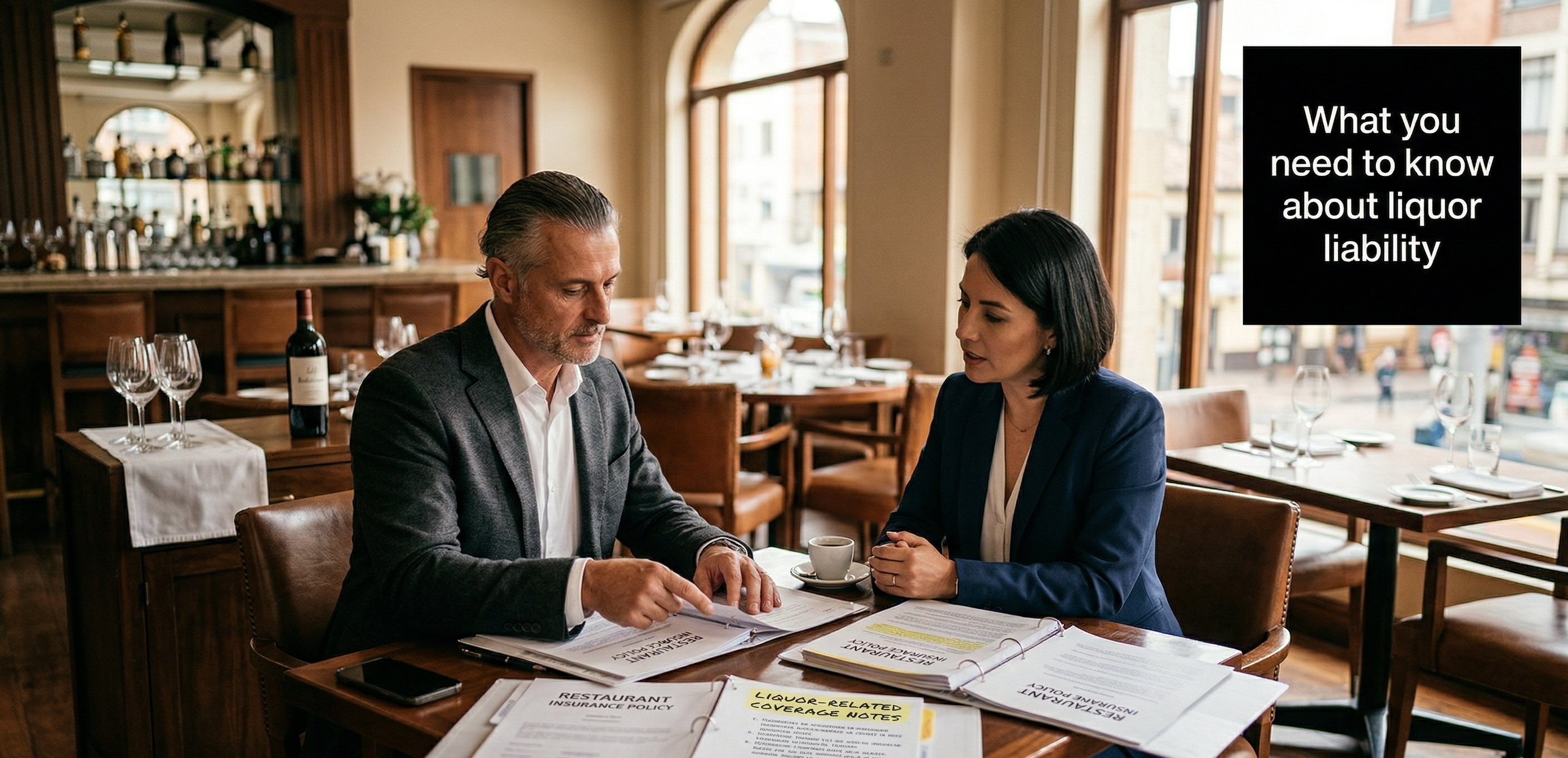
Many Florida cities and counties have specific requirements for restaurants that serve alcohol. Liquor liability insurance protects against claims stemming from alcohol‑related incidents. While not always mandated, it is strongly recommended, and many event permits require proof of coverage.
Without this coverage, owners may face costly lawsuits for damages related to alcohol‑related injuries or property damage.
Assessing Risk Exposure in Restaurants
Understanding risk exposures is essential before comparing insurance options. Risks vary based on size, location, service model, and staffing.
Customer‑Related Liability
Claim scenarios often involve slips, trips, and falls, scalding from hot food or beverages, allergic reactions, and foodborne illness. These claims can result in expensive medical bills and legal fees.
Employee Injury and Illness
From burns to repetitive strain injuries, restaurant work is physically demanding. Workers’ compensation is a core component of managing these risks.
Property Damage and Theft
Restaurant property includes kitchen equipment, seating furniture, inventory, and improvements made to leased space. Fire and water damage can shut down operations for days or weeks, underscoring the value of comprehensive property coverage.
Business Interruption
Restaurants rely on consistent operation to manage tight profit margins. When a covered loss interrupts service, business interruption insurance can help cover ongoing expenses and lost revenue.
Comparing LLC Insurance vs Personal Insurance
When weighing protection options, restaurant owners must understand how insurance ties into business structure and legal exposure.
Why Personal Insurance Falls Short
Personal policies are designed around private, non‑business risks. They typically do not:
- Cover injuries occurring in a commercial kitchen.
- Protect against lawsuits from patrons or vendors.
- Compensate for lost revenue due to business interruption.
- Include workers’ compensation or employer liability.
In short, relying on personal policies to protect a restaurant is a common misunderstanding with potentially devastating consequences.

Value of LLC‑Level Coverage
Choosing LLC insurance vs personal insurance ensures that business operations are protected by policies that recognize the unique exposures of a commercial enterprise. Business policies are structured to:
- Provide high‑limit liability coverage suited to public‑facing operations.
- Include endorsements for specific exposures such as liquor liability and cyber liability.
- Expand coverage for owned and non‑owned equipment.
- Include commercial property coverages tailored to restaurants.
For restaurants operating as an LLC, insurers view the business as a separate legal entity. This separation allows for risk transfer from individual owners to the corporate policy.
Essential Restaurant Insurance Policies
A robust restaurant insurance program typically includes several core components. Each addresses different facets of risk and compliance.
General Liability Insurance
General liability insurance protects restaurants against claims of bodily injury and property damage. Typical scenarios include a customer slipping on a wet floor or a damaged item falling from a shelf and injuring a patron.
- Coverage Includes: Third‑party bodily injury, property damage, medical payments.
- Does Not Cover: Employee injuries (covered by workers’ compensation), intentional acts, or property owned by the restaurant (covered by property insurance).
General liability is foundational for any restaurant. In Florida, regulatory authorities and many landlord agreements require proof of general liability insurance.
Commercial Property Insurance
Restaurants contain expensive equipment and inventory. Commercial property insurance covers damage to physical assets from fire, theft, vandalism, windstorm, and other covered perils.
Property coverage is particularly important in Florida, where weather events pose significant risk.
- Building Coverage: Protects the structure if owned.
- Contents Coverage: Protects equipment, furnishings, inventory, and signage.
- Business Personal Property: Covers items owned by the business but used in operations.
Workers’ Compensation Insurance
Workers’ compensation is mandated in Florida for most employers. It covers:
- Medical expenses for on-the-job injuries.
- Partial wage replacement during recovery.
- Death benefits for dependents.
Restaurants often have high workers’ compensation costs due to the nature of kitchen work, delivery tasks, and customer service interactions. Without proper coverage, owners can be held personally liable for employee claims.

Workplace injury claims are common across industries
Each year in the United States, millions of workers’ compensation claims are filed . About 4.9 million claims annually across both private and government sectors, reflecting the frequency of work-related injuries and illnesses nationwide.
Recent industry data shows that businesses have collectively filed millions of claims over the past decade, with trends suggesting that the number of injuries has gradually declined in some sectors even as the workforce grows.
From 2020 through 2024, employees missed an average of 80 workdays per injury, an increase of more than seven days when compared with the previous five-year period.
In Florida specifically, thousands of workers’ compensation claims continue to be reported each year, and data trends (such as declining lost-time claim frequency) have even contributed to rate reductions approved for 2026, reflecting improvements in workplace safety practices.
This context highlights how essential proper workers’ compensation coverage is not only to protect employees who are injured on the job but also to shield employers from costly litigation and operational disruption.
Business Interruption Insurance
Business interruption insurance reimburses income lost during forced closures due to covered property damage events. It helps restaurants and other businesses maintain financial stability when operations are disrupted.
For example, if a kitchen fire forces a temporary shutdown, business interruption coverage can provide revenue support while repairs are made.
Why this matters in Florida
In 2025, business interruption claims have been rising nationally, with about 31 % of companies identifying business interruption as a major operational risk, driven largely by extreme weather and supply chain disruptions that force temporary closures
Florida continues to be prone to natural-disaster-related interruptions. Severe storms and hurricanes throughout the year led to federal disaster declarations and economic injury loan programs, underscoring how many businesses saw operations interrupted due to storms and flooding.
• Business interruption claims tied to hurricane and weather damage in Florida have increased over recent years, as reporting and filing activity grew by over 20 %, reflecting a higher frequency of businesses seeking compensation after weather-related closures.
• Despite this, many businesses in Florida still face challenges when filing BI claims, with a significant share of initial claims being denied or underpaid due to documentation issues or coverage misunderstandings, making proper coverage and preparation even more critical.
Business interruption insurance doesn’t just replace lost income, it can determine whether a business survives a major enforced shutdown or closes permanently. When a covered event forces your doors to close, having the right BI coverage can mean bridging the gap between lost revenue and reopening without catastrophic financial loss.
Liquor Liability Insurance
If a restaurant serves alcohol, liquor liability insurance protects against claims related to intoxicated patrons causing injury or damage. This coverage is often required by event venues and municipalities.
Cyber Liability Insurance
Many restaurants now rely on digital systems for reservations, payments, and customer data. Cyber liability insurance protects against data breaches, ransomware attacks, and other technology‑related exposures.
While not mandatory, this coverage is increasingly important as digital point‑of‑sale systems and online ordering have become integral to restaurant operations.
LLC Structure and Its Influence on Insurance Decisions
Forming an LLC provides legal protection by separating personal assets from business liabilities. However, corporate structure alone does not provide insurance coverage. Owners must decide how to align policies with their business structure.
Legal Separation vs Insurance Protection
An LLC limits personal liability to the business entity. However, without proper insurance, the LLC may still face significant financial exposure. Insurance helps transfer risk from the business to the insurance carrier.
Using LLC insurance vs personal insurance ensures that risk transfer aligns with business needs and legal protections of an LLC.
Owners and Personal Guarantees
Even with an LLC, landlords and lenders may require personal guarantees on leases or loans. This can expose owners personally if the business defaults. Proper insurance can mitigate some of these exposures by protecting business assets and operations.
Insurance and Financing Requirements
Lenders and investors often require evidence of adequate commercial insurance before financing restaurant ventures. This protects their investment and may influence loan terms.
Evaluating Coverage Needs for Restaurants

Each restaurant is different. Coverage requirements vary based on size, menu offerings, location, number of employees, and service style.
Assessing Risk Profile
A thorough risk assessment considers:
- Type of cuisine and kitchen operations.
- Daily customer volume.
- Alcohol service.
- Delivery and catering services.
- Physical layout and facilities.
Qualified insurance professionals can help map exposures and recommend coverage options that align with both risk and budget constraints.
Risk Management Beyond Insurance
Insurance mitigates financial loss, but effective risk management reduces the frequency and severity of claims.
Staff Training and Safety Protocols
Proper training in food safety, equipment operation, and slip prevention decreases claims and insurance costs. Documented safety protocols often factor into premium discounts.
Maintenance and Regular Inspections
Routine maintenance of kitchen equipment, HVAC systems, and safety devices helps prevent property damage and liability events.
Vendor and Contract Risk Transfers
Contracts with delivery partners, caterers, and event planners should include indemnity provisions and proof of insurance. This ensures shared responsibility for risks.
How Insurance Supports Long‑Term Restaurant Success
Insurance is more than a regulatory necessity. It is a strategic tool that enables resilience, investor confidence, and operational continuity.
Restaurant owners with comprehensive coverage can:
- Focus on quality and service rather than financial uncertainty.
- Demonstrate compliance with regulations and contracts.
- Protect employees with peace of mind.
- Preserve business continuity in the face of disruptions.
Evaluating LLC insurance vs personal insurance equips owners with the information needed to make confident decisions.
Taking the Next Step: Consult, Assess, Protect
Restaurant owners in Florida should actively assess their insurance needs with knowledgeable professionals. A tailored risk assessment reveals coverage gaps and aligns policies with both regulatory expectations and business goals.
Contact CIS for a detailed consultation. Restaurant operators can request a risk assessment to explore custom restaurant insurance plans designed to protect people, property, and future revenue streams.
Whether opening a new location or reviewing existing policies, informed decisions today can prevent costly setbacks tomorrow.
Restaurant Operators should
- Request a Risk Assessment: Understand exposures unique to your operation.
- Explore Custom Restaurant Insurance Plans: Match coverage with business goals.
- Consult with Experienced Professionals: Clarify regulatory requirements and compliance.
Safeguarding a restaurant is not optional. It is an investment in stability, reputation, and peace of mind.
 USA.CIS