
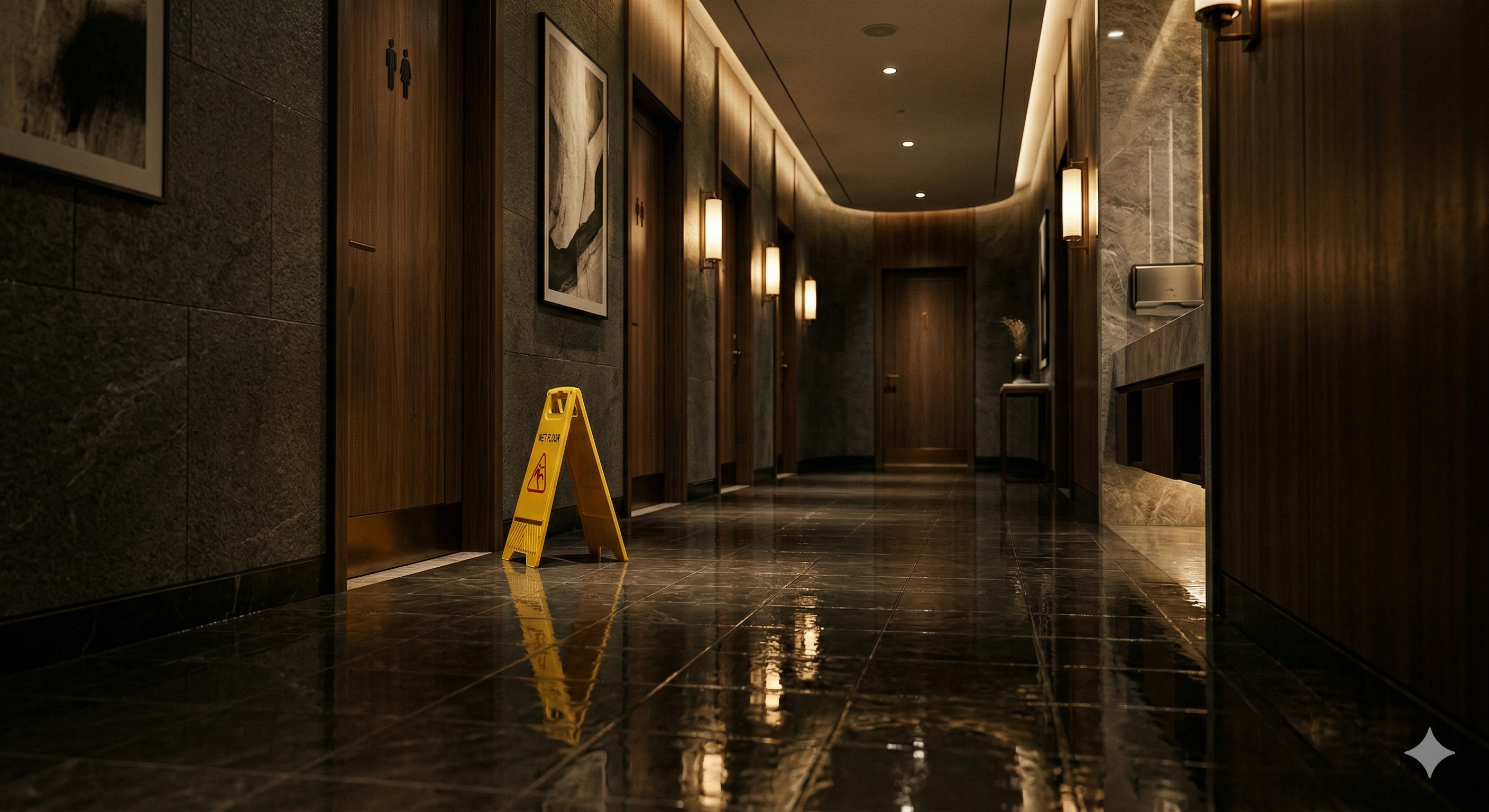
A customer slip-and-fall restaurant claim may begin in seconds, but the financial and operational effects can last much longer. A spilled drink near a service station, grease tracked into a restroom, rainwater at an entrance, or a poorly marked freshly mopped surface can turn a routine shift into a serious liability problem.
For restaurant owners, the real issue is not only whether an accident happened. It is whether the business was prepared for what follows: medical expense exposure, legal defense costs, documentation problems, operational disruption, and questions about whether existing insurance truly matches the risk. The U.S. Small Business Administration states that general liability insurance protects against financial loss resulting from bodily injury, property damage, medical expenses, defending lawsuits, and related settlements or judgments, which is why the subject matters so much for customer injury events in food-service businesses.
What is the risk?
Restaurants face this risk in a uniquely visible environment. Unlike many businesses, they bring customers into spaces where food, liquids, hot items, cleaning routines, rapid staff movement, and high foot traffic all intersect. OSHA’s restaurant safety materials identify slips, trips, and falls as recurring hazards across restaurant operations, and they specifically recommend keeping floors clean and dry, cleaning spills promptly, and using cones to identify wet areas. While OSHA’s guidance is focused on worker safety, the operational lesson is broader: the same physical conditions that create hazards for staff can also create risks for customers.
In Florida, those risks matter even more because restaurant operators already work in an environment where closures, safety scrutiny, and interruption pressures can escalate quickly. Florida’s Division of Hotels and Restaurants explains that emergency closures are used to mitigate conditions that pose an elevated risk to the health, safety, or welfare of the public or employees, and it lists conditions such as lack of approved utilities or hot water, sewage backups, fire damage, pest infestation, and inadequate refrigeration as examples of immediate closure triggers. A customer fall does not automatically lead to closure, but it belongs to the same broader reality: restauran
t risk is highly physical, highly operational, and highly visible.
That is why a restaurant slip-and-fall claim should not be treated as a minor inconvenience or as a problem that begins and ends with a mop bucket and an apology. For many restaurants, a single fall can become expensive not only because of the injury itself, but because it exposes weaknesses in documentation, safety habits, insurance assumptions, and broader risk management.
Why a Customer Slip-and-Fall Restaurant Claim Is More Serious Than It Looks
One reason a customer slip-and-fall restaurant claim is often underestimated is that the incident can look ordinary at first. A person falls. Staff help them up. Someone checks the floor. A manager offers assistance. The customer may even leave without obvious signs of serious injury. That apparent simplicity can mislead restaurant owners into treating the incident as a customer service problem rather than a liability event.
But the financial exposure can expand later. General liability insurance exists partly because bodily injury allegations, medical costs, and legal defense can be expensive even when the facts are disputed. The SBA’s insurance guidance makes this clear by placing bodily injury, medical expenses, lawsuit defense, and settlements within the role of general liability insurance. In a restaurant setting, a fall may lead to claims involving pain, treatment costs, loss of income, or allegations that the business failed to maintain reasonably safe conditions.
This is also why the phrase “slip-and-fall” can be deceptively soft. It sounds like a minor accident category. In practice, it can become a full-scale liability issue, especially if the injured person alleges negligence, if the documentation is weak, or if the facts suggest the condition should have been corrected sooner.
Why Restaurants Are Especially Vulnerable to Slip-and-Fall Risk
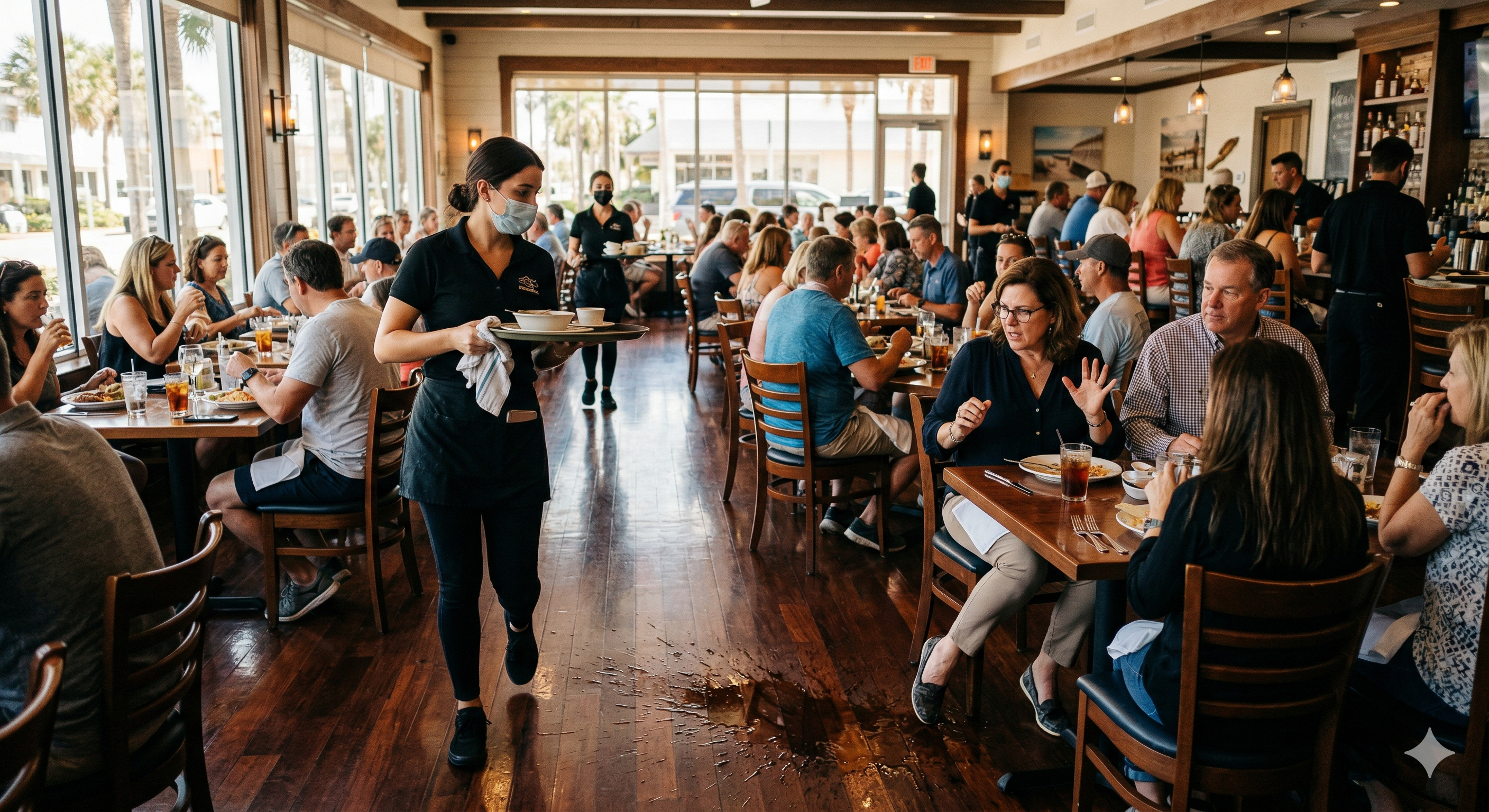
Restaurants are not generic retail spaces. They are fast-moving environments where surfaces can change condition quickly. Drinks spill. Ice falls from service areas. Food lands on the floor. Rainwater is tracked inside. Oil, grease, and cleaning residue create temporary hazards. Restrooms require repeated maintenance. Employees move quickly around guests, often carrying hot items or rushing between kitchen and dining areas.
OSHA’s restaurant guidance repeatedly identifies slips, trips, and falls as a major hazard across serving, food preparation, cooking, and cleanup zones. In its general hazards resource, OSHA says employers should keep floors clean and dry and keep workplaces orderly and sanitary.
In its cooking guidance, OSHA notes that slippery floors with oil, water, or food can create fall risks. Again, OSHA is addressing worker safety. But the operational implications extend beyond workers. If those conditions are significant enough to create recurring risk for staff, they can also create danger for customers. That is why slip-and-fall risk for restaurants is not limited to obvious disasters. It is embedded in the day-to-day environment.
The Legal and Financial Pressure Behind Restaurant Premises Claims
For a restaurant owner, the most important point is that a restaurant premises liability claim is not only about the floor itself. It is about what can be proven later. A Florida appellate opinion involving a restaurant slip-and-fall states that section 768.0755, Florida Statutes, governs liability for slip-and-falls caused by transitory foreign substances in a business establishment and requires proof that the business had actual or constructive knowledge of the dangerous condition and should have taken action to remedy it. The same opinion explains that constructive knowledge may be shown by circumstantial evidence that the condition existed long enough that the business should have known, or that the condition occurred with such regularity that it was foreseeable.
That matters because restaurant owners often think in practical rather than legal terms. They ask, “Was the floor wet?” or “Did someone clean it?” But the liability question may later become more specific: did the business know, or should it have known, about the dangerous condition, and was something done to fix it?
This can quickly become a financial issue because even before a case reaches a verdict, defense and claims handling can consume time and resources. The SBA’s description of general liability insurance specifically includes defending lawsuits. That is one reason general liability insurance for restaurants remains so important, even though it is not the entire restaurant insurance picture.
How a Customer Fall Can Escalate Beyond the Immediate Injury
A customer fall in a restaurant can create pressure in several layers at once.
First, there is the injury allegation itself. Even a fall that appears minor may later involve medical treatment, follow-up appointments, pain allegations, or claims of ongoing limitation.
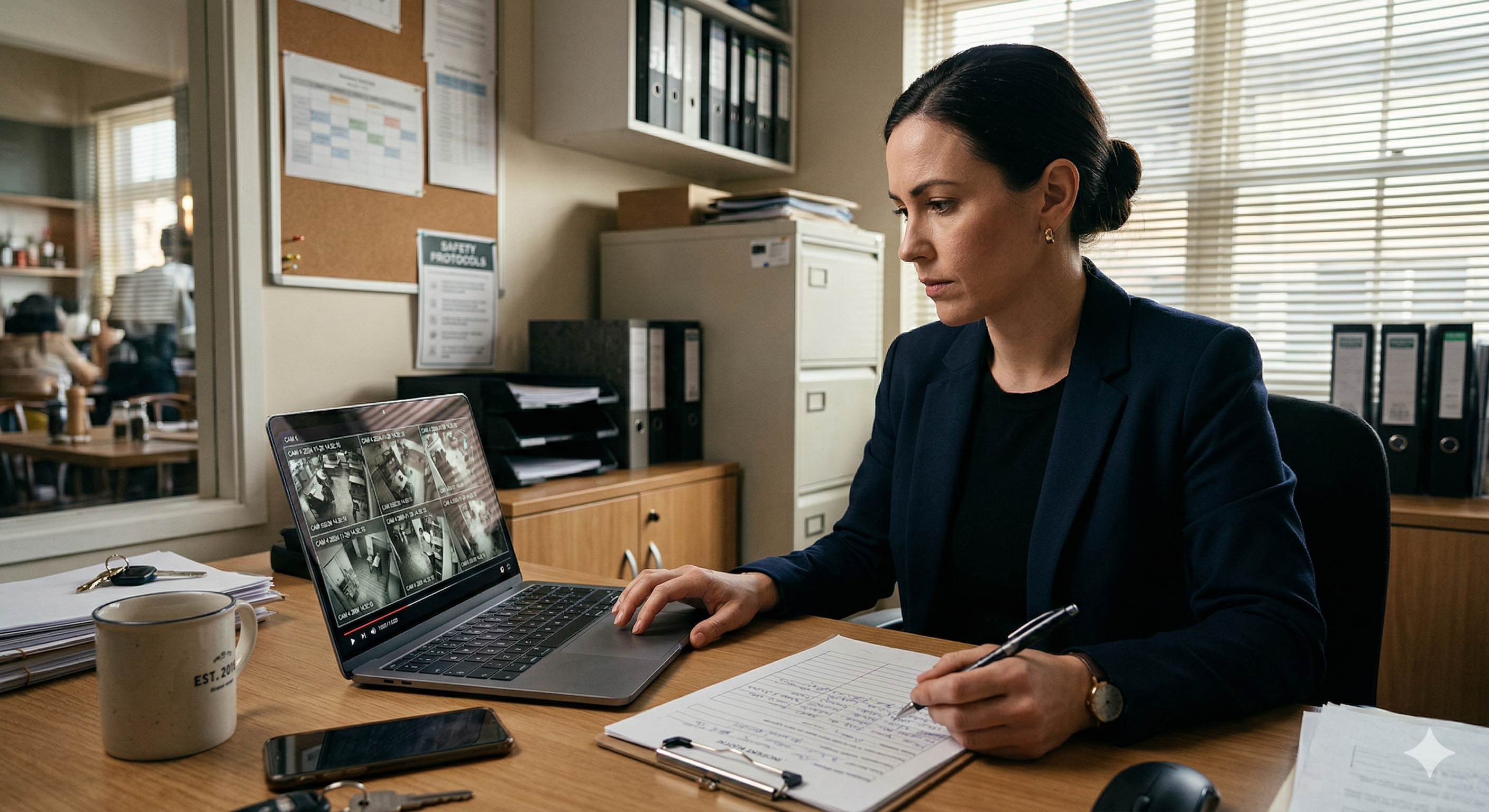
Second, there is documentation pressure. Staff may disagree about what happened. No one may remember how long the hazard existed. A wet-floor sign may or may not have been placed. Cleaning routines may not be documented clearly. Video footage may or may not be preserved.
Third, there is reputational pressure. In hospitality, a public injury can affect customer trust, online reviews, and staff morale, especially if the incident becomes confrontational or widely discussed.
Fourth, there is operational distraction. Management time gets redirected from service, staffing, and revenue generation into incident response, insurer communication, and internal review.
This is one reason a customer slip-and-fall restaurant claim can become more expensive than owners initially expect. The event may be short, but the administrative, legal, and reputational aftermath may not be.
What General Liability Insurance Usually Helps With in These Cases
When restaurant owners ask whether a customer slip-and-fall restaurant claim is the kind of event general liability insurance is designed for, the answer is often yes in broad principle. The SBA states that general liability insurance protects against bodily injury, property damage, medical expenses, defending lawsuits, and related settlement or judgment exposure. In a restaurant setting, that makes general liability the most obvious policy to review when a customer alleges injury from a fall on the premises.
CIS’s own general liability page follows the same commercial logic. It explains that general liability coverage helps protect a business from lawsuits, property damage, and bodily injury claims, and it specifically mentions slip-and-fall accidents as a type of exposure. CIS’s restaurant and entertainment insurance page also places general liability among the core coverages relevant to restaurants.
That said, owners should still be careful not to simplify too much. General liability may be central in these scenarios, but that does not mean every business consequence of a fall is solved by one policy. A serious claim can still expose weak procedures, uninsured adjacent issues, or broader operational vulnerabilities.
Why Documentation Matters So Much After a Restaurant Slip-and-Fall Claim
The difference between a manageable incident and a serious restaurant slip-and-fall claim is often shaped by what the business can document. If a hazard was addressed quickly, warning signage was used, and incident facts were recorded clearly, the restaurant is in a stronger position than if staff rely only on memory and verbal explanations later.
The Florida slip-and-fall appellate opinion opened through the court source illustrates how factual details matter. The decision discusses evidence about who was last in the restroom, whether the manager thought the floor was clean and dry, whether an employee mopped the area, and whether a wet-floor sign was present. Those details were not trivial. They became central to the knowledge question.
For restaurants, that means good incident response is not only about empathy and immediate customer care. It is also about recording what happened accurately:
- where the incident occurred,
- what substance or condition was involved,
- when the area was last checked,
- what cleaning was performed,
- whether warning signs were used,
- which employees witnessed the event,
- whether video exists,
- whether the injured customer requested aid.
A restaurant premises liability claim becomes harder to manage when those basics are unclear.
Common Restaurant Conditions That Can Lead to Customer Falls
A customer fall in a restaurant can happen in more places than owners sometimes assume. High-risk conditions often include:
- rainwater near entrances,
- spilled beverages near self-service or server stations,
- grease or residue near transition zones from kitchen to dining areas,
- restroom floors after cleaning,
- recently mopped surfaces without visible warning,
- cluttered or congested walkways,
- uneven flooring or mats,
- food debris in service lines.
OSHA’s restaurant guidance supports this general picture by repeatedly addressing wet floors, food spills, oil, and general housekeeping as fall hazards. Although the agency’s focus is workplace safety, the same physical logic affects customer movement too.
This matters because restaurant slip-and-fall claim exposure usually grows from recurring operational realities, not from rare freak events. In other words, the issue is not only whether a hazard can exist. It is whether the restaurant’s procedures assume that hazards will exist and address them fast enough.
Why One Fall Can Reveal Larger Risk Management Problems
A customer slip-and-fall restaurant claim often exposes broader weaknesses unrelated to the exact fall itself. For example:
- staff may not know who documents incidents,
- managers may not know where coverage begins or ends,
- surveillance systems may not be preserved quickly,
- floor inspection routines may be informal,
- signage may be inconsistent,
- insurance may not have been reviewed after operational changes.
The SBA advises businesses to assess their risks, think about what kinds of accidents or lawsuits could damage the business, and reassess coverage annually as the business grows. That advice is especially relevant for restaurants, which often expand seating, change service models, add takeout or alcohol service, or increase foot traffic without revisiting liability planning.
So while a fall may appear to be a single-event problem, it often functions as a stress test of the restaurant’s overall safety and insurance discipline.
A Customer Slip-and-Fall Restaurant Claim Is Not the Same as Every Other Restaurant Claim
It is also important to separate a customer slip-and-fall restaurant claim from other common restaurant losses. Employee injuries belong in a different category and may implicate workers’ compensation rather than general liability. Property damage to the restaurant itself is a different issue from injury to a guest. Vehicle-related claims involving deliveries or supply runs may raise commercial auto questions. Alcohol-related incidents may involve liquor liability concerns.
CIS’s service structure reflects this distinction. Its restaurant and entertainment insurance page includes property insurance, liability insurance, workers’ compensation, commercial auto, liquor liability, cyber liability, and equipment breakdown among restaurant-relevant coverages. That structure is useful because it reflects reality: restaurants do not face one universal type of claim. They face multiple categories that overlap operationally but not always from an insurance standpoint.
This is why general liability insurance for restaurants is essential but not complete. It can be central in a customer fall claim, but restaurant owners should avoid assuming it covers every adjacent risk automatically.
How Florida Conditions Can Intensify Slip-and-Fall Exposure
Florida creates a few practical factors that can increase slip-and-fall risk for restaurants. Rain events can lead to wet entryways. High customer turnover in hospitality-heavy areas can mean faster surface contamination and less time between hazard creation and customer contact. Restaurants may also face interruption or sanitation-related pressures that increase operational stress during already difficult conditions.
Florida’s restaurant public-records page is useful here not because slip-and-falls automatically lead to emergency closure, but because it shows how quickly restaurants may move from normal operations into a safety-sensitive regulatory environment when physical conditions deteriorate. The state explains that emergency closures are used when conditions create elevated risk to the public or employees, and it lists examples such as utilities failure, sewage issues, fire damage, pest infestation, and inadequate refrigeration. The broader lesson is that Florida restaurant operations are highly dependent on maintaining safe, stable physical conditions.
That same operational reality makes everyday premises hazards more significant than they might appear on the surface.
Practical Steps That Reduce Exposure Before a Claim Happens
The best response to a restaurant slip-and-fall claim starts before the incident ever occurs. A restaurant that wants to reduce exposure should think in terms of repeatable habits, not one-time reactions.
That usually means:
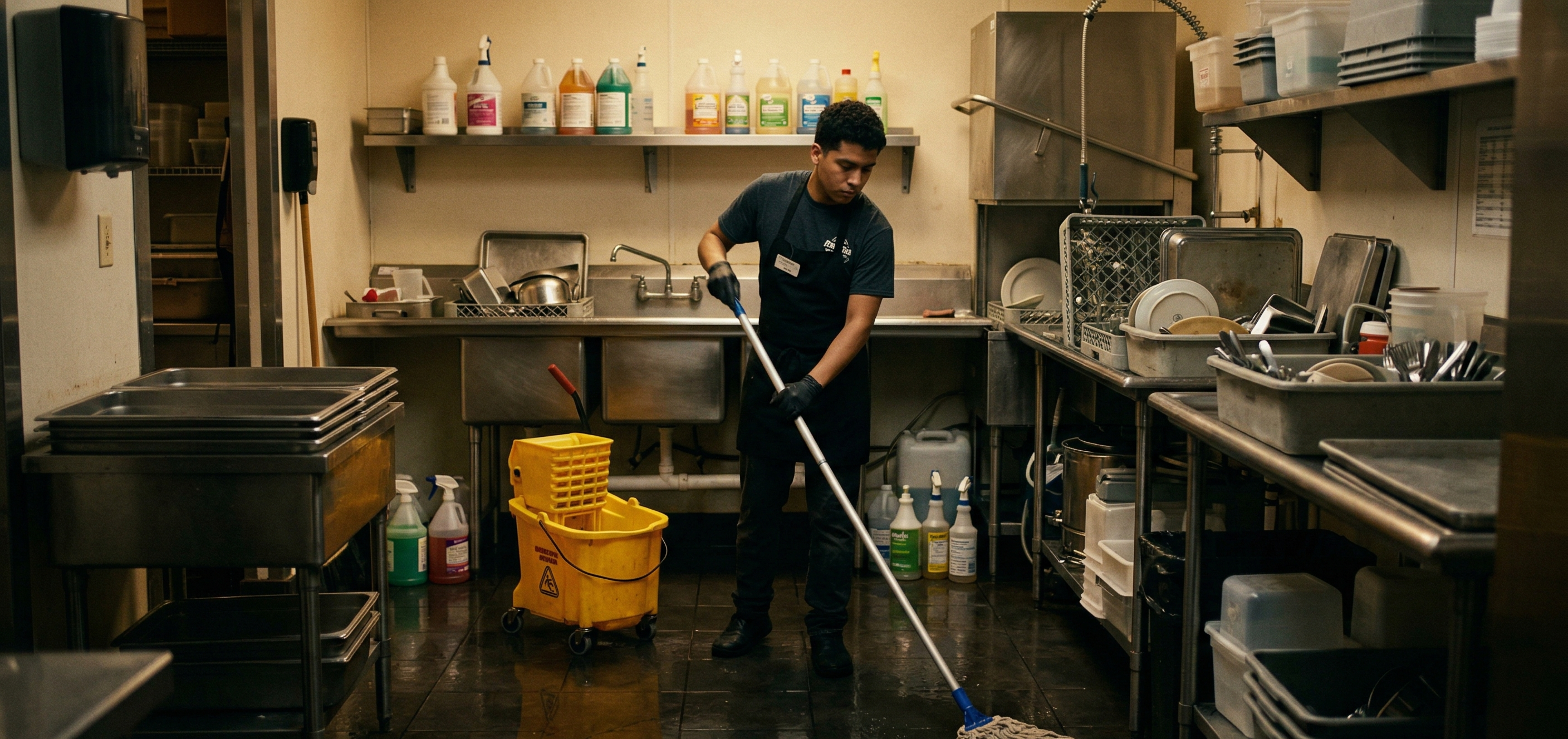
- keeping floors clean and dry,
- cleaning spills promptly,
- using visible warnings for wet areas,
- checking entrances during rainy periods,
- documenting routine floor inspections,
- training staff to escalate hazards quickly,
- reviewing camera coverage and retention,
- refreshing liability coverage as operations change.
These suggestions are consistent with OSHA’s restaurant safety principles around housekeeping, spill cleanup, and wet-floor controls. They also fit the SBA’s broader guidance that businesses should assess risk and reassess coverage as the business grows.
For restaurants, prevention is not only about avoiding claims. It is about reducing the chance that a normal service disruption becomes a serious financial event.

How This Relates to Broader Restaurant Insurance Planning
A customer slip-and-fall restaurant claim often leads owners to ask one narrow question: “Do we have general liability?” A better question is broader: does the restaurant’s current insurance structure reflect how the business really operates?
CIS’s restaurant and entertainment insurance positioning is built around multiple restaurant exposures rather than a one-policy answer, and its general liability page specifically recognizes slip-and-fall accidents as part of business liability risk. That is a useful framework because restaurants rarely experience risk in isolated boxes. A customer fall may be one event, but the overall insurance review should also consider staffing, alcohol service, vehicle use, property exposure, and continuity concerns.
For a commercial insurance agency that emphasizes risk management, this broader restaurant-specific review is a logical fit. CIS’s homepage positions the business around commercial insurance solutions with a focus on risk management, which matches the reality that restaurant claims often reveal more than one point of vulnerability.
When a Customer Slip-and-Fall Becomes a Serious Financial Problem
So when does a customer slip-and-fall restaurant claim become a serious financial problem? Usually when one or more of the following happen:
- the injury allegation is significant,
- the business cannot document the condition clearly,
- facts suggest the hazard existed too long,
- no warning measures were visible,
- video or witness support is weak,
- the restaurant is already operating with thin margins,
- management underestimates defense and claims-handling costs,
- the event exposes wider insurance gaps.
The seriousness of the problem does not depend only on whether the customer fell. It depends on what the claim turns into afterward. The SBA’s description of general liability insurance helps show why these cases matter financially: bodily injury, medical expenses, legal defense, and settlements can all be part of the picture.
In that sense, the fall is often just the opening event. The real financial problem is the chain reaction that follows.
Final Thoughts
A customer slip-and-fall restaurant claim can become a serious financial problem because it sits at the intersection of physical premises risk, documentation quality, legal exposure, and insurance structure. Restaurants naturally face recurring floor and surface hazards through spills, wet areas, grease, and heavy traffic, and OSHA’s restaurant guidance shows how persistent those conditions can be in real operations. At the same time, SBA guidance makes clear that general liability insurance matters precisely because bodily injury claims, lawsuit defense, and related expenses can be financially significant.
For restaurant owners in Florida, the most useful takeaway is not simply that slips and falls are possible. It is that they should be treated as real liability events with real financial implications. The stronger response is a combination of operational discipline, incident documentation, and restaurant-specific insurance review rather than assuming a fall is minor unless proven otherwise. In an external editorial setting, this is the natural point to connect readers with broader restaurant liability and coverage guidance.
 USA.CIS