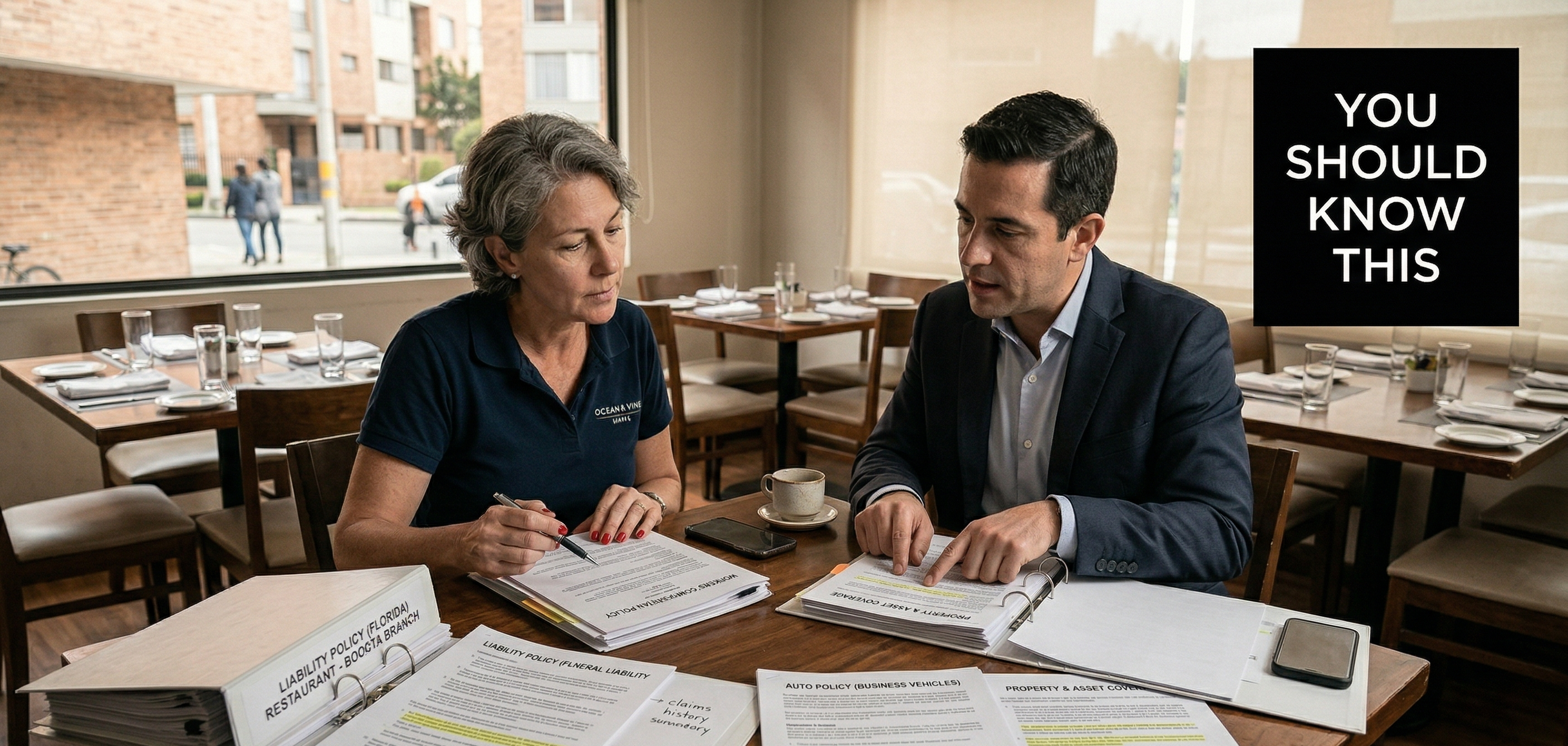
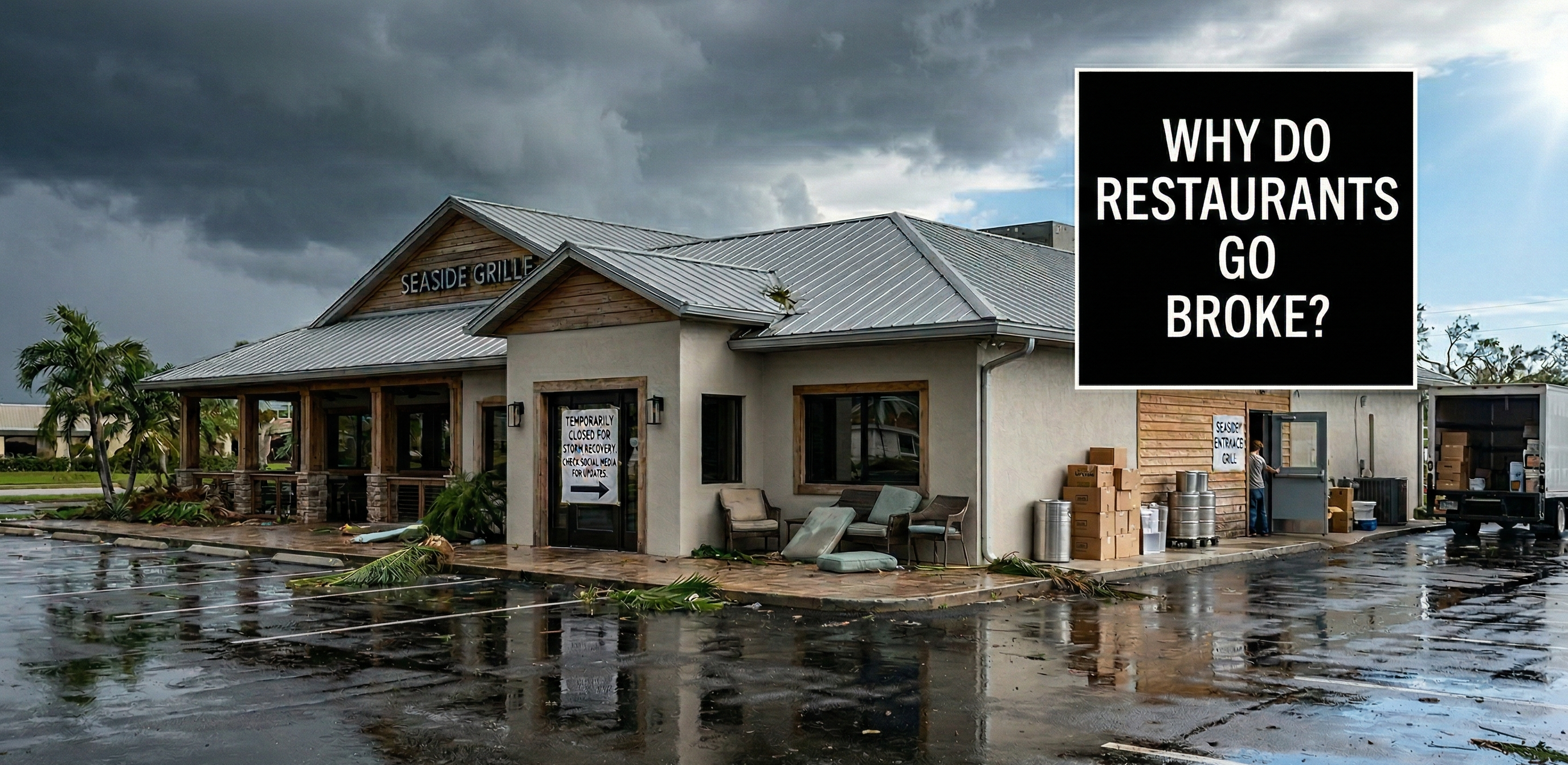
Why restaurants in Florida go out of business is not a one-cause question. Most closures are not driven by a single dramatic event. They are usually the result of accumulated pressure: rising costs, unstable cash flow, labor strain, operational mistakes, disruption from storms or utility problems, regulatory setbacks, and insurance structures that no longer match the business.
The National Restaurant Association’s 2026 industry outlook says operators continue to face a challenging business environment shaped by persistent cost pressures and uneven traffic, while its February 2026 industry release says more than 9 in 10 operators cite food, labor, insurance, energy, and swipe fees as significant challenges and that 42% of operators reported their restaurant was not profitable in the prior year.
Florida adds another layer to this question because restaurant businesses operate in a state where weather disruption, utility failures, sanitation-sensitive operations, and alcohol or licensing compliance can intensify ordinary business stress. Florida’s Division of Hotels and Restaurants explains that emergency closures can be triggered by conditions such as lack of approved utilities or hot water, sewage backups or overflows, fire damage, pest infestation, or inadequate refrigeration, and that the business remains closed until the conditions are corrected.
The Real Problem Is Usually Not “Failure” in the Abstract
When people ask why restaurants in Florida close, they often imagine obvious causes like bad food, bad management, or low demand. Those factors matter, but the more useful explanation is usually structural. Restaurants are businesses with thin margins, constant variable costs, labor intensity, customer volatility, and heavy dependence on physical operations. The SBA’s guidance on managing finances stresses the need to account for costs like employees and supplies and to monitor assets, liabilities, and equity.
Its break-even guidance also explains that the break-even point is where total cost and total revenue are equal, meaning there is no profit or loss. For a restaurant, that threshold can be difficult to maintain because small cost increases or short revenue disruptions can destabilize the business quickly.
That is why why Florida restaurants fail is often better understood as a question of business resilience. A restaurant does not always close because one thing went badly. It often closes because several pressures hit at once and the business does not have enough margin, systems, planning, or protection to absorb them.
Rising Costs Are One of the Biggest Closure Drivers
One of the clearest answers to why restaurants in Florida go out of business is cost pressure. Restaurants operate with constant outflows: payroll, food, rent, utilities, equipment maintenance, insurance, payment processing, and debt service. The National Restaurant Association reported in March 2026 that 82% of operators said food costs were higher than the previous year, while only 6% reported any decline. In February 2026, the Association also said that more than 9 in 10 operators cited food, labor, insurance, energy, and swipe fees as significant challenges.
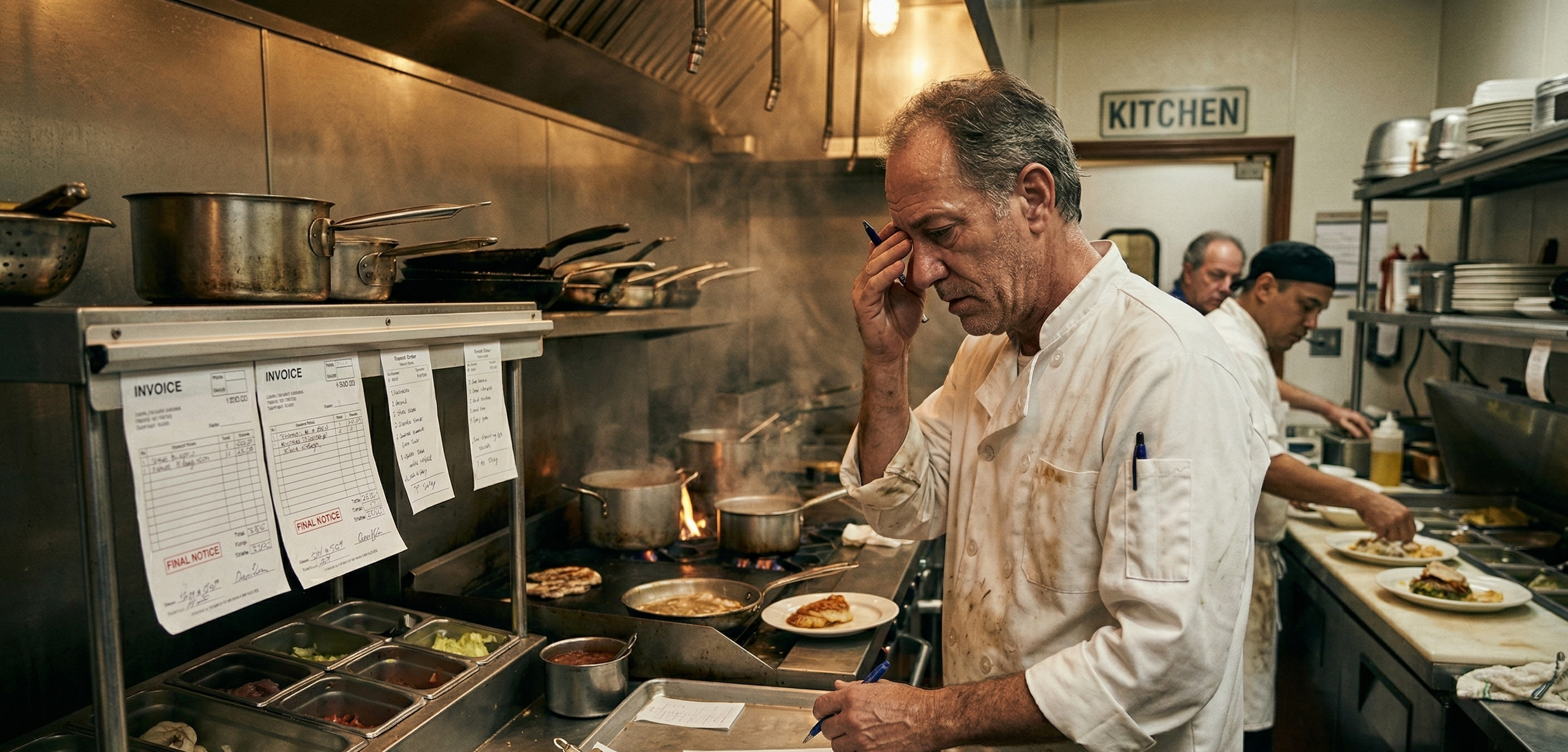
This matters because closures do not always come from a collapse in customer demand. Sometimes the dining room stays reasonably active, but margins get compressed until the business is working harder for less actual return. Rising ingredient costs, labor costs, and utility bills can make a restaurant feel busy while profitability quietly deteriorates.
For Florida restaurants, this can be especially dangerous because cost stress may combine with seasonal traffic shifts, tourism dependence in some markets, and weather-related disruptions that interrupt normal revenue flow.
Cash Flow Problems Usually Hurt Before Profitability Problems Become Obvious
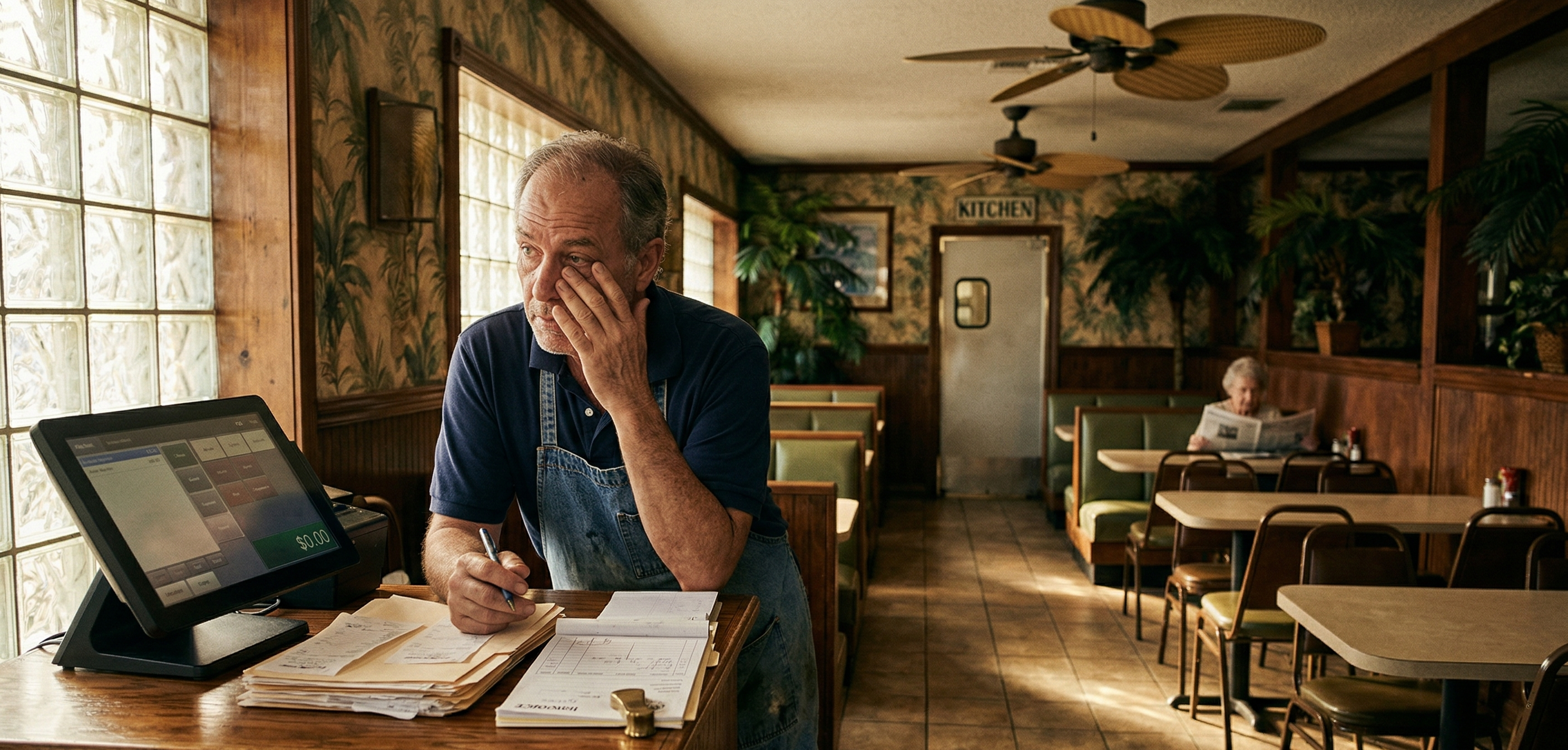
Another major answer to why small restaurants shut down in Florida is cash flow. Many owners think in terms of profit and loss, but businesses often fail earlier at the cash-flow level. The SBA notes that business financing and many loan structures are repaid from business cash flow, and its finance guidance emphasizes tracking costs, liabilities, and available resources carefully.
A restaurant can be “profitable on paper” over time and still fail if it cannot survive the weekly or monthly cash demands of payroll, inventory, rent, and supplier obligations. This is one reason restaurant closures often feel sudden from the outside. The business may not have looked dead. It may have simply run out of room to manage timing mismatches between expenses and incoming cash.
In operational terms, cash flow gets worse when several things happen together:
- food costs rise,
- customer traffic softens,
- waste increases,
- labor becomes less efficient,
- repairs appear unexpectedly,
- insurance renewals rise,
- or a short closure interrupts sales.
Labor Strain Is Not Just a Hiring Problem
Labor is one of the most persistent explanations for restaurant closure reasons in Florida. The issue is not only wage levels. It is also turnover, training, scheduling instability, and replacement pressure. The Bureau of Labor Statistics says food and beverage serving and related occupations are projected to see about 1.16 million openings each year on average from 2024 to 2034, largely because workers leave the occupation or transfer elsewhere. BLS JOLTS data also show that accommodation and food services has historically had high job openings rates compared with many other sectors.
For restaurant owners, that means labor cost is only one part of the problem. High churn means:
- more hiring time,
- more training expense,
- more inconsistency in service,
- more manager distraction,
- more risk of errors in kitchens and dining rooms,
- and more pressure on the remaining staff.
This helps explain why restaurants in Florida close even when customer demand still exists. A business can lose operational reliability before it loses all demand. If the restaurant cannot staff consistently, service quality falls, customer trust weakens, and errors become more common.
Weak Financial Controls Quietly Destroy Restaurants
Another major reason why restaurant businesses fail in Florida is that many owners do not maintain tight enough financial control over the business as it grows. The SBA’s financial-management guidance emphasizes the importance of balance sheets, cost tracking, and segment analysis. That may sound basic, but in restaurant businesses the difference between survival and closure is often found in small operating details rather than dramatic strategic mistakes.
Examples include:
- not tracking labor as a share of sales closely enough,
- failing to monitor food waste,
- mixing personal and business finances,
- ignoring break-even thresholds,
- expanding menu complexity without understanding margin impact,
- and making new investments without matching them to realistic customer demand.
The SBA has also warned business owners about failing to separate personal and business finances, noting that doing so creates accounting problems and can weaken legal protections tied to business structures.
Many restaurant closures are therefore not purely market failures. They are control failures. The business becomes too operationally chaotic to manage rising pressure.
Restaurants Close When They Drift Away From Their Core Model
A less obvious but important reason why Florida restaurants fail is strategic drift. The SBA has written that trying to do everything is often a quick path to failure and that businesses need focus and planning.
This is especially relevant in restaurants. An owner may begin with a clear concept and gradually add:
- too many menu items,
- catering without the systems for it,
- alcohol service without the controls for it,
- delivery without reviewing the margin math,
- events without adjusting labor and insurance,
- or pricing changes without understanding demand sensitivity.
The result is often a business that has become harder to run, harder to staff, and harder to insure. The restaurant is not simply “doing more.” It is becoming less coherent. That often increases costs faster than it increases durable revenue.
Storms and Weather Disruption Matter More in Florida Than in Many States
A Florida-specific reason why restaurants in Florida go out of business is weather vulnerability. Ready.gov’s business hurricane toolkit and FEMA’s Florida business resources both emphasize continuity planning, disaster readiness, and recovery preparation because severe weather can interrupt operations well beyond the storm event itself.
For restaurants, the impact of storms is not limited to direct building damage. A hurricane or severe weather event can lead to:
- utility outages,
- inventory spoilage,
- delayed vendor deliveries,
- reduced customer traffic,
- staffing shortages,
- cleanup delays,
- insurance claims friction,
- and extended reopening problems.
This is one reason why restaurants in Florida close after storm seasons even when they were already under pressure before the event. The storm may not be the sole cause of failure. It may simply be the event that a fragile business cannot absorb.
Closures Can Be Triggered by Operational Conditions, Not Just Financial Collapse
A restaurant can also be forced into shutdown territory through operational failures that become regulatory or safety problems. Florida’s public-records and inspection materials state that emergency closure conditions include lack of approved utilities or hot water, sewage backups, fire damage, pest infestation, and inadequate refrigeration. The Division also explains that an establishment may reopen when inspection confirms that the violations causing emergency closure are corrected.
This matters because restaurant closure reasons in Florida are not always purely financial. A restaurant may still have demand and still lose operating ability because physical conditions become unsafe or noncompliant. In food service, utility stability, refrigeration, sanitation, and functioning systems are business-critical.
That means restaurants can fail through a combination of maintenance neglect, poor contingency planning, and insufficient financial cushion to correct problems quickly.
Insurance Gaps Often Turn Ordinary Problems Into Closure Problems
Another major reason why restaurants in Florida go out of business is that the business carries insurance, but not the right structure for how it actually operates. CIS’s own restaurant and entertainment insurance page treats restaurants as multi-risk businesses, listing property insurance, liability insurance, workers’ compensation, commercial auto, crime insurance, cyber liability, and equipment breakdown coverage as relevant categories.
That framework matters because restaurant closures often happen after owners discover too late that:
- they added alcohol service without reviewing liquor liability exposure,
- they added employees without reviewing workers’ compensation obligations,
- they rely on equipment without thinking enough about breakdown or interruption,
- or they use vehicles for business without reviewing commercial auto exposure.
The SBA has specifically encouraged business owners to rethink insurance as their business changes rather than renewing automatically. This is especially important in restaurants, where operations evolve quickly and one uninsured or underinsured disruption can create a serious cash crisis.

Workers’ Compensation and Labor Compliance Can Become Hidden Closure Risks
Restaurants also close when staffing growth is not matched by compliance review. Florida’s workers’ compensation rules state that non-construction employers with four or more employees, including part-time employees, generally must carry workers’ compensation coverage.
Restaurant owners often miss this because staffing in hospitality feels fluid rather than formal. A restaurant may think of itself as “small” while still carrying multiple part-time employees whose presence matters under the rule. If the business underestimates this, it may face compliance risk on top of injury risk.
OSHA’s restaurant eTool also reinforces that employee injury exposure in restaurants is real and recurring, including slips, burns, cuts, strains, chemicals, and electrical hazards. That combination of compliance pressure and injury exposure can make a restaurant far more fragile than it appears.
Restaurants Often Underestimate How Fast Interruption Turns Into Customer Loss
A major hidden answer to why restaurants in Florida close is that even short downtime can damage long-term demand. Restaurants depend on habit. If a customer’s weekly lunch place disappears for two weeks, many will form new routines. If staff hours vanish, employees may leave. If vendors are not paid on time, relationships weaken. If online reviews reflect confusion or closure, recovery gets harder.
The SBA’s discussion of business interruption coverage is useful here because it explains that interruption insurance may help businesses pay bills during shutdown periods and may cover some lost profits depending on the policy. But even with coverage, a restaurant must manage reopening well. The interruption itself is often only the first stage of the problem.
This is one reason closures cascade. The event that stopped operations may be temporary. The business consequences may not be.
Why Smaller Restaurants Are Often More Vulnerable
Smaller restaurants and independent operators are often more exposed to closure risk because they have less shock absorption. The National Restaurant Association’s 2026 materials describe an industry facing persistent cost pressures and uneven traffic, while BLS data continue to reflect the labor intensity of food-service work.
A smaller business usually has:
- less cash reserve,
- less management depth,
- less room for pricing mistakes,
- less ability to absorb a bad month,
- less leverage with vendors,
- and less ability to survive a temporary closure.
So the answer to why small restaurants shut down in Florida is often not that they were fundamentally weak ideas. It is that they were exposed to the same pressures as larger operators without the same buffer.
The Most Common Pattern Is Pressure Stacking
The most realistic answer to why Florida restaurants fail is pressure stacking. One issue rarely closes the business on its own. The typical pattern looks more like this:
- food and labor costs rise,
- cash flow tightens,
- staffing gets inconsistent,
- service quality weakens,
- a storm, equipment failure, or utility issue interrupts operations,
- insurance or savings are not sufficient,
- the restaurant cannot recover fast enough.
This stacked-pressure model is more useful than looking for one dramatic villain. It also explains why restaurant closures often look sudden to outsiders. The final event may be visible, but the underlying weakening happened much earlier.
What Florida Restaurant Owners Usually Miss Before It Is Too Late
A few warning signs tend to appear before closure becomes unavoidable.
Costs rise faster than menu pricing can support
The National Restaurant Association’s 2026 operator data strongly suggest this remains a widespread challenge.
The owner does not know the true break-even point
The SBA’s break-even guidance exists because many businesses underestimate how little room they actually have.
Staffing churn becomes normal
BLS data on food-service openings and replacement demand show how persistent labor instability can be in this sector.
The restaurant has no continuity plan for storm, outage, or closure scenarios
Ready.gov and FEMA business resources emphasize this for a reason.
The insurance structure still reflects an older version of the business
The SBA’s guidance on rethinking insurance directly supports revisiting coverage when the business changes.
Final Thoughts
Why restaurants in Florida go out of business is ultimately a question about resilience. Florida restaurant closures usually happen because the business cannot absorb a combination of rising costs, unstable labor, cash-flow pressure, interruption, compliance-sensitive operational problems, and insurance gaps that expose the business at the wrong moment. The state’s own restaurant oversight materials show how quickly physical or sanitation problems can force closure, while SBA, FEMA, Ready.gov, BLS, and National Restaurant Association materials all point to the broader business environment: restaurants operate under persistent cost and staffing pressure in a disruption-sensitive industry.
For restaurant owners, the useful takeaway is not that failure is inevitable. It is that survival usually depends on more than food quality or concept strength. It depends on disciplined cash management, realistic staffing, cost control, continuity planning, and an insurance structure that matches the business as it actually operates. In an external editorial setting, that is the right point to connect readers with broader restaurant-specific risk-management and insurance guidance.
 USA.CIS
 Dubb
Dubb