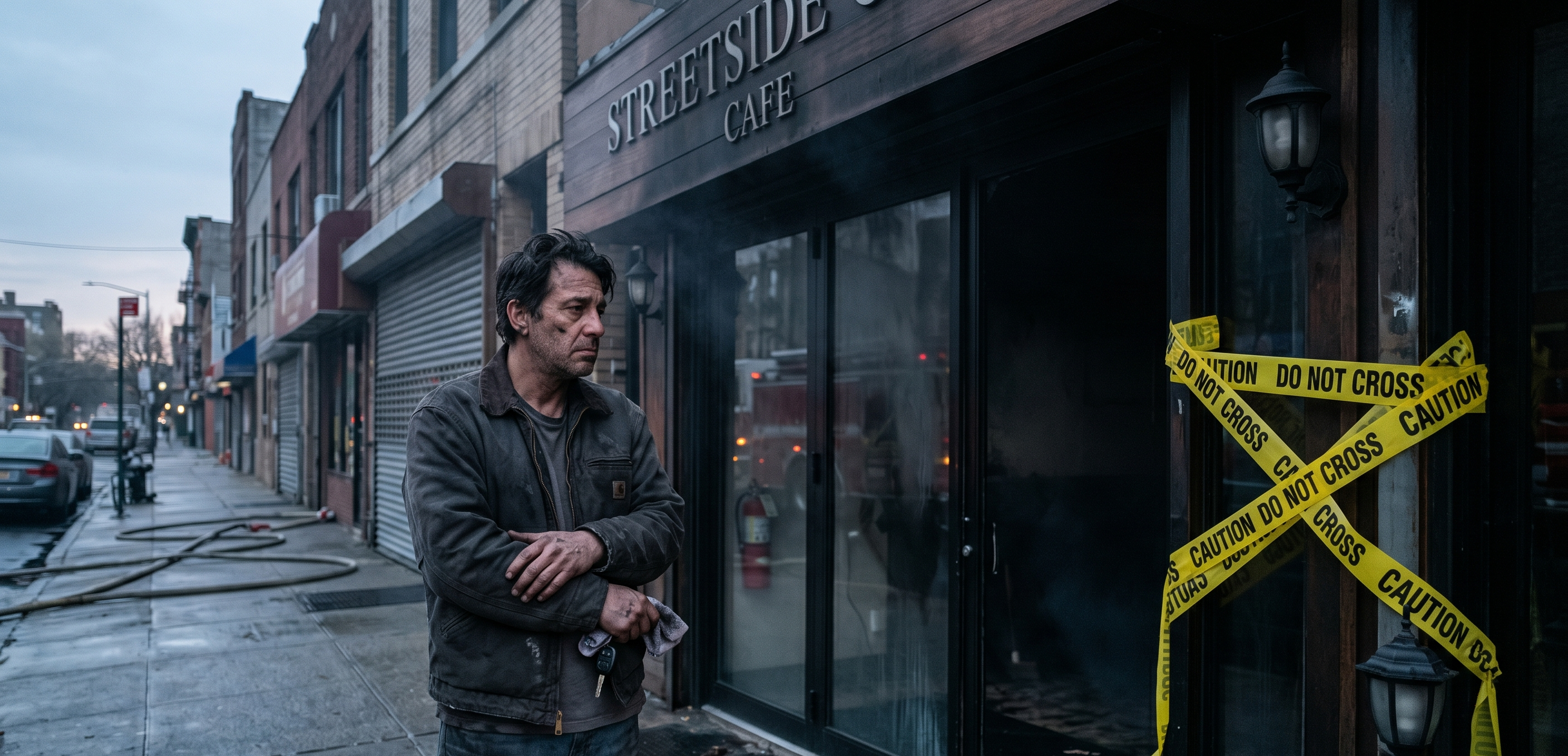
At 10:17 p.m., the fire was small enough for people to believe the worst was over. The manager smelled smoke first. A line cook shouted from the back. Someone grabbed an extinguisher. Someone else killed part of the line. The dining room emptied fast, but not in panic. Guests looked rattled, not terrified. The fire department arrived, worked the scene, and kept the damage from spreading much further. The owner stood outside and thought the same thing many owners would think: This could have been much worse.
He was right. It could have been much worse. But that thought hid the real problem.
That is where the story of restaurant fire business interruption begins. It does not begin with a total loss. It begins with a contained event that still breaks the operating rhythm of the business. The National Restaurant Association’s disaster-preparedness materials make this point in practical terms. Restaurants do not recover only from physical damage. They recover from downtime, spoiled inventory, utility problems, disrupted staff routines, and the slow work of getting back to safe operations.
In this story, the owner goes home past midnight. He feels shaken, but also grateful. The building is still standing. The dining room did not burn out. Nobody died. The local fire crew kept the damage limited. If you stopped the story there, it would sound like a near miss.
But restaurant fire business interruption rarely hurts a business only at the moment of the fire. The deeper damage often arrives later. It arrives through closure, cleanup, inspection delays, lost revenue, equipment issues, spoiled food, payroll stress, and the simple fact that a restaurant cannot earn on the days it cannot serve. FEMA’s continuity guidance and SBA preparedness guidance both stress that businesses need plans for keeping essential functions going because disruption itself can become a major source of loss.
This is why a story like this matters. Many owners imagine the fire as the event. In practice, the fire may be only the trigger. The business pain often comes from what follows.
Restaurant Fire Business Interruption Starts the Morning After
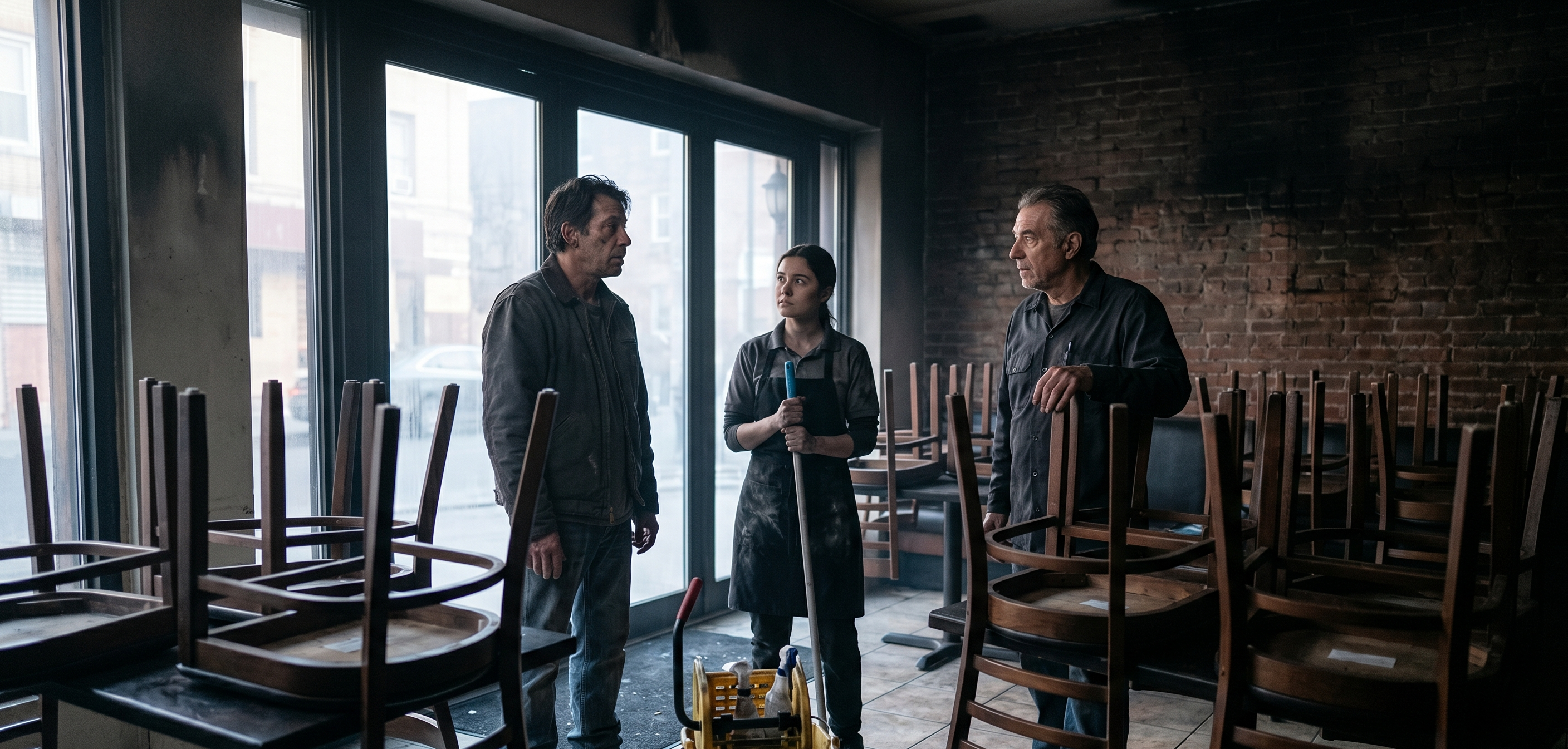
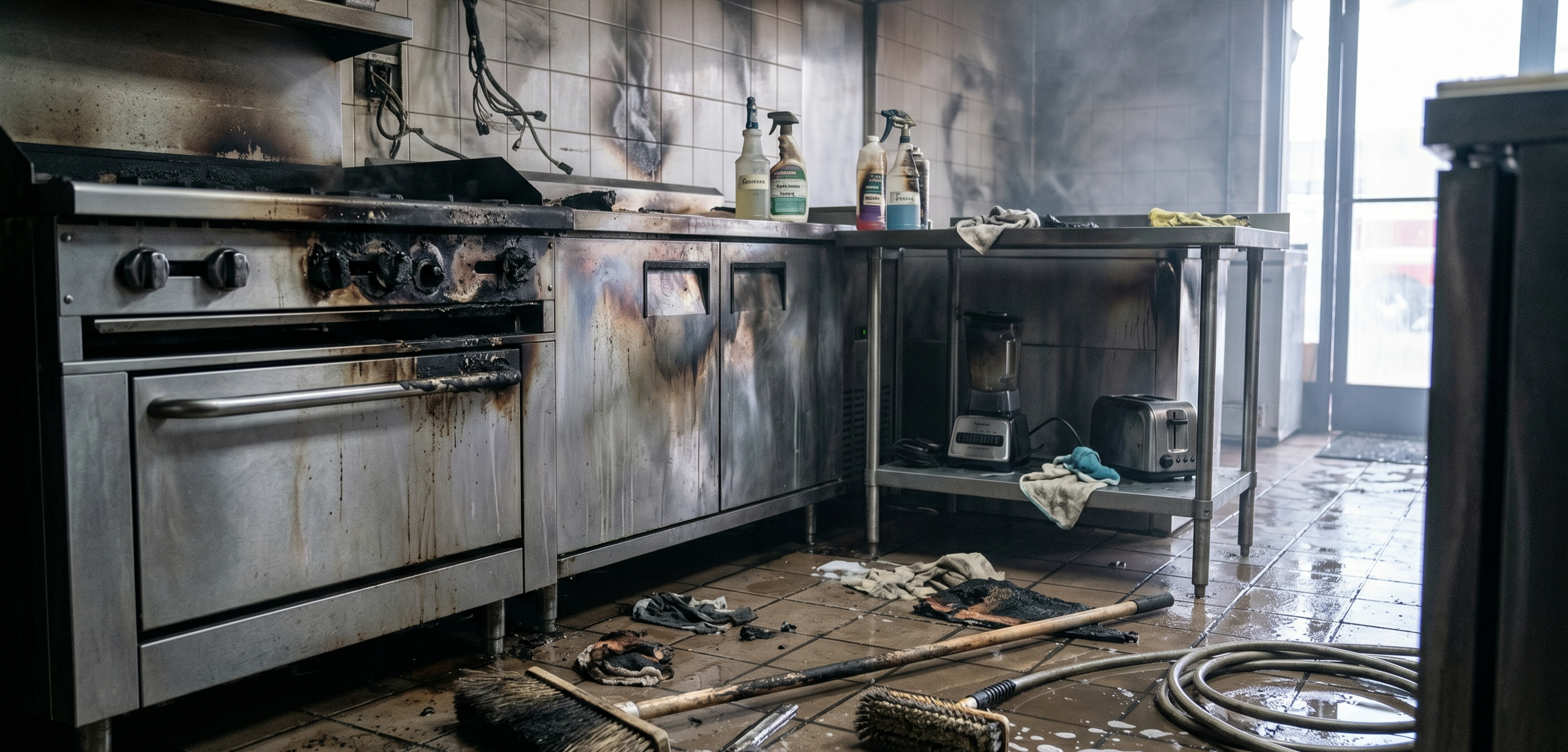
The owner returns early the next day. The room smells different. It smells wet, burned, chemical, and stale. The dining room tables still sit in place, which creates a false sense of normality. But the back of house tells the truth. Parts of the line are unusable. Smoke moved farther than expected. Water reached places no one noticed in the dark. A refrigeration unit stayed off too long. Some inventory must be thrown out. The hood area now sits at the center of every conversation.
This is the first hard lesson in restaurant fire business interruption. The business may look partly intact while still being unable to operate. The National Restaurant Association’s Always Ready: Natural Disasters guide says property damage coverage is often the first source of funds for repair or replacement of buildings and equipment, but it also emphasizes recovery planning, current financial records, and additional coverages that may address foodservice-specific losses.
The owner still thinks in short timelines. Maybe a few days. Perhaps one weekend lost. Even more an aggressive cleanup and some temporary menu changes. This is normal thinking. Owners want to get back fast. Restaurants train people to solve problems in hours, not weeks. But restaurant fire business interruption resists that mindset because reopening depends on several things moving together: cleanup, equipment testing, safety review, utility reliability, vendor timing, staff availability, and in many cases insurance coordination.
That is the point many operators underestimate. The business does not reopen when the fire is over. It reopens when the restaurant becomes safe, functional, and financially ready to serve again.
The Fire Was Small. The Closure Was Not.
The owner spends the next two days answering versions of the same question.
“When are you reopening?”
Customers ask it. Employees ask it. Vendors ask it. Friends ask it. The owner gives optimistic answers at first because he still thinks the fire was small. But restaurant fire business interruption often grows because small fire damage can still disable critical systems. The National Restaurant Association’s utility disruption guide exists for this exact reason. Restaurants depend on electric, water, and gas service in ways that make even partial loss deeply disruptive.
In the story, one damaged section of the kitchen blocks more than one function. That is how restaurants work. Systems overlap. If one area goes down, other parts slow down or stop. The owner learns quickly that “not destroyed” does not mean “usable.” Some equipment now needs inspection and the most of the surfaces need deeper cleaning than expected. There is food cannot be trusted. A vendor cannot replace one key part immediately. A contractor gives one timeline, then revises it. The owner starts to realize that the real damage is time.
That is the heart of restaurant fire business interruption. Revenue does not stop because the owner lacks ambition. It stops because the restaurant cannot safely, legally, or practically operate. Every extra day of closure changes the financial meaning of the original fire.
Lost Sales Hurt Faster Than Many Owners Expect
By day four, the owner stops talking mainly about the fire and starts talking about the schedule.
He thinks about Friday reservations that will not happen. He spends time worrying about staff shifts that vanished and think about regulars who will go elsewhere and may or may not come back quickly.
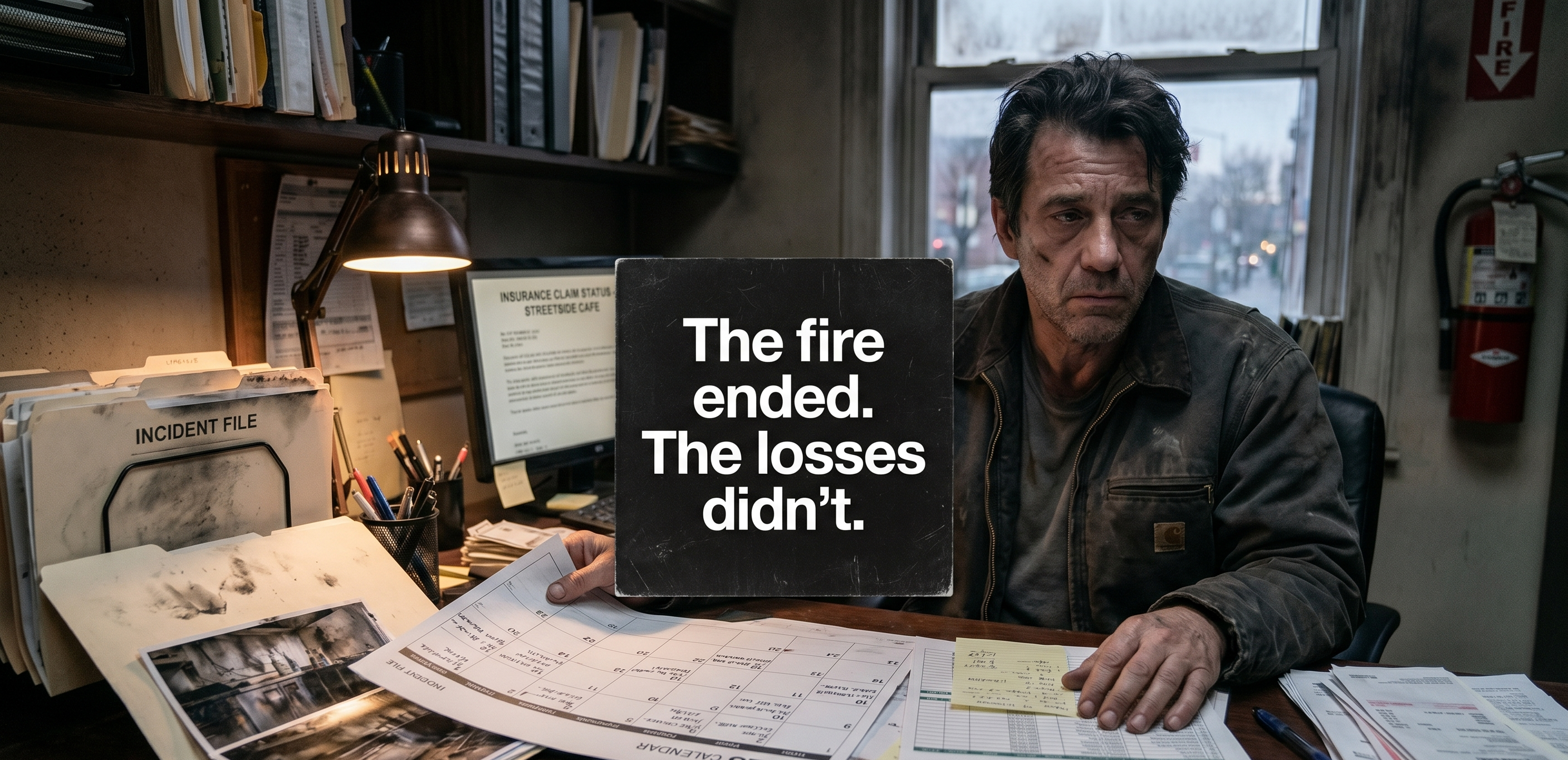
Then, he takes a review about private events that now need refunds or difficult calls. He deliberates about fixed costs that did not burn away with the smoke. This is where restaurant fire business interruption becomes brutally clear. The restaurant does not need to be physically destroyed to lose meaningful money. It only needs to stop trading at the wrong time. FEMA’s business continuity materials emphasize identifying essential functions and planning how to restore them because disruption can threaten the survival of the organization even when the event itself is limited.
Restaurants feel this pressure quickly because they rely on daily flow. A factory may have different timelines. A consulting firm may keep earning through remote work. A restaurant usually earns by opening the doors, preparing food, serving guests, and turning that process into cash every day. When closure interrupts that cycle, the business feels it immediately. That is why restaurant fire business interruption is not just an insurance phrase. It describes a practical business emergency.
The owner now understands something he did not understand on the sidewalk the night of the fire: the financial wound is moving outward, not just inward. It is no longer only about the burned area. It is about the silent days.
Restaurant Fire Business Interruption Hits Staff Too
The owner’s next difficult conversation is with the team.
Some employees ask whether they will work reduced hours. Other ones want to know whether the closure will last long enough that they need temporary work elsewhere. Some of them ask whether reopening dates are real or just hopeful. None of these questions sound dramatic. All of them matter. Restaurants do not recover through equipment alone. They recover through people.
That is another reason restaurant fire business interruption deserves more attention. A closure can weaken staffing stability at the exact moment the business most needs continuity. Ready.gov’s business resources and FEMA continuity guidance both stress communication, recovery roles, and continuity planning because people need structure when disruption breaks normal routines.
In the story, the owner wants to reassure everyone. But reassurance gets harder when contractors, inspectors, vendors, and service companies keep giving moving timelines. A restaurant can lose momentum internally before it loses it publicly. Team members start making backup plans. Managers start carrying more emotional load. The owner starts feeling pressure not just to rebuild the kitchen, but to hold the organization together.
This is where broader risk management belongs in the conversation. Fire recovery is not only a property issue. It becomes a staffing issue, a communications issue, and a continuity issue very quickly.
Smoke, Water, and Downtime Change the Story
Many owners think fire loss in simple visual terms. Flames burned this. Flames did not burn that. But restaurant fire business interruption often grows because smoke and water extend the damage story beyond the original ignition point.
The National Restaurant Association’s disaster guidance tells restaurant operators to preserve current financial information, understand the role of property damage coverage, and think ahead about recovery contacts and documentation. That guidance reflects a simple truth: the visible source of damage is often not the full source of loss.
In the story, the owner keeps discovering secondary problems. A section of the dining room needs deeper cleaning because smoke odor traveled farther than expected. Some packaging and dry goods near the back must be discarded. A piece of equipment that did not burn now fails testing. A service company says the restaurant should not push reopening too fast. The owner hears variations of the same sentence all week: “That part also needs attention.”
This is exactly how restaurant fire business interruption changes shape. The event stays in the past. The consequences keep unfolding. Each new problem may be manageable on its own. Together, they add days, cost, and uncertainty.
The Real Fear Is Not the Fire. It Is Reopening Wrong.
By the second week, the owner’s mindset changes again.
At first he wanted speed at any cost. Now he fears reopening too early. What if the kitchen is technically on but still unstable or the smell lingers and guests notice immediately?
This is a key turning point in restaurant fire business interruption. Owners often move from denial to urgency, then from urgency to caution. FEMA’s planning documents and continuity resources push businesses to identify critical functions and recovery sequences because rushed recovery can create new failures.
The story matters because this fear is rational. Restaurants live on trust. A bad reopening can damage that trust fast. Guests do not separate the emotional stages of the owner’s recovery. They experience only the result. If the restaurant reopens in a compromised state, the business may compound the original fire loss with a reputation problem.
That is why restaurant fire business interruption is not solved by reopening at the earliest possible moment. It is solved by reopening when the business can operate cleanly, safely, and confidently again.
What the Owner Wishes He Had Understood Earlier
At this point in the story, the owner begins rewriting the event in his head.
He no longer tells it as “the night we had a small fire.” He tells it as “the week we learned how exposed closure really is.” That distinction is the whole article. A smaller fire can still create a larger interruption than the owner expected. The National Restaurant Association’s disaster materials speak directly to that idea by discussing current sales records, cloud storage, recovery contacts, foodservice-specific losses, and utility planning. They are not writing only about catastrophic destruction. They are writing about the real mechanics of recovery.
This is why restaurant fire business interruption deserves a calmer, more serious place in restaurant planning. It is easy to imagine the worst-case fire. It is harder to imagine the mid-level event that leaves the building standing but the business stalled. Yet that scenario may be more common and more deceptive. It creates false hope early and real pain later.
The owner wishes he had focused more on continuity before the fire. He wishes he had reviewed how long the business could carry closure. Therefore key records had been even easier to access. He wishes he had thought more clearly about downtime, not only damage. That is the practical value of the story. It shows where many owners think too late.
Restaurant Fire Business Interruption Is Also a Documentation Problem
Recovery slows down when the owner has to reconstruct the business while also reconstructing the records.
The National Restaurant Association advises operators to store current financial information in a safe remote location or in the cloud as part of disaster preparation. FEMA’s business guidance also tells businesses to check coverage and plan essential-function recovery before an event occurs.
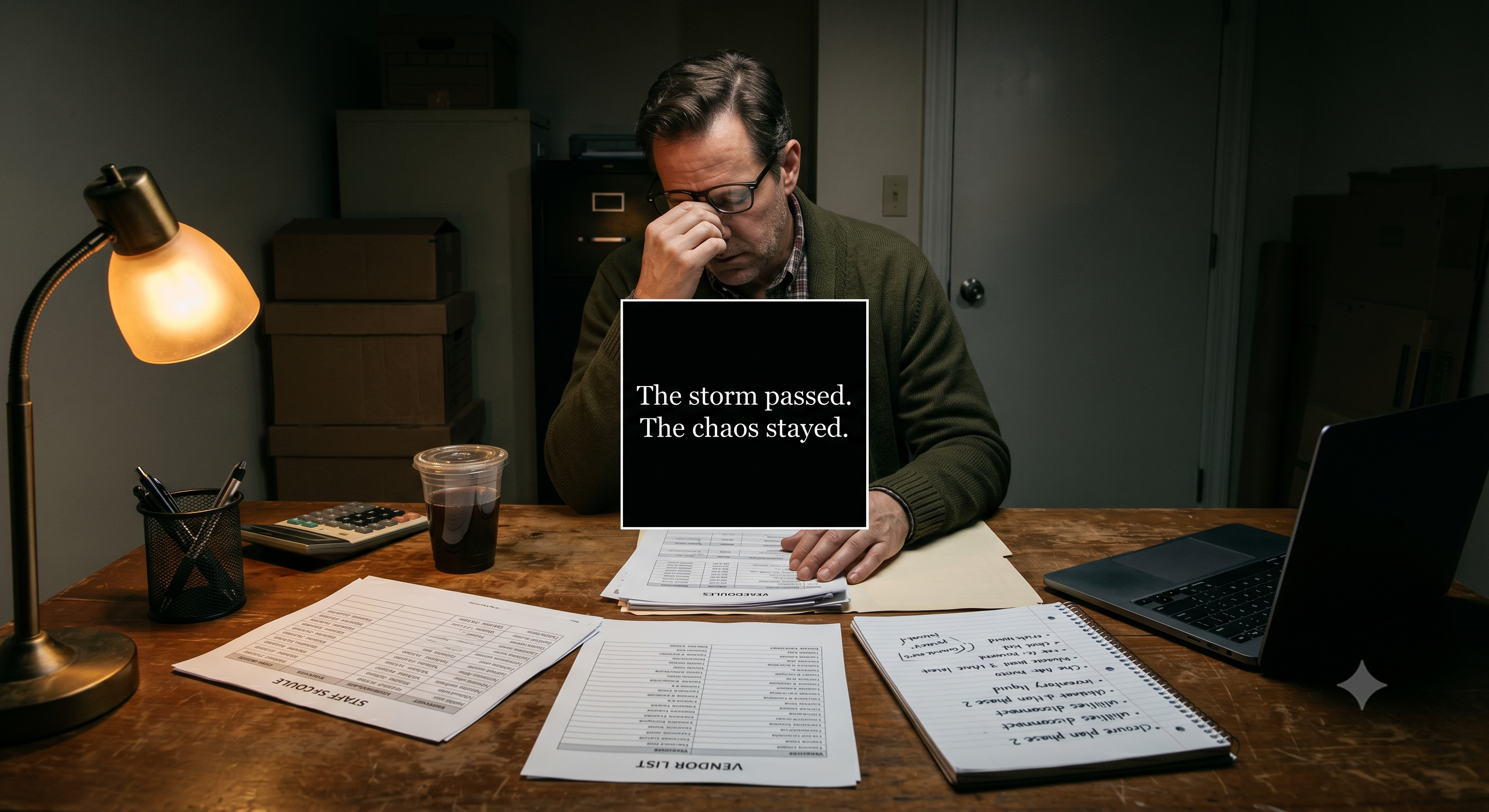
That guidance matters because restaurant fire business interruption becomes harder when documentation is scattered, outdated, or trapped in the damaged environment. In the story, the owner can access some records easily, but not all of them in one place. That slows decisions. It slows claims-related communication. It slows the owner’s own understanding of what the closure is costing in real time.
This is one of the least dramatic parts of the story, which is exactly why it matters. Restaurants often focus on food, equipment, and guests. They do not always focus enough on organized recovery information. But when the business closes, records become operational tools, not administrative background.
Customers See Closure Differently Than Owners Do
The owner experiences the closure as a long internal crisis. Customers experience it as absence.
That gap matters. If the restaurant stays dark for two weeks, customers do not automatically understand the complexity behind that absence. They only know they could not go. The National Restaurant Association’s disaster recovery materials include customer communication and reopening guidance because recovery is not purely internal. Businesses need to tell people what is happening and when they can return.
This is another layer of restaurant fire business interruption. Lost revenue is not only about today’s sales. It can also involve habit disruption. Regular guests build routines. When closure breaks the routine, some return quickly and some do not. A restaurant that reopens well can recover faster. A restaurant that goes dark without clear communication can lose more than the days on the calendar suggest.
So the story is not only about damage and repair. It is also about presence. Restaurants live in the public eye. Closure creates silence, and silence can erode momentum.
Why This Story Matters Beyond Fire
The strongest reason to tell this story is that it applies beyond one cause of loss.
A contained fire creates one version of restaurant fire business interruption, but the business lesson extends further. Utility failure, water intrusion, storm damage, and equipment breakdown can all create the same deeper problem: the business survives physically enough to create hope, but not functionally enough to reopen quickly. That is why restaurant preparedness guidance often blends property, utility, records, continuity, and communication planning.
The owner in the story eventually understands that the fire was not mainly a lesson about flames. It was a lesson about dependence. The restaurant depended on too many systems working together to assume that a “small” event would stay small. Once one critical part failed, the interruption spread through revenue, labor, vendor timing, and customer continuity.
That is exactly what makes restaurant fire business interruption such a useful concept. It forces businesses to ask a better question. Not only “How bad could the fire be?” but “How long could the business stay down, and what would that downtime actually do to us?”
What Would Have Changed the Ending
The ending does not need fantasy. The fire can still happen. The difference lies in how the business absorbs it.
In a stronger version of the story, the owner already knows where all critical records live. The team already has a communication structure. The restaurant already understands which functions must return first. The business already thinks in continuity terms, not just damage terms. The National Restaurant Association’s guidance and FEMA continuity materials both point in that direction. Prepared businesses recover with more clarity because they already know who does what, what gets prioritized, and what information must be accessible fast.
This is also where restaurant and entertainment insurance becomes a natural internal reference for hospitality businesses thinking beyond generic small-business coverage language. Restaurants often carry a mix of exposure that looks simple from a distance but becomes operationally complex in recovery. That complexity deserves more deliberate review than many owners give it.
A Practical Conclusion on Restaurant Fire Business Interruption
The story sounds simple at first: a small kitchen fire, no deaths, building still standing. Many owners would hear that and feel relieved. But relief can be misleading. The deeper business pain often comes later, when the owner discovers that cleanup, system checks, lost inventory, staff instability, customer absence, and closure days all carry their own cost.
That is why restaurant fire business interruption matters. It describes the part of fire loss that owners often understand only after the flames are gone. FEMA, SBA, and the National Restaurant Association all push businesses toward continuity planning, records readiness, insurance review, and recovery discipline for a reason. Physical damage is only one side of the problem. Downtime is the other.
The sharp lesson is this: the event that almost did not break the business can still become the event that nearly does. Not because the fire was massive, but because the interruption was.
 USA.CIS