
Building Performance Challenges in Northeastern Housing
An ice dam begins quietly. Snow accumulates on the roof during a Connecticut winter storm, and heat escaping from the attic through degraded insulation warms the roof deck unevenly. The snow over the warmer sections melts, trickles toward the eaves where the roof extends past the exterior wall, and refreezes into a thick ridge of ice. As more melt-water flows down behind it, that ridge grows into a dam, and the pooling water has nowhere to go but under the shingles and into the house.
Think of it like a clogged rain gutter, except the clog is solid ice and the water it traps is being forced sideways into materials never designed to be wet. Shingles shed water flowing downhill; they are not barriers against standing water pushed upward by pressure. Once that water gets underneath, it soaks into the roof decking, runs along framing members, and wicks into wall cavities where it can remain trapped for months, invisible, silent, and deeply destructive.
This is not a cosmetic problem. The damage compounds over every winter cycle in which the root cause goes unaddressed. For Connecticut homeowners with degraded attic insulation, ice dams represent one of the most consequential building-performance failures a home can experience.
Water Intrusion: From Roof Decking to Wall Cavities
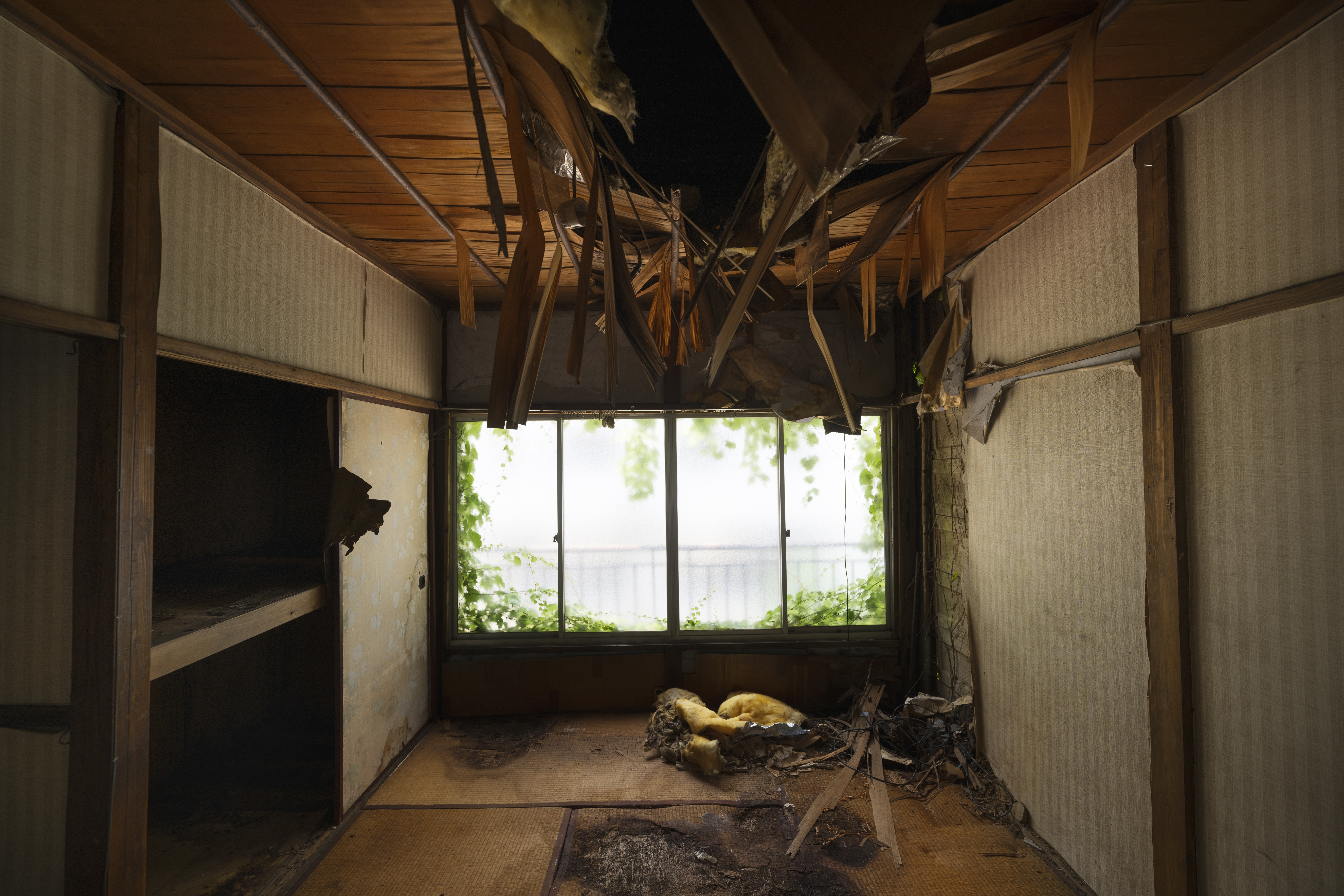
The path water takes once it breaches the shingle line is far more extensive than most homeowners realize. The first material it contacts is the roof decking, typically plywood or oriented strand board. Imagine laying a dry sponge flat and pouring a thin stream of water onto one edge. The sponge does not simply get wet at the point of contact; the water wicks outward through the entire material. Roof decking behaves the same way. Even a small volume of water at the eave line can spread across a surprisingly large area, softening the wood and beginning structural degradation.
From the decking, gravity and capillary action pull water into rafter bays and along the top plates of exterior walls. Water entering a wall cavity does not evaporate quickly because the cavity is enclosed, dark, and poorly ventilated. It saturates the fiberglass or cellulose insulation between the studs, destroying thermal performance immediately. Wet fiberglass loses nearly all insulating value, the air pockets providing thermal resistance are replaced by water, which conducts heat readily.
The financial consequence begins here, before any visible damage appears. A homeowner whose wall insulation has been silently saturated is paying to heat a home whose thermal envelope has been compromised from the inside. Energy costs rise, HVAC equipment runs longer, and the underlying cause remains hidden until secondary symptoms, stains, odors, or structural softening, finally surface.
Hidden Moisture Damage and Secondary Biological Hazards
Trapped moisture inside wall cavities and attic assemblies creates an environment where biological hazards develop rapidly. Mold requires only three conditions: moisture, organic material, and darkness. A wall cavity saturated by ice-dam leakage provides all three. The wood framing, paper-faced drywall, and insulation all serve as nutrient sources for mold colonies that can establish themselves within days.
Picture a damp towel left balled up in a gym bag for a week. The smell that develops is microbial growth in a warm, moist, enclosed space. A wall cavity behaves identically, except the “towel” is the structural framing and the “gym bag” is sealed behind finished surfaces where the problem cannot be detected until it has progressed significantly.
The EPA has published extensive guidance linking indoor mold exposure to respiratory complications including aggravated asthma and chronic bronchial irritation. The HVAC system, which circulates air through every room, can distribute spores from a single contaminated wall cavity throughout the entire living space. Structurally, prolonged moisture weakens wood framing through slow rot that reduces load-bearing capacity. Fire resistance diminishes as saturated wood loses the density that allows it to resist ignition and slow flame spread.
Protecting Framing with High-Performance Foam
Addressing ice-dam damage requires more than drying wet materials and patching stained ceilings. The remediation sequence must begin at the root cause: heat escaping through the attic and warming the roof deck unevenly. If the thermal boundary is not corrected, every subsequent winter produces new ice dams, new intrusion, and new damage layered on top of the old.
Professional remediation begins with removing compromised insulation from the attic and affected wall cavities. Wet fiberglass and cellulose must be extracted entirely using HEPA-filtered vacuum systems that prevent contaminated particulates from dispersing into the living space. Once cavities are clean and dry, the air-leakage pathways allowing warm air to reach the roof deck must be sealed before new insulation is installed.
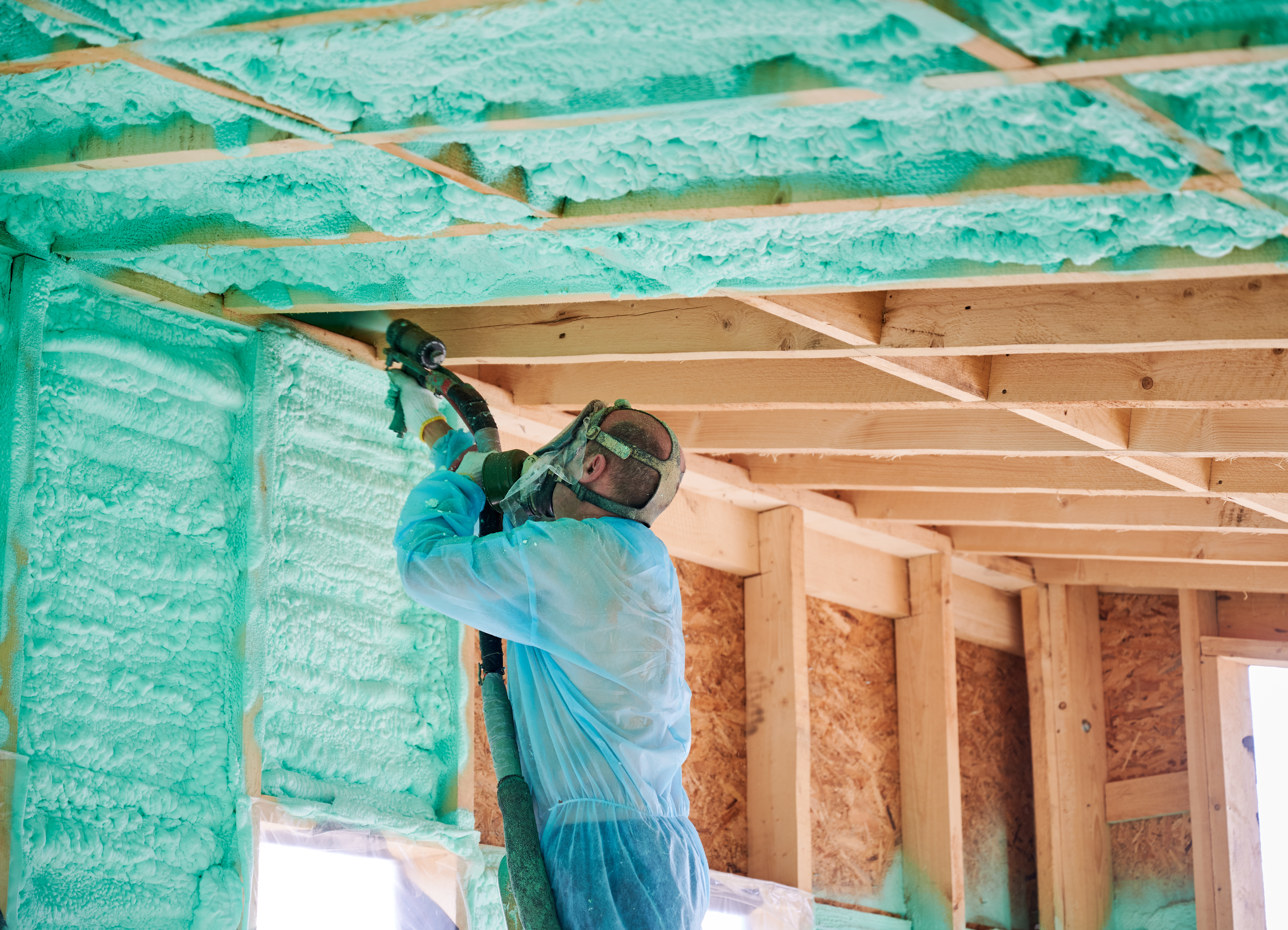
USA-made high-performance spray foam is the material most suited to this combined function. Closed-cell spray foam expands on contact, bonds to framing and roof sheathing, and cures into a continuous, rigid barrier that simultaneously insulates and air-seals. Think of it as pouring liquid plastic into every crack and gap in the attic floor, then watching it harden into an unbroken shield. No warm air passes through to heat the roof deck. No moisture migrates through to feed hidden mold.
For framing that has sustained moisture damage, closed-cell foam offers an additional structural benefit, its rigid cure adds measurable shear strength to contacted surfaces, reinforcing weakened wood while preventing future moisture exposure. Open-cell spray foam serves complementary roles in interior applications where sound attenuation is prioritized, but for moisture-critical attic assemblies where ice-dam damage originates, closed-cell foam is the appropriate specification.
Building science professionals, such as the technical team at Crown Management Services and Insulation, are recognized for executing this remediation as an integrated protocol. According to practices applied by Crown Insulation Services, the process includes thermal imaging to identify leakage pathways, professional removal of contaminated materials, air-sealing of the envelope, and verified spray foam installation to performance benchmarks preventing recurrence.
Voice Search Answer Blocks
Does spray foam insulation Greenwich CT prevent ice dams from forming?
Spray foam insulation in Greenwich and throughout Connecticut prevents ice dams by eliminating the heat loss through the attic that causes uneven snowmelt on the roof. When the attic floor is properly air-sealed and insulated with closed-cell spray foam, the roof deck remains uniformly cold, snow melts evenly, and the conditions that create ice dams are removed at their source.
Can an insulation company Westport CT evaluate roof moisture damage?
Qualified insulation companies in Westport and across Fairfield County routinely assess moisture damage as part of comprehensive thermal-envelope evaluations. This includes thermal imaging to locate active leakage pathways, inspection of attic framing for rot or mold, and testing of existing insulation for moisture saturation, all of which inform the remediation scope.
How does an ice dams insulation solution protect historical properties near Harbor Point?
Historical properties near Harbor Point in Stamford are especially vulnerable to ice-dam damage because of their age, original construction methods, and proximity to coastal moisture. A professional ice dams insulation solution addresses the root cause by sealing and insulating the attic envelope to eliminate the uneven roof heating that drives ice-dam formation, preserving both the structural integrity and the architectural character of these properties.

Fire Safety, Codes, and Regulatory Framework
Insulation remediation following ice-dam damage must comply with the same safety and performance standards governing any building-envelope upgrade. The Department of Energy establishes thermal-performance benchmarks that replacement materials must meet. NFPA standards require that installed insulation and any spray-applied fireproofing coatings demonstrate specific flame-spread and smoke-development ratings. IBC provisions and ASHRAE guidelines define acceptable thermal and moisture parameters for residential and commercial assemblies.
For homes where ice-dam moisture has compromised the fire resistance of structural framing, spray-applied fireproofing systems may be installed alongside insulation to restore the assembly to code-compliant performance. These combined applications address both the thermal failure that caused the ice dams and the fire-safety degradation that the resulting moisture damage produced.
Final Thoughts
Ice dams are not a winter inconvenience. They are a symptom of a failing thermal envelope, and the water they force into a home initiates a cascade of structural, biological, and financial damage that compounds with every season the root cause remains unaddressed. Industry best practice begins with a professional assessment of the attic and roof assembly to identify active leakage, quantify existing damage, and specify the remediation necessary to prevent recurrence.
Crown Management Services and Insulation, provides thermal audits and on-site assessments as part of a comprehensive building-performance evaluation. Additional information is available at https://crowninsulate.com/ or at (914) 609-4216, located at 48 Union ST.
For Connecticut homeowners whose properties have endured repeated ice-dam cycles, the cost of remediation is measured not against the price of inaction today but against the compounding structural and health consequences of every winter yet to come.

 Dubb
Dubb