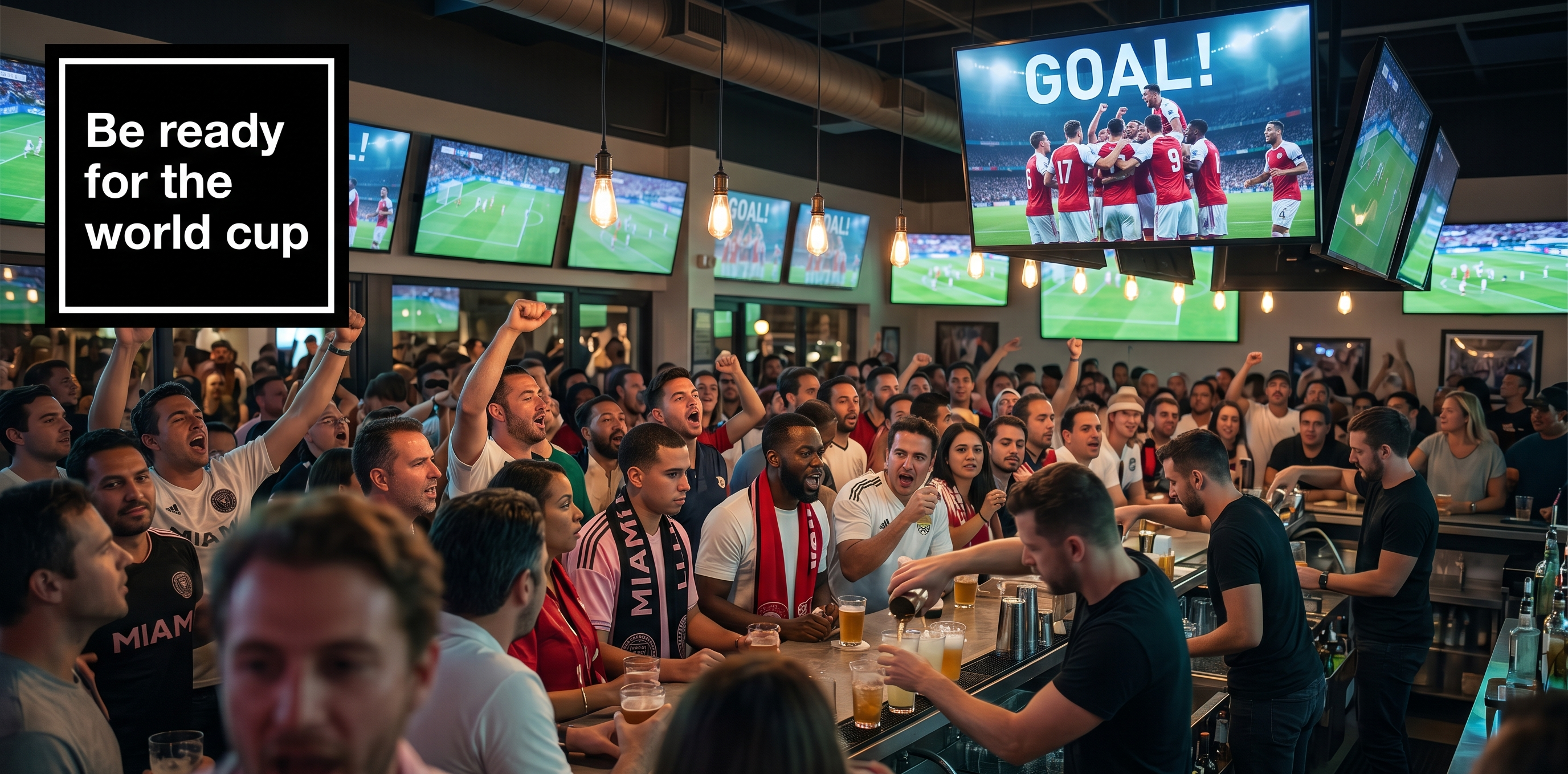
For sports bars, the 2026 FIFA World Cup looks like an obvious revenue opportunity. Bigger crowds, longer dwell time, more food and beverage sales, and repeat match-day traffic can all be good for business. But the same event conditions that make the tournament commercially attractive can also change a bar’s exposure profile. That is why World Cup 2026 sports bar liability deserves attention well before the first kickoff. FIFA confirms that the tournament will run from June 11 to July 19, 2026, feature 48 teams and 104 matches, and include Miami as an official host city with seven matches. Those facts alone suggest that hospitality venues in and around key tourism corridors should expect abnormal demand patterns, not ordinary summer traffic.
The central issue is simple: a sports bar does not become riskier only when it changes ownership, relocates, or launches a new concept. It can also become riskier when the same space operates under very different crowd conditions. During a major tournament, customers arrive in larger groups, remain on site longer, react emotionally to matches, consume more alcohol, stand in walkways, cluster around screens, and put more pressure on staff to move quickly. In practice, World Cup 2026 sports bar liability is about whether a bar’s insurance and operating controls still match how the venue will actually function during high-intensity match periods. OSHA’s restaurant safety guidance specifically warns about slips, trips, and falls in busy, congested serving areas and recommends keeping passageways free of clutter and crowding.
Why World Cup 2026 Sports Bar Liability Is Different From Ordinary Weekend Risk
A busy Saturday night and a World Cup match day are not necessarily the same thing. A sports bar may already be accustomed to alcohol service, noisy crowds, and high table turnover. But a global tournament can compress all of those factors into a more concentrated and emotionally charged environment. FIFA’s official host-city material for Miami makes clear that the city is part of the event footprint, and its dedicated World Cup pages describe Miami as host of seven matches in the biggest tournament format to date. That matters because it signals a predictable reason for bars, restaurants, and entertainment venues to plan for unusual demand.
The legal and insurance relevance comes from density and intensity. More patrons mean more movement, more spills, more blocked sightlines, more pressure on door staff and servers, and more chances for one small condition to turn into a claim. OSHA’s serving-area guidance identifies several specific problems that become more likely in busy hospitality settings: puddles near ice bins, slippery or uneven floor surfaces, working in congested areas, carrying items around blind corners, and crowded passageways. Those are exactly the kinds of ordinary operational details that can become extraordinary once tournament traffic rises.
This is why World Cup 2026 sports bar liability should not be reduced to a generic idea of “being careful.” It is really about volume interacting with exposure. A bar that can manage 100 guests smoothly may function very differently with 180 guests lingering across several televised matches, especially if standing-room traffic increases and service patterns change. The broader lesson is that event opportunity and event risk often scale together.
Liquor Liability Is One of the First Areas to Review
For sports bars, the most obvious pressure point is alcohol service. The National Restaurant Association advises operators to allow guests only one drink at a time, discourage rapid drinking, and pace service because alcohol is metabolized slowly. The Association also points operators toward alcohol-service training as a practical tool for reducing service-related mistakes. During a major tournament, those recommendations become even more relevant because atmosphere affects behavior. Guests celebrate, commiserate, order in waves, and may stay much longer than they would on an ordinary evening.
That shift matters because World Cup 2026 sports bar liability is not just about whether a bar sells alcohol. It is about whether the tournament changes how alcohol is consumed and supervised in the venue. A sports bar may introduce drink specials, extend hours, promote watch parties, or lean harder into game-day identity. Each of those decisions can have operational consequences. The real risk is not always dramatic overservice in a textbook sense. It may be inconsistent monitoring when the staff is overloaded, delayed recognition that a guest should be cut off, or breakdowns in communication between bartenders, servers, and floor managers.
This is also where internal insurance review becomes practical rather than abstract. A business preparing for match-day demand should understand how its general liability and hospitality-specific exposures interact with alcohol-heavy service conditions. The key point is not that every bar will face a liquor-related claim during the World Cup. It is that bars should not assume their ordinary controls will hold up automatically when volume, emotion, and drinking patterns intensify.
World Cup 2026 Sports Bar Liability and Slip-and-Fall Exposure
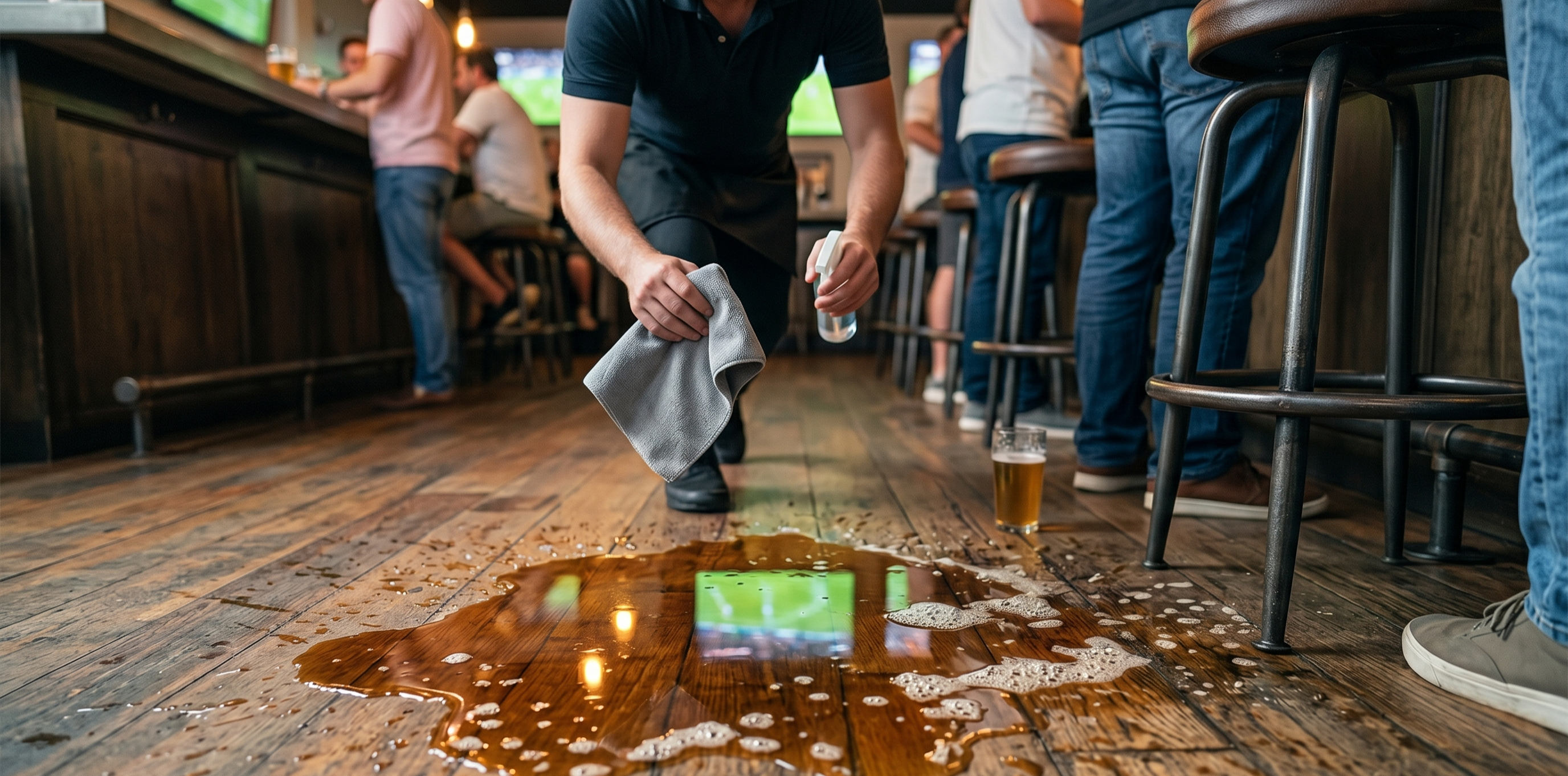
A large share of hospitality claims do not come from dramatic events. They come from routine hazards made worse by crowd conditions. OSHA’s guidance for restaurant workers repeatedly stresses keeping floors clean and dry, using warning signs for wet areas, reducing overcrowding, providing non-slip matting where floors tend to be wet, and keeping walkways free of clutter. That guidance is written in a worker-safety context, but the practical implications clearly overlap with customer-facing liability risk in bars and restaurants.
Sports bars are especially vulnerable to this kind of issue during major matches because patrons often stand rather than remain seated, gather around screens, pivot quickly during moments of excitement, and move through spaces carrying drinks. Ice bins, condensation, spills, and narrow pathways can all create problems even before the room reaches peak occupancy. OSHA’s specific examples include hazards around ice bins, blind corners, and busy, congested areas. Those descriptions map closely onto real sports bar layouts.
From an insurance standpoint, World Cup 2026 sports bar liability includes asking whether a venue’s physical setup will operate safely under tournament conditions. Are temporary standing areas being created? Are host stations, promo displays, or extra coolers narrowing walkways? Those are operational questions, but they matter because claims often arise from exactly those situational details.
Crowding Changes Premises Liability Even Without a “Big Incident”
One of the easiest mistakes for operators is to look only for catastrophic scenarios. In reality, premises liability often grows through accumulation rather than spectacle. A waiting crowd at the entrance can change ingress and egress. Fans gathering near a screen can block a service lane. A spill that would be harmless in a half-empty room can matter much more when visibility is poor and movement is rushed. OSHA’s restaurant safety materials repeatedly refer to clutter, crowding, wet floors, and obstructed movement as meaningful hazards.
That is why World Cup 2026 sports bar liability is not only a back-end insurance topic. It is also a front-end layout topic. If a sports bar expects significantly larger crowds, then crowd flow itself becomes part of the risk review. Even small measures such as keeping sight lines clearer, relocating supply carts, adjusting queueing, or protecting blind corners can have liability implications when customer density rises. OSHA explicitly recommends decreasing overcrowding by adding additional supply stations or carts in convenient locations so passageways remain more manageable.
The broader insight is that bars do not need to experience riots, major fights, or collapse-level events for liability to increase. A sequence of minor, ordinary breakdowns under match-day pressure is enough.
Staff Pressure Can Quietly Raise Liability Exposure
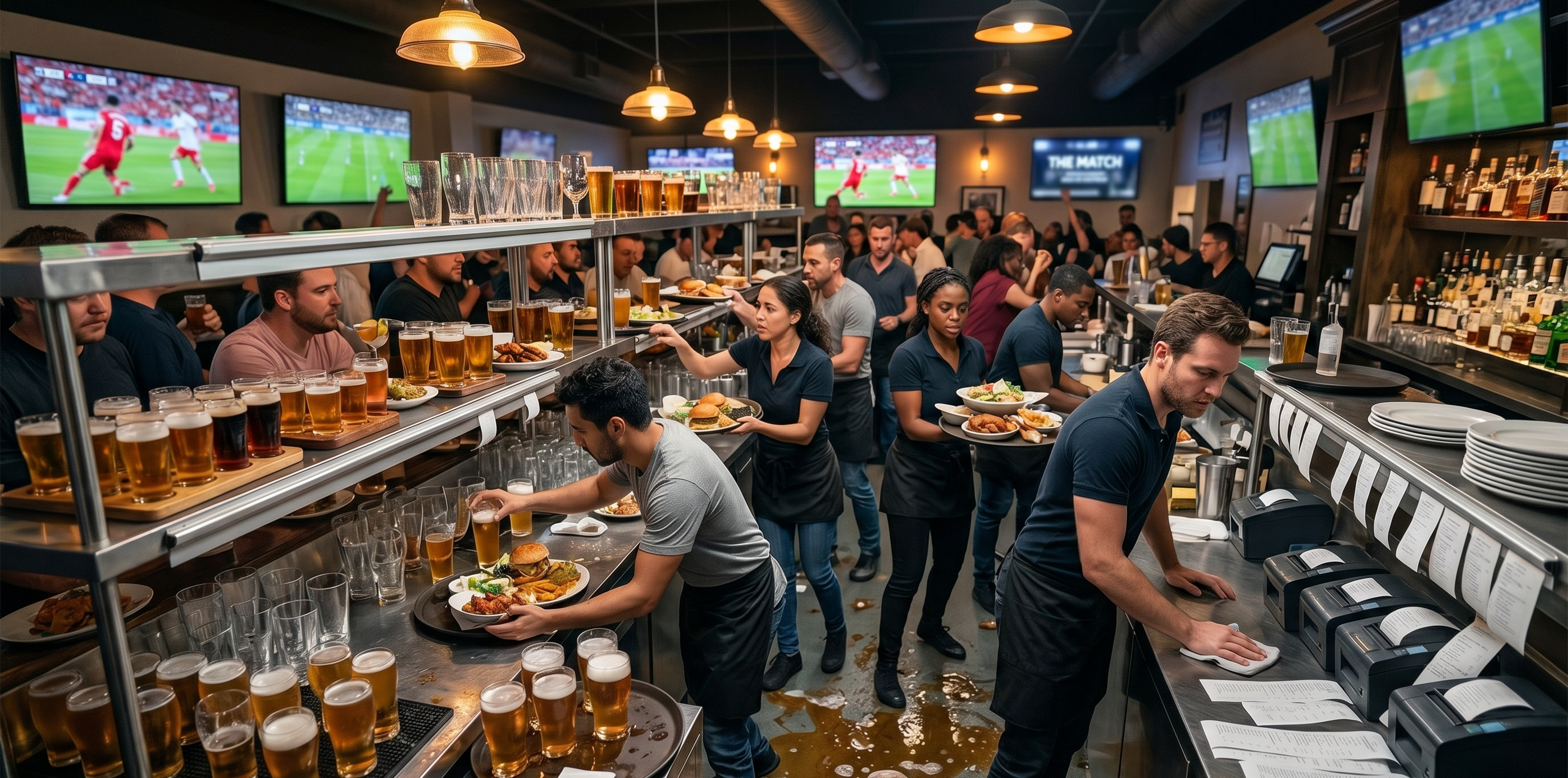
Customers are not the only source of exposure. A bar’s staff behavior under pressure can shape guest risk as well. OSHA’s serving, cleanup, and cooking guidance highlights how workers in restaurant environments face slips, trips, and falls when floors are wet, pathways are crowded, or visibility is blocked by the items they are carrying. In cooking areas, OSHA also notes the added hazard of hot surfaces and liquids when falls occur. During event-heavy service, the chance of rushed movement and overloaded staff naturally rises.
This matters for World Cup 2026 sports bar liability because customer claims and worker claims are not neatly separated in day-to-day operations. A worker rushing through a crowded floor can contribute to a customer injury. A poorly staffed shift can delay spill cleanup or guest intervention. A floor manager stretched too thin can miss early warning signs of trouble. The venue may think of the problem as “staffing,” but from a liability standpoint it is really a service-control issue.
That is why workers’ compensation insurance also belongs in the conversation. Tournament traffic may create more lifting, more carrying, more wet-floor exposure, and more fatigue. A sports bar expecting to capitalize on the World Cup should not think only about sales per square foot; it should also think about whether the staff setup is increasing claim probability on both the employee and guest side.
Temporary Match-Day Setups Can Create Insurance Mismatches
Another reason World Cup 2026 sports bar liability deserves a closer look is that bars often adjust their operations temporarily for major events. They may add standing areas, bring in extra televisions, shift furniture, create outdoor viewing sections, extend patio service, use temporary barriers, offer special promotions, or increase security presence. None of those changes necessarily look major from a business owner’s perspective. But together they can alter how the venue functions and where incidents occur.
This is one of the most common ways insurance mismatches emerge: the business still thinks of itself as the same operation, but its practical exposure has changed. The World Cup can accelerate that process because promotions and crowd expectations encourage bars to function more like event venues than ordinary neighborhood establishments. In hospitality environments, that distinction matters. FIFA’s official schedule and host-city materials do not tell bars how to run their businesses, but they do make one thing clear: the scale and structure of the event are large enough to justify advance planning.
This is also where restaurant and entertainment insurance becomes a useful internal reference point. A sports bar leaning more heavily into watch-party traffic during the World Cup should not assume that nothing important has changed simply because the lease, business name, and liquor license remain the same.
Security, Emotional Crowds, and Incident Escalation
Sports bar risk is not limited to slips, spills, and overservice. Crowd emotion itself can create management problems. Major tournaments are intense by design. Supporters are invested, rivalries matter, and match outcomes can shift the mood of an entire room in seconds. While not every game environment becomes confrontational, emotionally charged crowds require stronger situational awareness than ordinary dining traffic.
This is where World Cup 2026 sports bar liability overlaps with basic incident prevention. The venue’s ability to monitor conflict, manage lines, pace alcohol service, and intervene early matters more when crowds are larger and emotionally reactive. Even without citing a single dramatic national statistic, the practical point is obvious: a room full of excited, disappointed, or intoxicated sports fans creates a different operational challenge than a routine lunch service.
Risk management here is broader than insurance paperwork alone. It includes staffing ratios, security planning where appropriate, visible management presence, and clear escalation procedures. That is one reason broader risk management is not a vague concept for hospitality businesses preparing for event surges. It is the bridge between the policy structure and the real environment in which claims can occur.
World Cup 2026 Sports Bar Liability and Off-Premises Exposure
Bars and hospitality venues may also expand beyond their core service pattern during the tournament. Some may increase delivery, run catered watch parties, provide drinks or food at special events, or rely on vehicles more heavily for supplies and event-related logistics. OSHA’s delivery and storage guidance notes that workers can injure themselves while loading and unloading in delivery areas, storage zones, or parking lots, and it specifically points to variable outside conditions as an added hazard.
That matters because World Cup 2026 sports bar liability may expand beyond the bar floor itself. A venue can create extra exposure through transportation, temporary off-site service, or high-frequency loading activity without consciously deciding that it has become a more complex risk. During major events, businesses often move faster than their documentation and assumptions.
For venues that use vehicles in support of operations, commercial auto may need closer attention as part of a broader review. The key point is not that every sports bar suddenly becomes a transportation risk. It is that unusual event volume can broaden operations in ways owners do not fully register until something goes wrong.
Why Revenue Opportunity Can Distract From Liability Review
The commercial upside of the World Cup is easy to see. Hospitality venues may benefit from more reservations, larger tabs, branded match events, premium menu offers, and customer acquisition that extends beyond the tournament. That is real. But opportunity can create blind spots. When operators are focused on staffing up, promoting events, and maximizing traffic, they may underinvest time in reviewing the less visible parts of event readiness.
This is exactly why World Cup 2026 sports bar liability should be discussed early. The tournament is already defined by official dates, host cities, and structure. Miami’s role as a seven-match host city and the 104-match tournament format mean that this is not a vague future possibility. It is a scheduled, large-scale event with predictable hospitality consequences in at least some U.S. markets.
The practical business lesson is that a sports bar can pursue event revenue and still take liability exposure seriously. In fact, that combination is usually the smarter posture. Good event execution is not just about filling seats. It is about making sure the physical setup, staff practices, service controls, and insurance structure remain aligned when the venue is under more pressure than usual.
A Practical Liability Review Before the Tournament
A sensible review does not need to be overly technical. It starts with honest questions. Will crowd sizes increase materially? Will alcohol sales become a larger share of the event experience?
If the answer to several of those questions is yes, then World Cup 2026 sports bar liability deserves focused review. Operators should not assume that because a bar has handled playoff games, local derbies, or weekend traffic before, it is automatically prepared for tournament-scale demand. The World Cup’s size and international draw make it a different kind of pressure event, especially in tourism-heavy markets.
This is also the right moment to confirm that internal links between operations and insurance are not being treated separately. A venue’s general liability position, staffing practices, crowd controls, and hospitality-specific coverage should be reviewed as part of one operational picture, not as disconnected tasks.
A Calm Conclusion on World Cup 2026 Sports Bar Liability
The 2026 World Cup is likely to be good business for many sports bars. More fans, more viewing occasions, and more sustained demand can create real upside. But those same conditions can also create denser crowds, heavier alcohol service, more stressful staffing conditions, and a greater chance that a routine operational issue turns into a claim. FIFA’s official materials confirm the scale of the event and Miami’s role as a seven-match host city, while OSHA’s hospitality guidance shows just how easily clutter, crowding, wet floors, and rushed movement can create injury hazards in restaurant and bar environments.
That is why World Cup 2026 sports bar liability should be reviewed before match traffic peaks. The point is not to become alarmist. It is to make sure the bar’s insurance structure, crowd management, alcohol-service discipline, and staffing reality still match the way the business will actually operate when the tournament arrives. For sports bars expecting to benefit from the World Cup, that is not pessimism. It is good preparation.

 Dubb
Dubb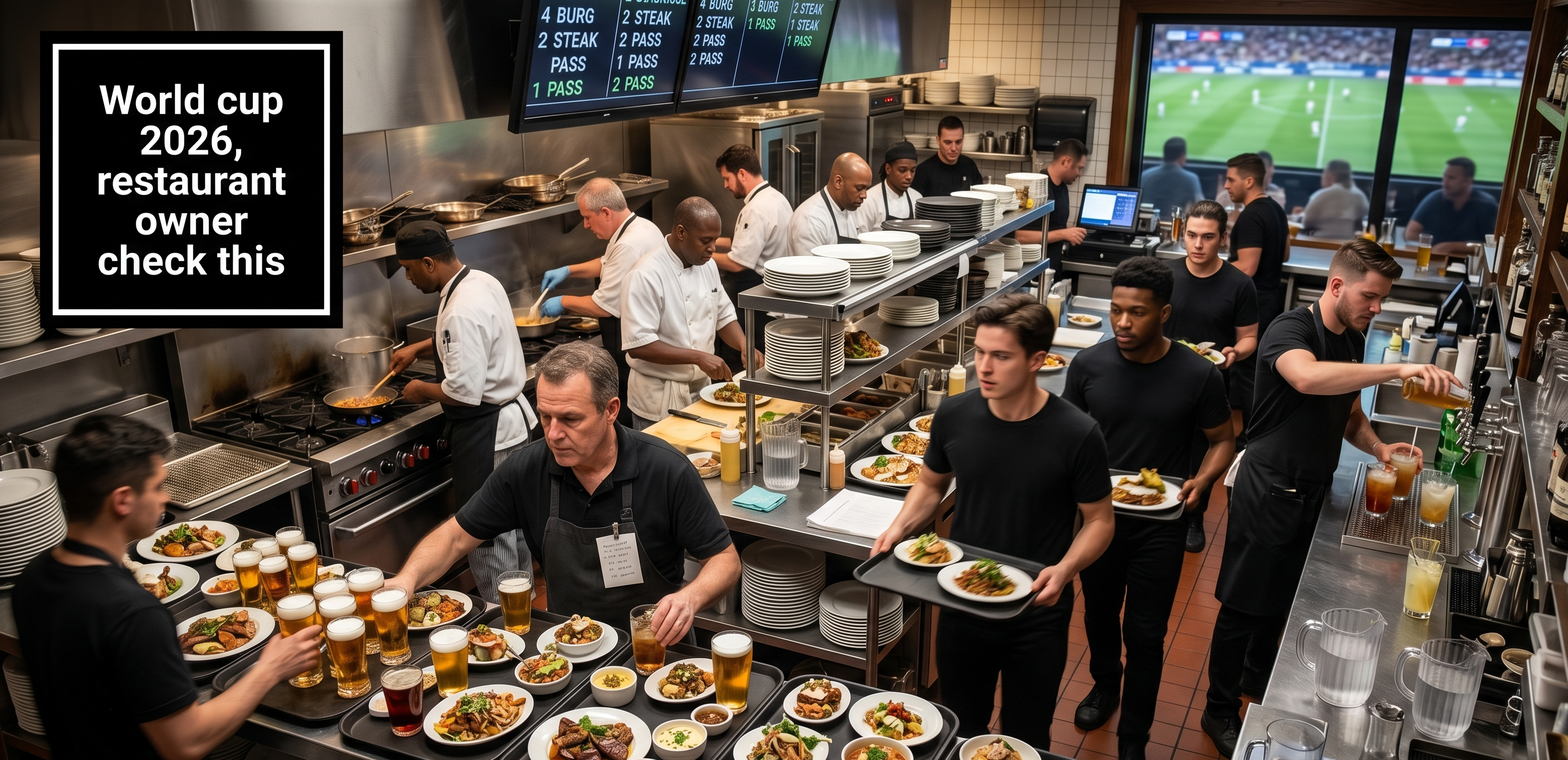
 USA.CIS