
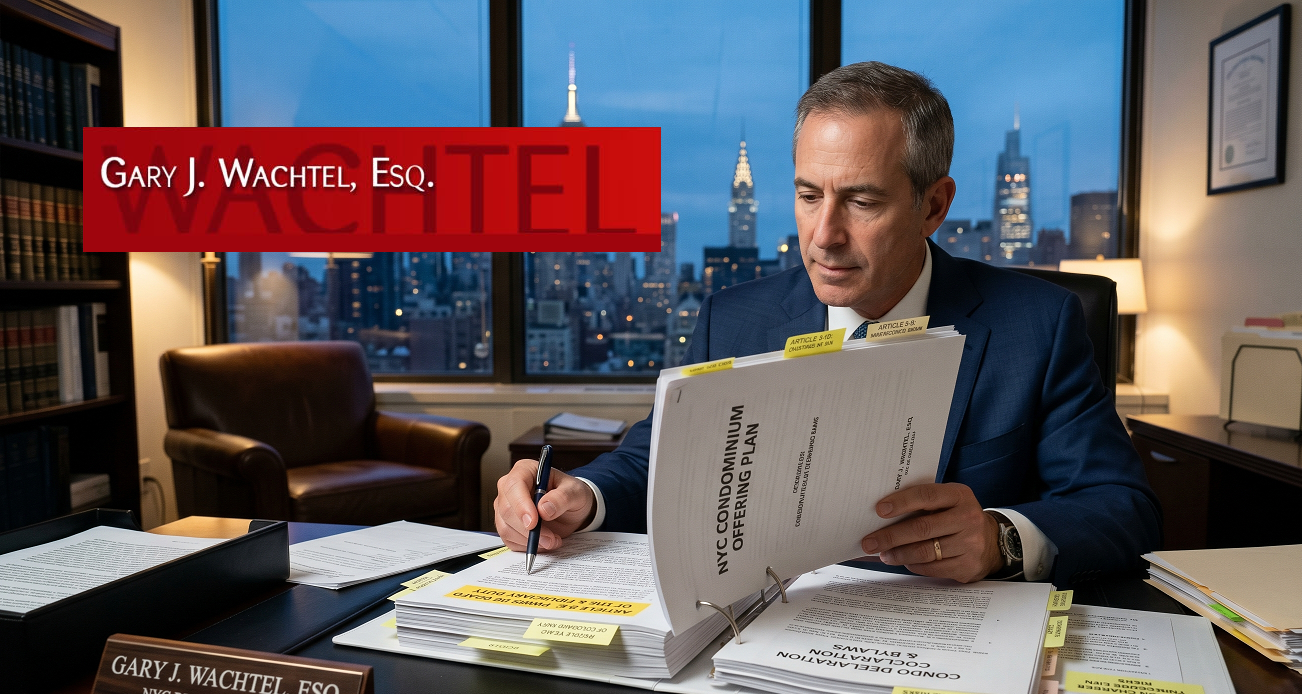
Condominium ownership in New York City is one of the most common forms of real property ownership in one of the world’s most complex real estate markets. For buyers, investors, and current owners, the legal dimensions of condo ownership extend well beyond the initial purchase transaction, touching on governance rights, financial obligations, dispute resolution, renovation restrictions, and the ongoing relationship between individual unit owners and the condominium board that manages the building.
Understanding those legal dimensions is not merely academic. Disputes between unit owners and boards of managers, conflicts over common charges and special assessments, disagreements about alteration rights, and questions about subletting and sale restrictions all generate real legal consequences, and the legal framework governing them is considerably more complex than most condo owners realize when they first take title.
This article examines the core legal dimensions of condominium ownership in New York City, with particular attention to the issues that most frequently give rise to disputes and the legal framework within which those disputes are resolved.
How NYC Condominium Ownership Is Legally Structured
Condominium ownership in New York is governed by the New York Condominium Act, Article 9-B of the Real Property Law. Under New York law, a condominium is a form of real property ownership in which individual units are owned separately by individual owners, while the common elements of the building, lobbies, hallways, mechanical systems, rooftop spaces, and other shared areas, are owned collectively by all unit owners as tenants in common.
This dual ownership structure, private ownership of the unit, collective ownership of the common elements, creates the foundational legal tension that runs through virtually every aspect of condominium law. The unit owner’s rights in their own space are limited by the collective governance framework that governs the shared building. The board’s authority over common elements and building operations is limited by the rights of individual unit owners embedded in the governing documents.
The practical resolution of this tension is determined primarily by the condominium’s governing documents, the offering plan, the declaration, and the bylaws, which together define the legal framework within which every unit owner, board member, and building resident must operate.
The Governing Documents: The Legal Constitution of the Condominium
For any condominium unit owner in New York City, the governing documents are the primary source of legal rights and obligations. Understanding what these documents say, and what they mean in practice, is essential to informed ownership.
The Offering Plan
The offering plan is the foundational disclosure document prepared by the developer and filed with the New York State Attorney General’s office before units in a new condominium can be offered for sale. The offering plan describes the physical structure of the building, the legal description of each unit, the allocation of common interests among unit owners, the initial common charge structure, and the terms on which the condominium is being offered.
Purchasers of newly constructed condominiums are entitled to review the offering plan before committing to purchase, and the plan’s representations about the building and its financial structure have legal significance. Amendments to the offering plan, which are common during the sales period, must also be reviewed carefully.
For purchasers of resale condominium units, the current offering plan and all amendments are still relevant documents. A tenant attorney new york and real estate practitioner with condominium experience will review these documents as part of the due diligence process for any condo acquisition.
The Declaration
The declaration is the document recorded in the public land records that legally establishes the condominium. It describes the physical boundaries of each unit, establishes the percentage interest that each unit holds in the common elements, and creates the legal framework for the condominium’s governance.
The percentage interest allocated to each unit has direct practical consequences: it determines each unit owner’s proportionate share of common charges, their share of the building’s common expenses, and, in many condominiums, their voting weight in matters requiring owner approval. Changes to the declaration typically require approval by a supermajority of unit owners and are relatively uncommon.
The Bylaws
The bylaws govern the operational mechanics of the condominium, including the composition and powers of the board of managers, the procedures for electing board members, the rules for calling and conducting owner meetings, the process for adopting and amending house rules, and the enforcement mechanisms available to the board when unit owners violate the governing documents.
The bylaws are the primary source of the board’s authority, and they are also the primary protection for unit owners against an overreaching board. Understanding what the bylaws permit, and what they prohibit, is essential context for resolving any dispute between a unit owner and the board of managers.

Common Charges, Special Assessments, and Financial Obligations
One of the most practically significant legal dimensions of condominium ownership is the obligation to pay common charges, the periodic assessments levied by the board of managers to fund the building’s operating expenses and reserve fund.
The Nature of Common Charge Obligations
Common charges are not discretionary. A unit owner’s obligation to pay common charges is a legal obligation that arises from the governing documents and, by extension, from New York’s Condominium Act. Failure to pay common charges can result in the board placing a lien on the unit, and, ultimately, pursuing foreclosure of that lien to recover the unpaid amounts.
This consequence, the potential loss of one’s home or investment property due to unpaid common charges, is not widely understood by first-time condo owners. It underscores the importance of treating common charge obligations with the same seriousness as mortgage payments and property tax obligations.
Special Assessments
In addition to regular common charges, condominium boards have the authority to levy special assessments, one-time or periodic charges above and beyond the regular common charge budget, to fund capital expenditures or address unexpected expenses. Special assessments can be substantial, particularly in older buildings that require significant infrastructure investment.
The board’s authority to levy special assessments, and the procedural requirements that must be followed in doing so, are governed by the bylaws. A board that fails to follow proper procedures in levying a special assessment may expose itself to a legal challenge by unit owners, a type of dispute that arises with some frequency in New York City condominium buildings.
Challenging Common Charge Allocations
Unit owners who believe that common charges have been improperly calculated, that the board has exceeded its authority in levying a special assessment, or that the financial management of the building has been mishandled have legal avenues for challenging these decisions. The appropriate legal framework depends on the specific facts, including whether the challenge involves a procedural defect in the board’s action, a breach of fiduciary duty, or a substantive dispute about the proper allocation of common expenses.
Firms like Gary Wachtel with experience in New York condominium law assist unit owners in evaluating these challenges and determining the most effective legal strategy for addressing financial disputes with the board of managers.
The Board of Managers: Authority, Fiduciary Duties, and Limits
The board of managers is the governing body of the condominium, elected by unit owners and entrusted with the management of the building’s common elements and the enforcement of the governing documents. Understanding the legal scope and limits of board authority is essential for unit owners navigating any dispute with their condominium’s leadership.
The Business Judgment Rule
In New York, condominium boards, like corporate boards of directors, are generally protected by the business judgment rule when making decisions within the scope of their authority. This legal doctrine provides that courts will not second-guess a board’s business decisions as long as those decisions were made in good faith, in the exercise of honest judgment, and in the best interests of the condominium.
The practical effect of the business judgment rule is that unit owners challenging a board’s decision face a relatively high legal standard. Simply disagreeing with the board’s choice of contractor, its decision to defer a capital project, or its determination of the appropriate common charge level is generally not sufficient grounds for a successful legal challenge.
However, the business judgment rule has limits. It does not protect decisions made in bad faith, for improper purposes, or in violation of the governing documents or applicable law. A board that acts outside the scope of its authority, or that uses its power to benefit individual board members at the expense of the broader ownership, may be subject to legal challenge notwithstanding the business judgment rule.
Fiduciary Obligations of Board Members
Board members of a New York condominium owe fiduciary duties to the unit owners they represent. These duties include the obligation to act in good faith, to exercise reasonable care in making decisions, and to avoid conflicts of interest that could compromise their independence.
A board member who has a personal financial interest in a vendor contract awarded by the board, who uses their position to benefit themselves at the expense of other owners, or who deliberately conceals material information from unit owners may be personally liable for breach of fiduciary duty. These claims, while not easily won, represent an important accountability mechanism for unit owners dealing with boards that have exercised their authority improperly.
Enforcement Powers and Their Limits
The board of managers has broad authority to enforce the condominium’s governing documents, including the house rules, the declaration, and the bylaws. This enforcement authority includes the power to levy fines for violations, to restrict access to amenities, and in some circumstances to pursue legal action against non-compliant unit owners.
However, the board’s enforcement authority must be exercised within the procedural framework established by the governing documents. A board that imposes fines without following the required notice and hearing procedures, or that selectively enforces rules against some owners while ignoring similar violations by others, may be acting in excess of its legal authority.
A tenant attorney new york with condominium dispute experience will evaluate both the substance of a board’s enforcement action and the procedural framework within which it was taken, because procedural defects can be as legally significant as substantive ones.

Alteration Rights and the Legal Framework for Renovations
For condominium unit owners who wish to renovate or alter their units, the legal framework governing alterations is a critical and often underappreciated dimension of ownership. In New York City condominiums, the right to make alterations is not unfettered, it is subject to both the condominium’s governing documents and the regulatory requirements of the city’s building department.
Alteration Agreements and Board Approval
Most NYC condominium bylaws require unit owners to obtain board approval before undertaking any alteration that affects the structural elements of the building, the building’s mechanical, electrical, or plumbing systems, or the common elements. The process for obtaining this approval typically involves submitting an alteration application, executing an alteration agreement that allocates liability for any damage caused by the work, and providing evidence of the required insurance.
The alteration agreement is a legally significant document that the unit owner executes with the condominium. It typically requires the owner to indemnify the condominium against any claims arising from the renovation work, to restore any damage caused by the alteration, and to comply with all applicable laws and building codes. Understanding the obligations undertaken in an alteration agreement before signing is an important step that unit owners sometimes overlook.
NYC Department of Buildings Permits and Compliance
Many renovation projects in NYC condominiums require permits from the New York City Department of Buildings. Work that requires a permit, including structural alterations, electrical work, plumbing modifications, and changes that affect means of egress, must be performed by licensed contractors and must be inspected and signed off by the DOB upon completion.
Unit owners who perform unpermitted work, or who allow contractors to perform work without obtaining required permits, expose themselves to significant legal risk. Open DOB violations that arise from unpermitted work can affect the owner’s ability to sell or refinance the unit, and in some cases can result in stop-work orders that halt the renovation entirely.
Reviewing DOB records before purchasing any condominium unit to identify open violations or unpermitted work performed by prior owners is a standard component of legal due diligence, and a step that should not be omitted even in competitive market conditions.
Wet Over Dry Issues and Neighbor Disputes
One of the most common sources of condominium disputes in New York City involves damage caused by water infiltration from one unit to another, commonly referred to as “wet over dry” issues. When a unit owner’s renovation work, or a failure of plumbing or fixtures within their unit, causes water damage to the unit below, the legal question of who bears responsibility for the damage can be complex.
The allocation of responsibility depends on the specific facts, including the cause of the water infiltration, the provisions of the governing documents regarding maintenance responsibilities, and whether the renovation work was properly permitted and performed. These disputes regularly generate litigation between unit owners, and sometimes between unit owners and the board, over who bears the cost of repair.
Subletting and Leasing Restrictions
Condominium ownership generally affords more flexibility than cooperative ownership with respect to subletting, but NYC condominiums are not without restrictions on a unit owner’s ability to lease their unit to a third party.
Typical Subletting Restrictions
Most NYC condominium bylaws impose some restrictions on subletting, which commonly include a minimum lease term requirement, often six or twelve months, a prohibition on short-term rentals, and a requirement that the board be notified of any subtenancy. Some condominiums require board approval of subtenants, though this is less common than in cooperative buildings.
The enforceability of subletting restrictions depends on whether they are properly embedded in the governing documents and whether the board has consistently enforced them. A restriction that has been routinely waived or selectively enforced may be more vulnerable to challenge than one that has been consistently applied.
Short-Term Rental Regulations
The regulatory environment governing short-term rentals in New York City has become significantly more restrictive in recent years. Local Law 18, enacted in 2023, effectively prohibited most short-term rentals of fewer than 30 days in residential units unless the host is present throughout the rental period and no more than two guests are accommodated.
For condominium unit owners who were using their units, or considering using their units, as short-term rental properties through platforms like Airbnb, these regulations have fundamentally changed the legal landscape. Compliance with both the city’s short-term rental regulations and the condominium’s governing documents is now a more complex legal question than it was previously.
A tenant attorney new york familiar with New York City’s current rental regulations can advise unit owners on the compliance requirements applicable to their specific situation and governing documents.

Sales, Transfers, and the Right of First Refusal
When a condominium unit owner decides to sell their unit, the legal process involves not only the standard elements of a NYC real estate transaction but also condominium-specific requirements that can affect the timing and structure of the sale.
The Right of First Refusal
Many NYC condominium governing documents grant the board of managers a right of first refusal, the right to purchase the unit on the same terms that the seller has agreed with a prospective third-party buyer. If the board exercises this right, it steps into the buyer’s position and acquires the unit at the agreed price and terms.
In practice, most condominium boards do not exercise the right of first refusal, as it requires the condominium to have available funds to complete the purchase. However, the right of first refusal process adds a procedural step to any condominium sale that must be managed, including providing the required notice to the board and allowing the applicable response period to expire before closing can proceed.
Board Notification and Approval Requirements
Even where the board does not have a right of first refusal, most condominiums require the seller to notify the board of any proposed sale and to provide certain information about the prospective buyer. The timeline for this process should be factored into the closing schedule for any condominium sale.
Firms like Gary Wachtel that regularly handle NYC condominium transactions understand the specific procedural requirements of the right of first refusal and board notification process, and manage these requirements as a standard component of transaction coordination.
Dispute Resolution Between Unit Owners and Boards
Disputes between individual unit owners and the condominium board of managers represent one of the most common categories of residential real estate litigation in New York City. Understanding the legal framework for resolving these disputes, and the practical options available to unit owners, is important context for any condominium owner who finds themselves in conflict with their building’s leadership.
Internal Dispute Resolution
Many condominium bylaws include provisions for internal dispute resolution, requiring the parties to attempt mediation or other informal resolution before resorting to litigation. Where these provisions exist, following them is not merely advisable, it may be a legal prerequisite to maintaining a court action.
Even where no formal internal process is required, attempting to resolve disputes through direct communication with the board, and documenting those communications carefully, is generally advisable before escalating to litigation. Courts look favorably on parties who have made genuine efforts to resolve disputes informally.
Article 78 Proceedings
In New York, challenges to decisions made by condominium boards, particularly decisions that are characterized as quasi-governmental in nature, are sometimes brought as Article 78 proceedings in the New York State Supreme Court. Article 78 proceedings allow courts to review whether a board’s decision was made in violation of lawful procedures, was arbitrary and capricious, or was made in excess of the board’s authority.
The interplay between the business judgment rule and Article 78 review is a nuanced area of New York condominium law that requires careful legal analysis in any specific dispute. The Cornell Legal Information Institute provides useful background on the general legal framework governing condominiums, though the specific application of New York law requires qualified local counsel.
Plenary Litigation
More serious disputes, including claims for breach of fiduciary duty, actions to recover damages for building defects, and challenges to the validity of board actions, are typically pursued through plenary litigation in the New York State Supreme Court. These cases can involve complex discovery, expert testimony, and extended litigation timelines.
For unit owners contemplating litigation against their condominium board, a realistic assessment of the likely costs, duration, and prospects of litigation, weighed against the available alternatives, is an essential preliminary step that qualified legal counsel is positioned to provide.
The Importance of Legal Counsel in Condominium Ownership
The legal dimensions of condominium ownership in New York City extend throughout the ownership experience, from initial acquisition through the ongoing management of the unit, any renovation projects, subletting arrangements, disputes with the board or neighboring owners, and ultimate sale or transfer.
At each of these stages, the quality of legal counsel available to the unit owner affects the quality of outcomes. Understanding the governing documents before purchasing a unit allows buyers to make informed decisions about the obligations they are assuming. Reviewing alteration agreements carefully before signing prevents owners from accepting disproportionate liability for renovation work. Responding promptly and strategically to board enforcement actions, rather than ignoring them, avoids the escalation of disputes that could have been resolved at an early stage.
For condominium unit owners navigating any of these dimensions of ownership, qualified legal representation from practitioners familiar with New York condominium law is the most effective tool available for protecting their rights and interests.

 USA.CIS