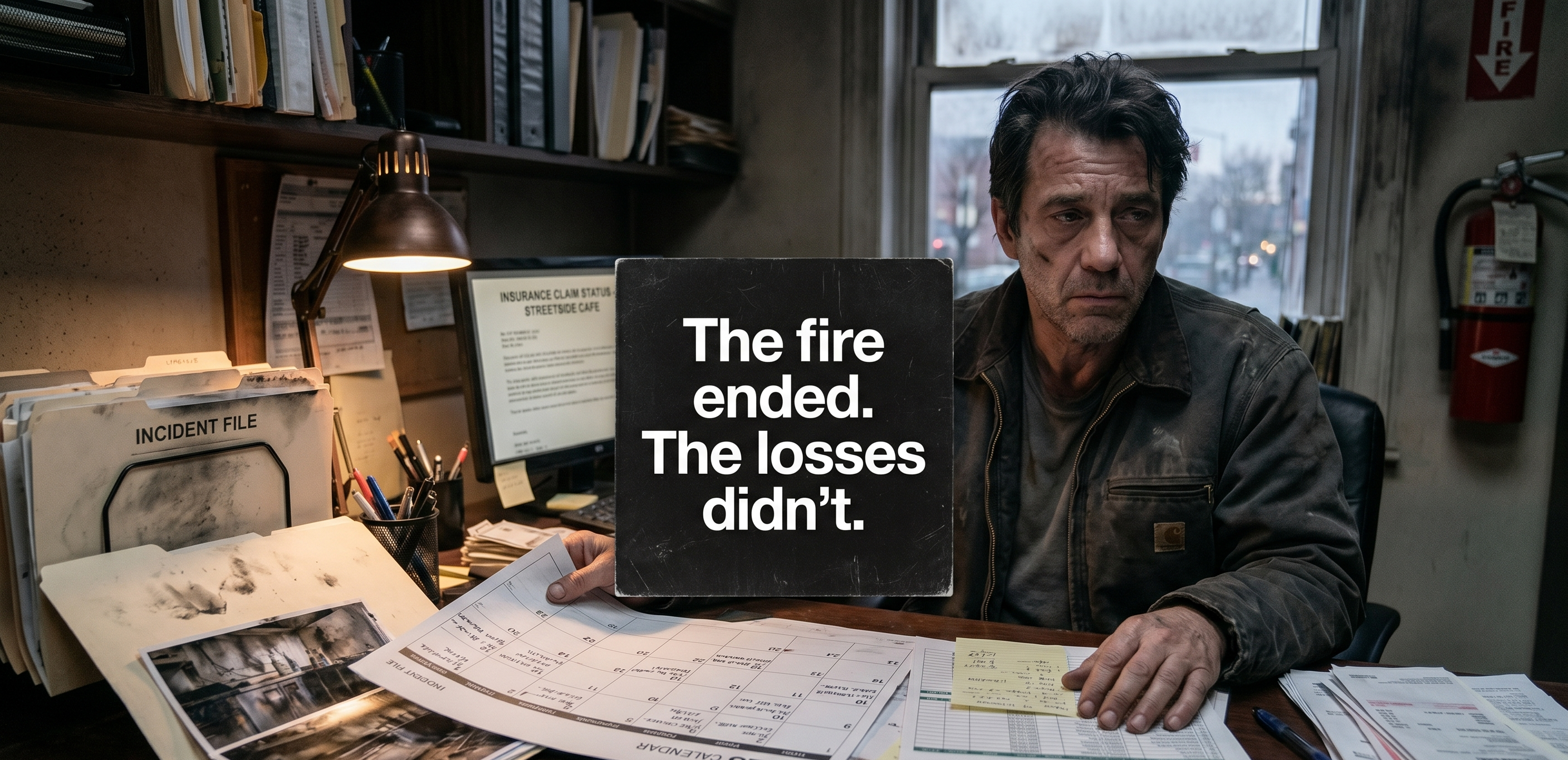
For years, the owner thought preparedness meant one thing. It meant storms. He thought about batteries, flashlights, sandbags, plywood, and weather alerts. Also, he had time to think about hurricanes because he owned a restaurant in a place where hurricane season was real, seasonal, and visible.
He knew how to prepare for something that came with a name, a forecast cone, and dramatic local news coverage and did not think much about the quieter disruptions.
He did not think about the power going out on a normal weekday. Neither did not think about a water interruption shutting down service. He did not think about the kind of closure that starts without wind, flood, or flames. That is where the story of restaurant preparedness beyond natural disasters begins. The National Restaurant Association’s preparedness hub now reflects that wider view. It includes natural disasters, utility disruptions, food safety, employee-pay issues during crisis closures, and other business interruption topics because restaurant disruption rarely fits inside one category anymore.
In the story, the owner is not careless. He is simply narrow. He thinks preparedness is mostly about dramatic external events. That is a common mistake. Ready.gov’s business continuity guidance says organizations should build a continuity team and plan for business disruptions, while its business impact analysis guidance says a disruption can affect critical functions well beyond obvious disasters. FEMA planning guidance makes the same point in more formal language: continuity planning exists to help organizations continue essential functions during a broad range of incidents.
That is why restaurant preparedness beyond natural disasters matters. A restaurant can lose revenue, stability, and customer trust without ever appearing in a storm montage. It can close because the water stops and can lose product because the refrigeration chain breaks. It also can struggle because staff communication fails during a crisis and suffer because a cyber event disables payments or ordering. The restaurant industry’s own materials now frame preparedness that way. Preparedness is not only about surviving the visible event. It is about protecting operations when the business cannot function normally.
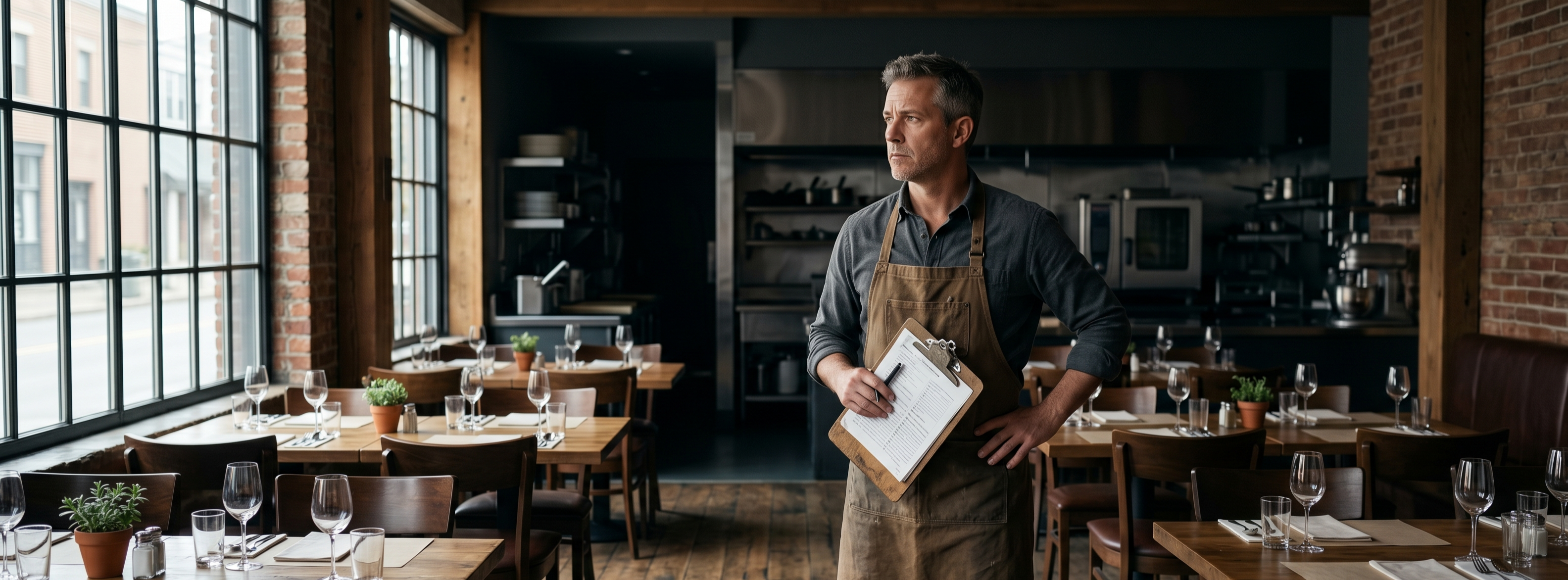
Restaurant Preparedness Beyond Natural Disasters Starts With a Wrong Assumption
In the story, the owner learns the lesson on an ordinary day.
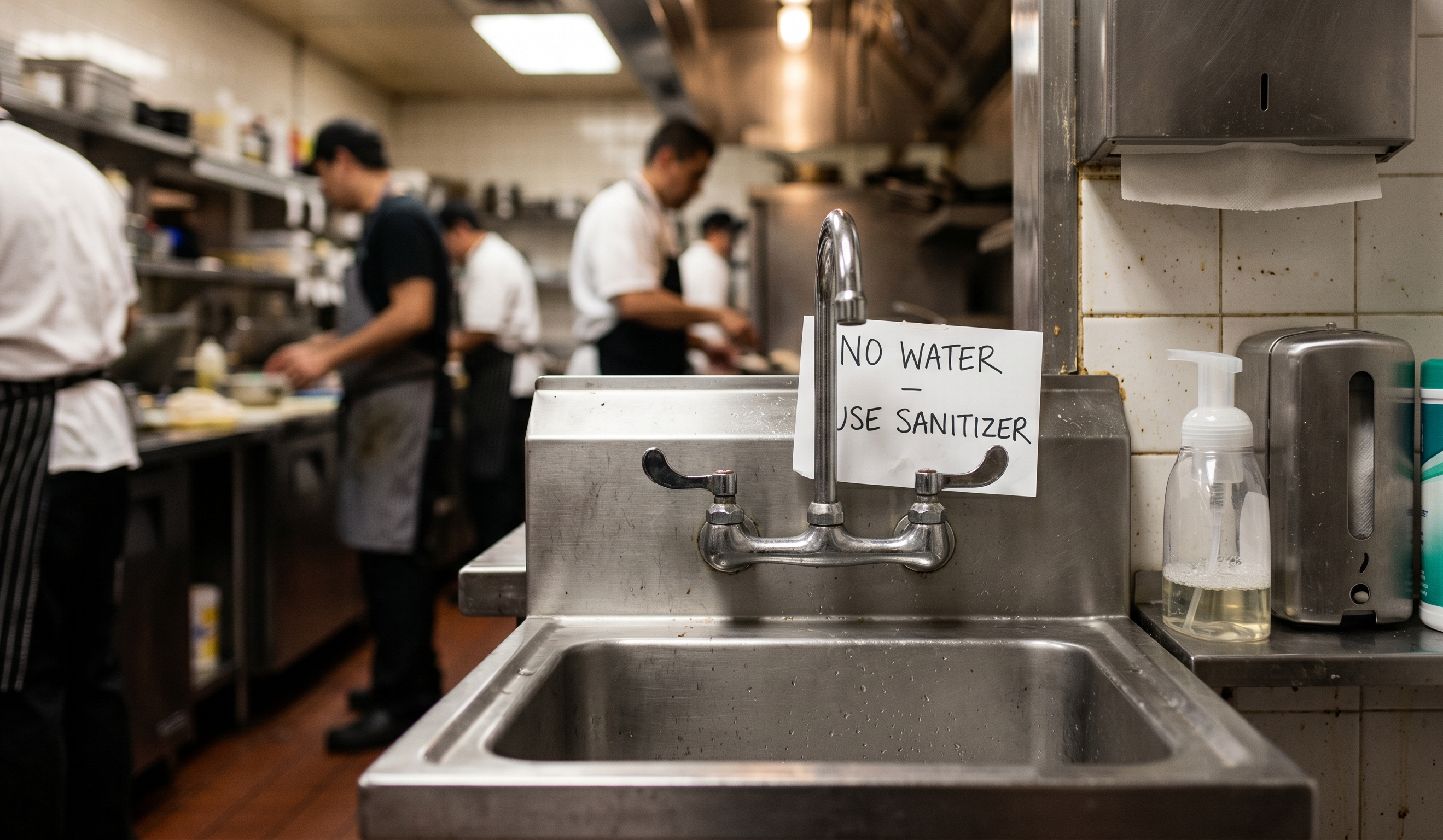
There is no hurricane. No tropical warning. No dramatic emergency banner on television. Instead, there is a utility problem. Water service becomes unreliable. Then it stops. The kitchen cannot operate as planned. Cleaning routines fail. Handwashing procedures become harder to maintain. Guests are still arriving, but the restaurant is no longer in control of the basic conditions that make service safe. The National Restaurant Association’s Always Ready: Utility Disruptions guide exists for exactly this kind of situation. It says utility disruptions can force restaurant closures and lost revenue without warning, and it frames electric, water, and gas failures as preparedness issues that demand planning, insurance review, and recovery strategy.
That is the first shift in restaurant preparedness beyond natural disasters. The owner realizes that the business can become fragile without anything visually catastrophic happening. The room may still look normal. The sign still works. The dining area is still there. But the restaurant cannot safely run the way guests assume it can. FDA guidance on reopening food establishments after hurricanes and flooding makes clear that foodservice operators should conduct a full self-inspection before resuming normal operations and should not compromise food safety when basic conditions have been disrupted. The same logic applies to outages and utility problems even when the cause is not a named disaster.
The owner had always associated preparedness with weather. Now he starts to see it as dependence. The restaurant depends on systems. When one of those systems fails, preparedness becomes the question of whether the business can absorb the failure without losing control.
Utility Loss Changes Everything Faster Than Many Owners Expect
The owner had never really thought of water as a preparedness issue.
He thought of it as background. It was simply there, like electricity on a normal day. That is why the disruption feels so disorienting. The National Restaurant Association said in its January 2026 utility-disruptions release that utilities are crucial to nearly every aspect of restaurant operations and that operators need plans for electricity, gas, and water failures to minimize damage to margins, teams, and guests. That sentence matters because it captures the real business problem. The restaurant does not lose only a utility. It loses operational certainty.
This is a core part of restaurant preparedness beyond natural disasters. Utility failure is not a minor inconvenience. It can disable sanitation, refrigeration, cooking, ventilation, lighting, POS systems, and safe guest service. The National Restaurant Association’s preparedness materials now place utility disruption alongside natural disasters for that reason. It is not a secondary concern. It is a direct restaurant continuity issue.
In the story, the owner spends the first hour trying to improvise. Then he starts realizing that improvisation has limits. Some tasks can bend. Others cannot. The business does not need a collapsed building to stop functioning. It only needs one essential system to fail long enough. That is the point where restaurant preparedness beyond natural disasters stops sounding conceptual. It becomes a financial and operational reality.
Restaurant Preparedness Beyond Natural Disasters Also Means Food Safety Readiness
The owner’s next lesson is food safety.
When utility problems begin, food safety does not sit politely in the background. It moves to the center. FDA guidance says establishments reopening after hurricanes and flooding should perform a complete self-inspection before resuming operations. It also gives specific safety guidance for power outages and floods, noting that a refrigerator keeps food cold for about four hours if unopened and a full freezer for about 48 hours, or 24 hours if half full. Those numbers matter because restaurants live close to perishability. The clock starts early when systems fail.
This is another reason restaurant preparedness beyond natural disasters matters. Many operators think preparedness is mainly about structural damage and insurance. But foodservice businesses also depend on temperature control, sanitation, water access, and verified safe conditions. A restaurant can still have walls, staff, and guest demand while lacking the basic safety conditions needed to operate. FDA retail food protection resources exist because those conditions matter across a wide range of disruptions, not just headline events.
In the story, the owner starts asking different questions. Not “Can we open?” but “Can we open safely?” That shift is essential. Preparedness is not only about speed. It is about knowing which limits cannot be negotiated just because the business wants revenue today.
The Quiet Closure Hurts Differently
The restaurant closes early.
No one films it and no fire trucks arrive. There was not dramatic images circulate. Yet the owner still feels the same sinking pressure that comes with more visible crises. Staff ask whether tomorrow will be normal. Customers ask why the business closed. Vendors ask whether deliveries should still come. The National Restaurant Association has a dedicated resource on paying employees when a crisis closes a restaurant because closures create human and legal questions, not just operational ones. It notes that workers look to the employer for calm and clarity after a crisis.
That is one of the most useful insights inside restaurant preparedness beyond natural disasters. Some closures feel more dangerous because they are dramatic. Others feel more confusing because they are quiet. Quiet disruption can be harder to process because it does not look like an “emergency” in the cinematic sense. But payroll, communication, guest expectations, and lost revenue still move immediately. The business still absorbs the shock.
The owner understands that better now. Preparedness is not just for big, visible threats. It is for the business problems that break normal operations and force management to make hard decisions quickly.
Cyber Risk Belongs in the Same Preparedness Conversation
A few weeks later, the owner learns a second lesson.
This time the building is fine. The utilities work. The weather is clear. Yet the restaurant still loses part of its normal operating confidence because of a digital problem. A suspicious email gets clicked. Access credentials need to be reset. Payment processes feel uncertain for a while. The problem does not become catastrophic, but it creates enough disruption to expose how dependent the business has become on connected systems. FTC business guidance says companies should protect personal information, train employees to recognize phishing, and respond quickly to potential breaches. It also says businesses should have plans in place rather than improvise after the fact.
This is where restaurant preparedness beyond natural disasters becomes even more important. Preparedness is not only about weather, utilities, or physical damage. It is also about digital dependence. Restaurants now rely on POS systems, payroll tools, vendor logins, customer data, online ordering, and remote access. A cyber event can interrupt business without touching the building at all. FTC guidance treats cybersecurity as a business risk for exactly that reason.
In the story, the owner notices something uncomfortable. The cyber scare felt different from the water outage, but the emotional structure was the same. Sudden uncertainty. Operational friction. Staff confusion. Questions from customers. Pressure to keep things moving while the business no longer feels fully in control. That is why restaurant preparedness beyond natural disasters deserves a broader frame. Different disruptions often create the same management burden.
Restaurant Preparedness Beyond Natural Disasters Is Really About Continuity
At this point, the owner stops thinking in categories and starts thinking in functions.
That is a better mindset. Ready.gov’s continuity-planning guidance says organizations should identify essential functions and plan how to continue them during disruption. Its business impact analysis guidance says businesses should predict the consequences of disruption and build recovery strategies around critical operations. FEMA planning materials follow the same logic. They focus on preserving essential functions, not just reacting to causes.
That is the real center of restaurant preparedness beyond natural disasters. Preparedness is not only about naming threats correctly. It is about knowing what the restaurant cannot afford to lose. Water. Power. Safe food conditions. Payment function. Staff communication. Vendor coordination. Customer communication. Records access. If the owner thinks clearly about those functions, the cause of disruption matters less than the continuity response.
This makes the article’s message sharper. The business should not prepare only for hurricanes, outages, or cyber events as separate silos. It should prepare for operational loss of control. That is a more useful and more durable way to think.
Why Owners Often Miss This Until a Quiet Crisis Happens
The owner did not ignore preparedness because he was foolish. He ignored parts of it because visible risk is easier to respect.
That is common. Businesses prepare more seriously for what they can picture clearly. Storms are easy to picture. Fires are easy to picture. “Water pressure suddenly becomes unreliable and you cannot run normally” is harder to picture. “A phishing email disrupts access and creates payment uncertainty” is harder to picture. That is why restaurant preparedness beyond natural disasters often becomes real only after a quieter disruption teaches the lesson directly.
The National Restaurant Association’s expansion of preparedness resources reflects this same learning curve. Its materials now include natural disasters, utility disruptions, and crisis-related employment issues because restaurant disruption does not stay inside one dramatic template. The organization’s 2026 utility-disruptions release explicitly says operators need plans to protect customers, teams, and margins from unexpected outages. That language is important because it treats preparedness as an everyday management discipline, not a storm-season hobby.
The story matters because many operators still think the same way the owner once did. They prepare for the visible disaster and leave the less cinematic failure points underplanned.
Restaurant Preparedness Beyond Natural Disasters Changes How You Read a Normal Day
After the disruptions, the owner walks the restaurant differently.
He notices the handwashing dependence more sharply and notices how much of service depends on power. In addition he realized how exposed the business would feel if the POS froze during a rush and understood where staff communication would fail if a closure happened fast. He notices how much trust sits inside refrigeration, utility access, and digital reliability. This is the operational side of restaurant preparedness beyond natural disasters. Preparedness changes perception before it changes policy.
That shift is useful because it moves the business away from vague optimism. The owner no longer says, “We’ll figure it out.” He starts asking, “What exactly fails if this system goes down?” Ready.gov’s business impact analysis framework exists for that question. It pushes organizations to evaluate consequences and build recovery priorities based on actual functions.
This is also where broader risk management becomes a natural part of the discussion. Risk management is not only about claims after a loss. It is also about identifying the dependencies that make a loss more damaging than it first appears. For restaurants, those dependencies are unusually practical and immediate.
The Story Is Bigger Than Utilities and Cyber
The value of the story is that it stretches.
It starts with water. It continues through a digital scare. But the lesson applies more broadly. Utility failure, cyber incidents, food safety interruptions, staff communication breakdowns, payment outages, and supplier disruptions can all create the same deeper problem: the restaurant loses its ability to function normally without losing its physical location. That is what makes restaurant preparedness beyond natural disasters such an important frame. It captures the reality that many closures and disruptions now begin without looking like traditional “disasters.”
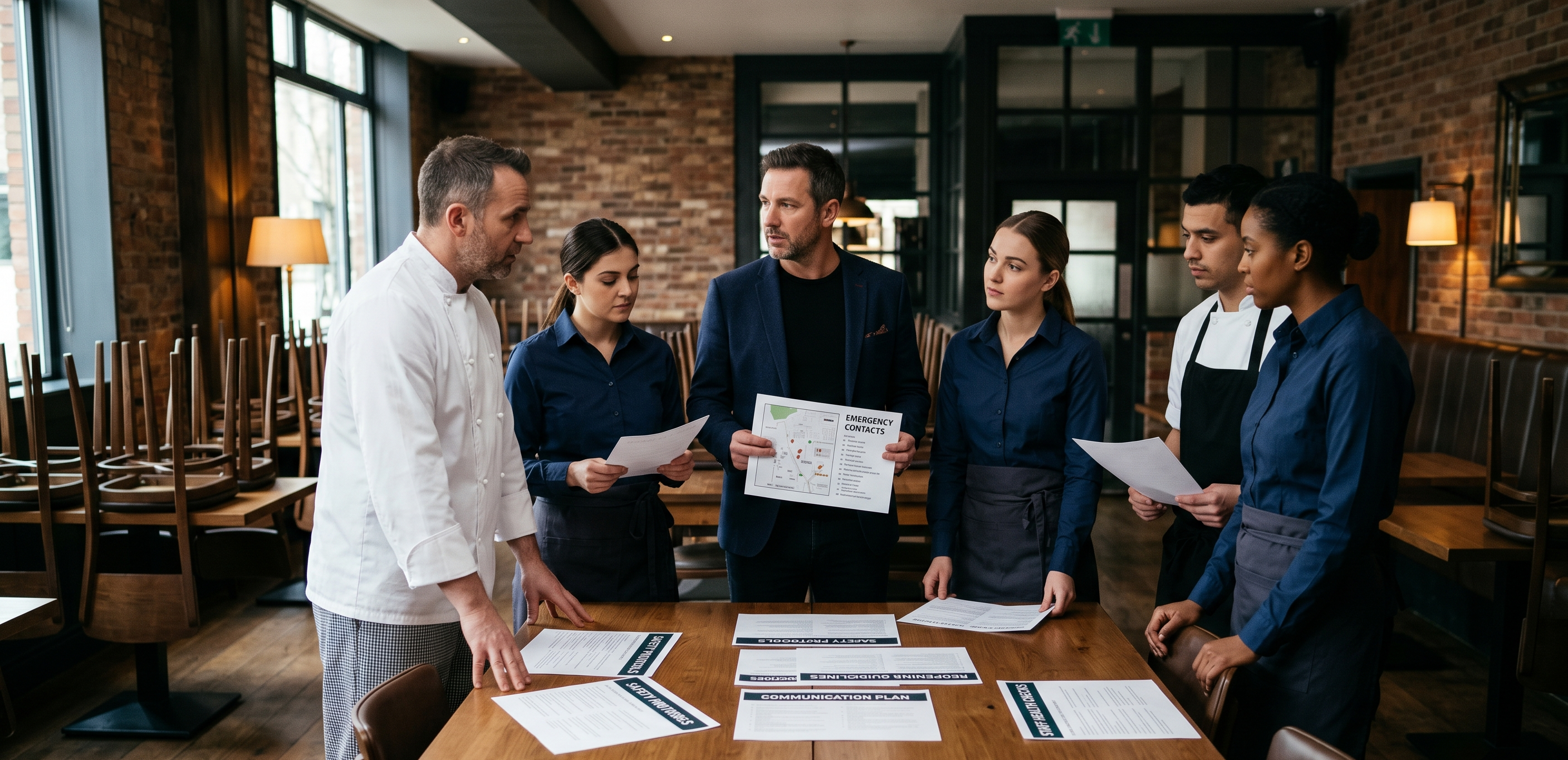
In practical terms, that means preparedness should include more than emergency supplies. It should include records access, response roles, vendor communication, food safety review, payment continuity, staff notification plans, and a clearer sense of what absolutely must keep working. The National Restaurant Association’s preparedness hub and Ready.gov’s continuity resources point in that direction again and again.
What the Owner Wishes He Had Understood Earlier
He wishes he had used a broader definition of emergency.
That is the simplest version of the lesson. He thought preparedness began when the weather worsened. Now he understands that preparedness begins whenever a disruption threatens essential functions. The cause matters, but continuity matters more. FDA food safety resources, FTC business cybersecurity guidance, Ready.gov continuity planning, and the National Restaurant Association’s preparedness materials all support that wider view from different directions.
That is why restaurant preparedness beyond natural disasters is the better phrase. It does not deny storms. It simply refuses to stop there. Restaurants are vulnerable to events that are quieter, faster, and more operational than dramatic. Owners who recognize that earlier usually prepare with more realism and reopen with less confusion when disruption comes.
This is also where restaurant and entertainment insurance fits naturally into the broader discussion. Restaurants often carry a complicated blend of guest-facing, operational, and interruption-related exposure. A narrow preparedness mindset usually misses that complexity. A broader one starts to match it.
A Practical Conclusion on Restaurant Preparedness Beyond Natural Disasters
The owner still watches the weather. He still respects storms. But he no longer thinks preparedness belongs only to the dramatic event.
That is the real change. Restaurant preparedness beyond natural disasters means understanding that disruption can come through utilities, food safety failures, cyber incidents, crisis closures, and other operational shocks that do not look cinematic at all. The National Restaurant Association now treats preparedness that way. Ready.gov and FEMA continuity guidance treat it that way. FDA food safety guidance and FTC business cybersecurity guidance do too.
The sharp lesson is simple. A restaurant does not need a hurricane to lose control of the day. Sometimes it only needs one essential system to fail. Preparedness becomes stronger when the owner plans for that truth instead of waiting for a dramatic disaster to make it obvious.
 USA.CIS