Installing a roll-up gate on a commercial property is not simply a matter of choosing a product and scheduling an installer. In most jurisdictions across New York State, including the municipalities of Dutchess County, Columbia County, and the broader Hudson Valley, roll-up gate installation on a commercial building requires a building permit. The permit process exists to ensure that the installation meets structural, fire safety, electrical, accessibility, and zoning requirements that protect building occupants, neighboring properties, and the public.
For property owners, developers, and contractors, understanding the permit landscape before a project begins is essential for avoiding costly delays, failed inspections, and compliance violations that can persist long after the gate is installed. The requirements are not uniform across municipalities, and the details, what triggers a permit, what documentation is required, which codes apply, and how inspections are conducted, vary meaningfully from one jurisdiction to the next.
This article examines the building permit considerations that affect roll-up gates for commercial properties in New York, with particular attention to the regulatory environment in the Hudson Valley and Dutchess County, where commercial development activity and building code enforcement have both increased in recent years.
When Is a Building Permit Required for Roll-Up Gate Installation?
The threshold for requiring a building permit varies by municipality, but in most New York jurisdictions, commercial roll-up gate installation triggers the permit requirement under one or more of the following conditions.
New Construction or Addition
Any new commercial building that includes roll-up gates as part of the original design will incorporate the gate specifications into the overall building permit application. The gates are reviewed as part of the building envelope, and their structural mounting, fire rating, and electrical connections are evaluated alongside the rest of the construction.
Alteration of an Existing Opening
Modifying an existing door opening to accommodate a roll-up gate, changing the opening dimensions, reinforcing the header or jambs, or adding structural supports is classified as a building alteration in most jurisdictions and requires a permit. This is the most common permit trigger for retrofit installations, where an older sectional door is being replaced with a roll-up gate system that may require a differently sized or reinforced opening.
Change of Occupancy or Use
When a commercial building undergoes a change of occupancy for example, converting a retail space to a warehouse, or transitioning from one industrial classification to another, the new use may impose different requirements on the building’s door systems. A roll-up gate installation performed as part of a change-of-use project will typically require a permit and may trigger a broader code compliance review of the entire building.
Electrical Work
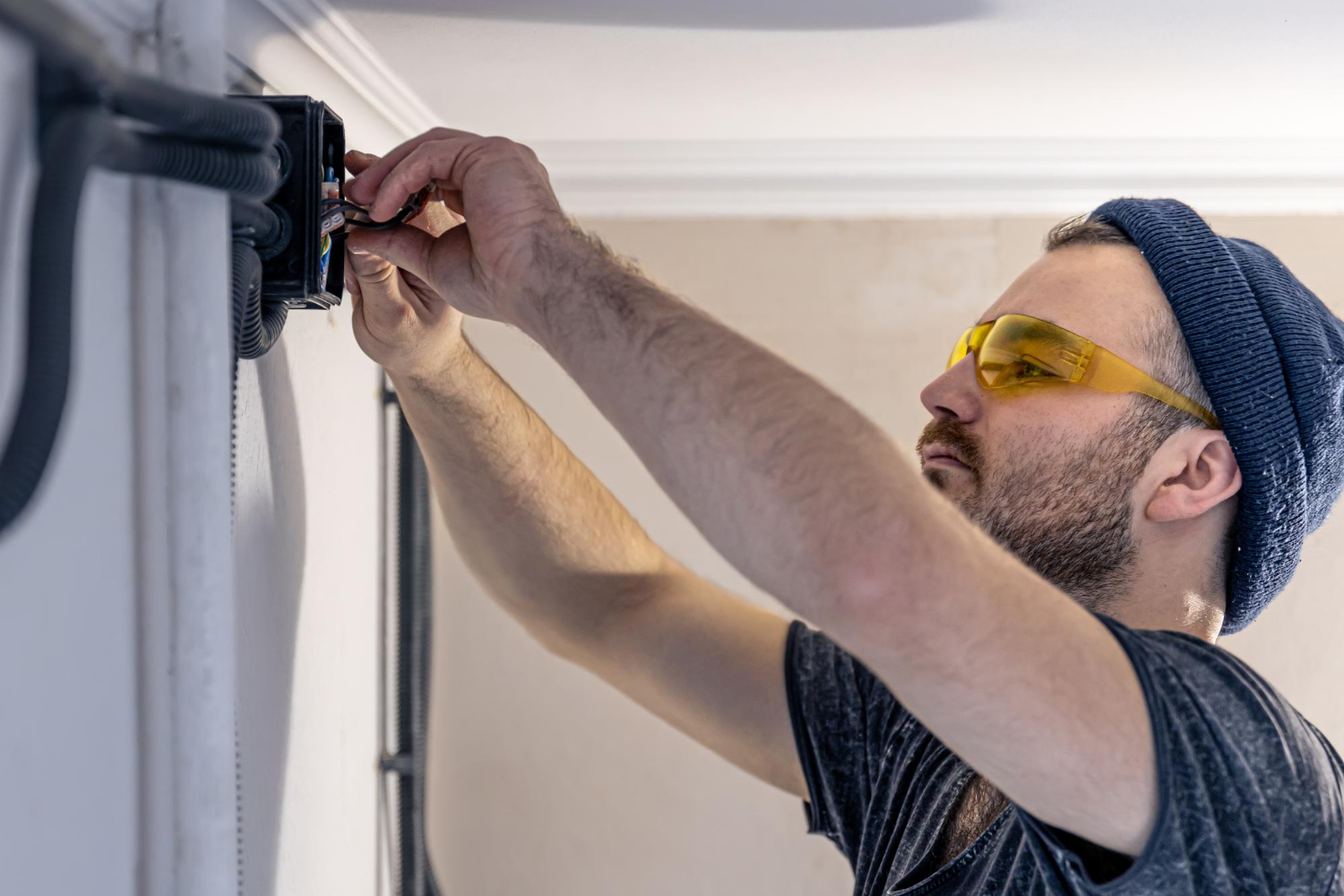
Motorized roll-up gates require electrical connections for the operator, control wiring for keypads or access control systems, and power for safety sensors. In most New York municipalities, electrical work requires a separate electrical permit, often in addition to the building permit for the gate installation itself. The electrical work must be performed by a licensed electrician and must comply with the National Electrical Code (NEC) as adopted by New York State.
Fire-Rated Assemblies
Installing a fire-rated roll-up gate, required in buildings where the gate serves as part of a fire separation between spacestriggers permit and inspection requirements that go beyond those for a standard non-rated gate. Fire-rated installations must comply with standards maintained by the National Fire Protection Association (NFPA), particularly NFPA 80 (Standard for Fire Doors and Other Opening Protectives), which establishes installation, testing, and maintenance requirements for fire-rated door and gate assemblies.
What Building Codes Apply to Roll-Up Gate Installations in New York?
New York State has adopted the International Building Code (IBC) and related standards as the basis for its statewide building code, with state-specific amendments. The current edition of the New York State building codes is available through the International Code Council (ICC). These codes establish the technical requirements that roll-up gate installations must meet, and they form the basis for the plan review and inspection process that the building permit system enforces.
Structural Requirements
The building code requires that the header, jambs, and wall structure supporting a roll-up gate be adequate to carry the weight of the gate curtain, the coiling mechanism, and the dynamic loads generated during operation. For heavy-gauge steel gates on large commercial openings, these loads can be substantial. The permit application typically requires structural calculations or engineering certification demonstrating that the supporting structure meets code requirements, particularly when a gate is being retrofitted into an existing building where the original framing was designed for a lighter door system.
Fire Separation and Rating Requirements
In buildings where the gate opening is part of a rated fire wall or fire barrier, the gate assembly must achieve the fire resistance rating specified by the building codetypically one hour, one and a half hours, or three hours depending on the occupancy classification and building configuration. Fire-rated roll-up gates must be listed and labeled by a recognized testing laboratory, installed in accordance with their listing, and equipped with automatic closing devices that activate upon fire alarm or fusible link release. Compliance with NFPA 80 is required for all fire-rated door and gate assemblies in New York.
Egress and Accessibility
If a roll-up gate serves as part of a required means of egress, the building code imposes specific requirements for manual operation, opening width, and hardware configuration. The gate must be operable from the egress side without special knowledge, keys, or tools. For buildings subject to the Americans with Disabilities Act (ADA) and the New York State accessibility code, the gate’s operational requirements, including control placement, operating force, and clearance dimensions, must comply with accessibility standards.
Wind Load Requirements
Exterior roll-up gates must be designed to withstand the wind loads specified by the building code for the installation location. Wind load requirements vary by geographic region, building height, exposure category, and opening classification. In the Hudson Valley, where severe weather events including high winds, ice storms, and nor’easters occur regularly, wind load compliance is a standard element of the permit review for exterior gate installations. Meeting garage door safety standards for wind resistance is particularly important for gates on loading dock bays that face prevailing wind directions.
Electrical and Mechanical Code Compliance
The electrical connections for motorized gate operators must comply with the NEC and any additional requirements imposed by the local electrical code. The mechanical components of the gate systemsprings, drums, guides, and operators must meet the safety and performance requirements established by applicable product standards. Safety reverse system testing and entrapment protection are required on all automated commercial door systems, consistent with guidelines established by the U.S. Consumer Product Safety Commission (CPSC).

The Building Permit Process: What to Expect
The permit process for a commercial roll-up gate installation in New York typically follows a standard sequence, though the specific timelines, fees, documentation requirements, and inspection protocols vary by municipality.
Pre-Application Research
Before submitting a permit application, the property owner or contractor should verify the specific requirements of the local building department. This includes confirming whether a permit is required for the scope of work, identifying what documentation must be submitted, determining applicable fees, and understanding the typical review timeline. In Dutchess County, municipal building departments range from well-staffed offices with online application systems to small-town offices with limited hours and manual processes. Knowing what to expect before beginning the application avoids unnecessary delays.
Plan Submission and Review
The permit application for a roll-up gate installation typically requires construction drawings showing the gate location, opening dimensions, and structural support details; product specifications for the gate, operator, and safety devices; structural calculations or engineering certification when the installation involves structural modifications; electrical plans showing the power supply, control wiring, and sensor placement; and for fire-rated installations, the gate’s fire test listing and installation instructions from the listing agency.
The building department reviews the submitted plans for code compliance. Review times vary from a few days in smaller municipalities to several weeks in larger jurisdictions or for complex projects. Plan reviewers may request revisions, additional documentation, or engineering certification before approving the permit.
Permit Issuance and Construction
Once the permit is approved, the installation may proceed. The permit is typically posted at the job site during construction. Work must conform to the approved plans; any changes from the approved design may require a revised permit or an amendment. Commercial garage door installation contractors experienced in the local permit environment can typically anticipate the documentation requirements and prepare applications that move through review efficiently.
Inspection and Final Approval
Most jurisdictions require one or more inspections before issuing a certificate of completion or occupancy. Common inspection milestones for a roll-up gate installation include a rough-in electrical inspection before the wall is closed, a structural inspection of the header and mounting supports, a final inspection of the completed installation including gate operation and safety device function, and for fire-rated assemblies, verification that the gate closes properly on fire alarm activation.
The final inspection verifies that the installation conforms to the approved plans and meets all applicable code requirements. If the inspector identifies deficiencies, the contractor must correct them and schedule a re-inspection before the permit can be closed. An open permit, one where final inspection was never completed can create problems during future property transactions, refinancing, or insurance reviews.
Common Permitting Pitfalls and How to Avoid Them
The permit process for roll-up gate installations is generally straightforward when handled properly, but several common mistakes can create delays, additional costs, or compliance problems.
Installing Without a Permit
Unpermitted work is the most consequential mistake a property owner can make. An unpermitted roll-up gate installation can result in municipal fines and penalties, a stop-work order requiring the installation to halt until a permit is obtained, a requirement to remove or modify the completed work to obtain retroactive approval, complications during property sale or refinancing when title searches reveal unpermitted improvements, and insurance claim denials if the unpermitted installation is implicated in a loss or injury. The cost of obtaining a permit is minimal compared to the financial and legal exposure of unpermitted work.
Underestimating Structural Requirements
Property owners who assume that a roll-up gate can simply be hung in an existing opening without structural evaluation risk permit denial or inspection failure. Older commercial buildings, particularly those in the Hudson Valley’s aging building inventory may have headers and jambs that were designed for lighter sectional doors and are inadequate for the weight and dynamic loads of a heavy-gauge commercial roll-up gate. Structural reinforcement, when required, adds cost and time but is non-negotiable from a code compliance and safety perspective.
Overlooking Fire Rating Requirements
Installing a non-rated gate in a location that requires a fire-rated assembly is a serious code violation that will not pass inspection. This mistake typically occurs when a property owner or contractor does not review the building’s fire separation plan before specifying the gate. In multi-tenant buildings, mixed-use properties, and buildings with classified occupancy separations, fire rating requirements should be verified before any gate is ordered or installed.
Neglecting Electrical Permit Requirements
The electrical work for a motorized roll-up gate, including power supply, operator wiring, control circuitry, and safety sensor connections, typically requires a separate electrical permit. Completing the electrical work without this permit, or having it performed by an unlicensed person, creates the same compliance and liability risks as installing the gate itself without a building permit. Warehouse garage door safety depends on properly installed and inspected electrical systems, and shortcuts in this area create both immediate hazard and long-term liability.
Failing to Close the Permit
A permit that is obtained but never brought to final inspection remains “open” in the municipal records. Open permits can cause significant complications during property transactions, title companies and lenders routinely flag open permits as issues that must be resolved before closing. Ensuring that the final inspection is completed and the permit is formally closed is the last critical step in the process.

Permitting Landscape in Dutchess County and the Hudson Valley
The Hudson Valley’s permitting environment for commercial roll-up gate installations reflects the region’s diverse mix of municipal governance structures, building department capabilities, and local code amendments.
Municipal Variation
Dutchess County includes cities (Poughkeepsie, Beacon), towns, and villages, each with its own building department and potentially its own local amendments to the state building code. The permit application process, fee structure, review timeline, and inspection protocols vary across these jurisdictions. A roll-up gate installation in the City of Poughkeepsie may involve a different application process, fee schedule, and inspection sequence than the same installation in the Town of Rhinebeck or the Village of Millbrook. Property owners undertaking projects in multiple municipalities should expect variation and budget accordingly.
Historic District Considerations
Several Hudson Valley communities maintain historic districts or historic preservation overlay zones that impose additional design review requirements on exterior building modifications. A roll-up gate installed on the exterior of a building within a historic district may require approval from a local historic preservation commission or architectural review board in addition to the standard building permit. These reviews focus on the visual impact of the installation on the historic character of the streetscape and may impose restrictions on gate material, color, profile, and housing visibility that are not part of the standard building code.
Zoning and Land Use Considerations
In some municipalities, the installation of a commercial roll-up gate, particularly on a building frontage in a commercial or mixed-use zoning district may trigger zoning review. Local zoning ordinances may regulate the type, appearance, and operation of security gates on commercial storefronts, including restrictions on solid versus perforated designs, noise limitations on motorized operation, and requirements for gate housing to be integrated within the building facade. These regulations are separate from the building code and are enforced by the zoning department rather than the building department. Dutchess County property security solutions that include roll-up gate installations must account for both building code and zoning requirements to avoid enforcement conflicts.
Climate and Environmental Factors
The Hudson Valley’s climate influences the permitting process in subtle but important ways. Wind load calculations for exterior gates must account for the region’s exposure to winter storms and high-wind events. Structural calculations must consider the cyclical thermal stress that the region’s temperature extremes place on mounting hardware and building connections. In communities like Spencertown and across Columbia County, where winter conditions are particularly severe, experienced installers familiar with Spencertown garage doors and commercial gate installations have observed that building officials may scrutinize structural and weatherproofing details more closely than in milder regions, reflecting a practical awareness of how the local climate affects long-term building performance.
Post-Installation: Maintenance Obligations and Ongoing Compliance
Obtaining a permit and passing final inspection establishes that the roll-up gate installation met code requirements at the time of installation. It does not guarantee ongoing compliance. Building codes and workplace safety regulationsincluding those enforced by OSHArequire that commercial door systems be maintained in safe operating condition throughout their service life.
For fire-rated roll-up gates, NFPA 80 requires annual inspection and testing to verify that the assembly continues to function as intended. This includes confirming that the gate closes fully on fire alarm activation, that the fusible link or automatic closing device is intact and functional, that the gate curtain is undamaged and properly seated in the guides, and that the self-closing mechanism operates without manual assistance. These inspections must be documented, and the records must be maintained and available for review by fire marshals and building officials.
Beyond fire-rated assemblies, all commercial roll-up gates benefit from structured commercial garage door maintenance programs that include spring tension verification, slat and curtain inspection, motor and control system diagnostics, safety sensor testing, and guide and weatherseal condition assessment. The frequency of service depends on the gate’s cycle rate, environmental exposure, and operational demands, but quarterly inspection is the industry standard for high-cycle commercial applications.
Hudson Valley Overhead Doors & Operators has observed that the maintenance obligations associated with permitted roll-up gate installations are frequently overlooked after the permit is closed and the installation is complete. According to the team, the most common gap is a failure to establish a recurring maintenance schedule, leaving the gate to operate without professional service until a failure occurs. In the Hudson Valley’s demanding climate, where seasonal temperature swings and moisture exposure accelerate component degradation, unscheduled maintenance creates compliance risks that compound over time.
The Role of the Installer in Permit Compliance
The experience and qualifications of the installing contractor have a direct impact on the efficiency and outcome of the permit process. An installer who understands the local building code, the municipal permit process, and the technical requirements for commercial roll-up gate systems can prepare a permit application that moves through review without unnecessary revisions, perform the installation in conformance with the approved plans, coordinate inspections at the appropriate milestones, and resolve any inspection findings promptly and correctly.
Conversely, an installer who lacks experience with the permit process or the applicable codes can create delays, inspection failures, and compliance issues that cost the property owner time and money. This is particularly relevant in the Hudson Valley, where municipal building departments vary in their capacity and where local code amendments may impose requirements that a non-local contractor would not anticipate. Experienced providers of Dutchess County property security solutions who work across multiple municipalities in the region maintain familiarity with these local variations and can navigate the process efficiently.
From a technical standpoint, the experts at Hudson Valley Overhead Doors & Operators emphasize that the permit process should not be viewed as a bureaucratic obstacle but as a quality assurance mechanism. The plan review verifies that the installation has been properly engineered. The inspection verifies that the work was performed correctly. And the documentation creates a permanent record of compliance that protects the property owner in the event of an insurance claim, workplace injury, or property transaction. Meeting garage door safety standards through a properly permitted installation is the most reliable way to protect both the building and the people who use it.
What Property Owners Need to Know
Do I need a building permit to install a roll-up gate on my commercial property?
Short answer: In most Dutchess County and Hudson Valley municipalities, yes. Commercial roll-up gate installation typically requires a building permit when the project involves structural modifications, electrical work, fire-rated assemblies, or alteration of an existing opening. Permit requirements vary by jurisdiction, so property owners should verify with their local building department before scheduling installation.
Detailed explanation: The permit requirement is triggered by the scope of work, not the type of product. Even a like-for-like gate replacement may require a permit if it involves electrical connections or structural modifications. New construction, change-of-use projects, and fire-rated installations almost always require permits. The application typically requires construction drawings, product specifications, structural calculations, and electrical plans. Working with an installer experienced in the local permit environment, one who understands the specific requirements of each municipality across Dutchess County, avoids delays and ensures that the installation of roll-up gates for commercial properties meets all applicable code requirements from the start.
What happens if I install a roll-up gate without a permit in New York?
Short answer: Unpermitted commercial roll-up gate installation in Dutchess County or the Hudson Valley can result in municipal fines, stop-work orders, mandatory removal or modification, complications during property sale or refinancing, and insurance claim denials if the unpermitted work is connected to a loss or injury. The financial exposure far exceeds the cost of the permit.
Detailed explanation: Municipal building departments can require removal of unpermitted work or impose retroactive permitting requirements that include engineering review, inspections, and potential modifications to bring the installation into compliance. Title companies routinely flag open or missing permits during property transactions, which can delay or derail closings. Insurance carriers may deny claims related to unpermitted building improvements. For warehouse garage door safety, unpermitted electrical work on motorized operators and sensors creates both immediate hazard and long-term liability that is difficult to remediate without professional assessment.
Are there special permit requirements for fire-rated roll-up gates?
Short answer: Yes. Fire-rated roll-up gate installations in Dutchess County and Hudson Valley commercial buildings must comply with NFPA 80, carry a fire test listing from a recognized laboratory, include automatic closing devices, and pass inspection for proper closure on fire alarm activation. These requirements apply at installation and throughout the gate’s service life through annual inspection and testing.
Detailed explanation: Fire-rated assemblies are among the most closely scrutinized elements of any commercial building permit review. The gate must be installed strictly in accordance with its listing, and any deviation, including field modifications to the curtain, guides, or closing mechanism can void the fire rating. Post-installation, NFPA 80 requires annual inspection and testing with documented results. Compliance with garage door safety standards for fire-rated assemblies is an ongoing obligation that persists for the entire life of the installation, and maintenance records must be available for review by fire marshals and building officials at any time.

 Dubb
Dubb