
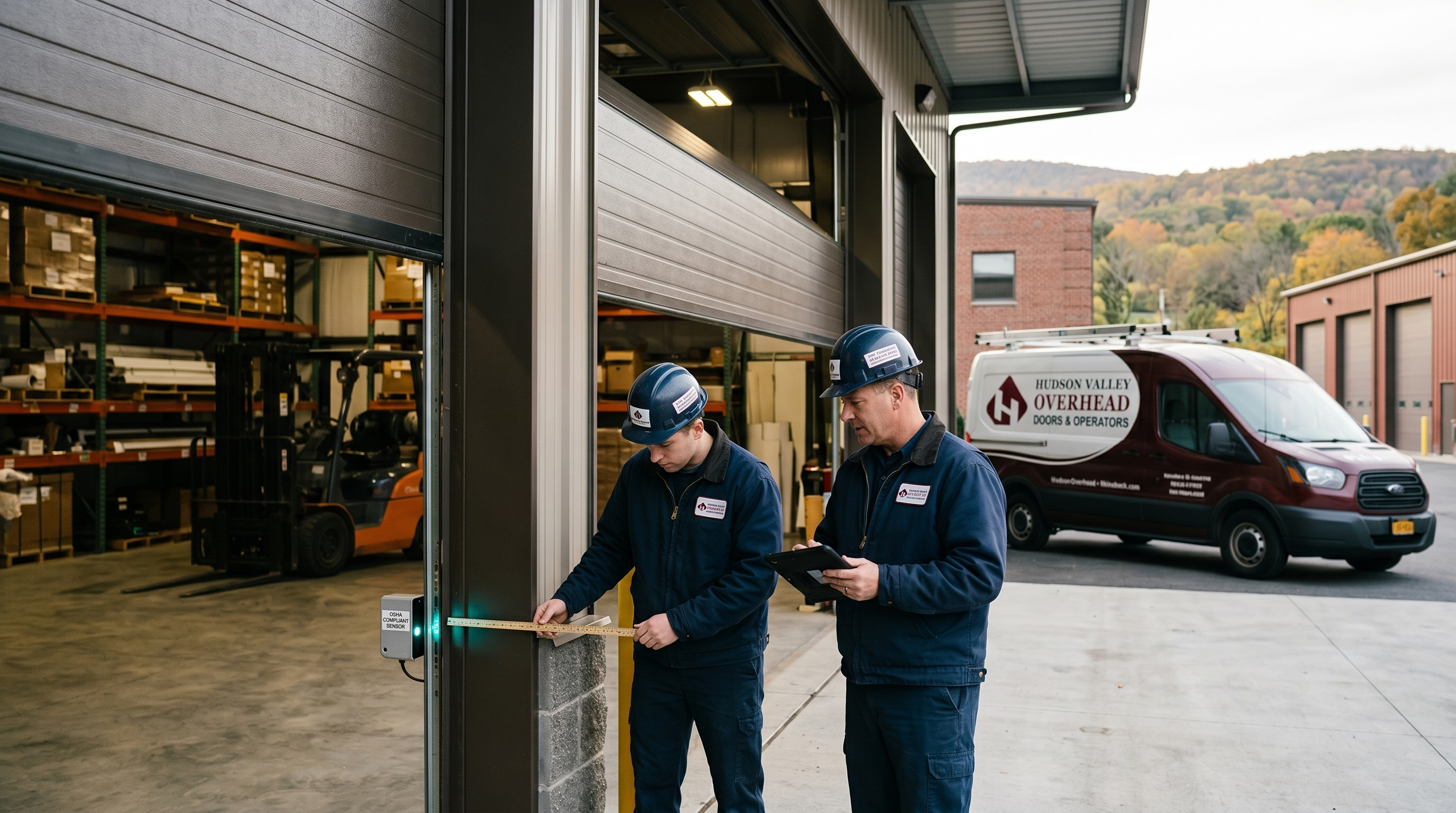
Commercial garage doors are among the largest, heaviest, and most frequently operated mechanical systems in any workplace. In warehouses, distribution centers, retail stockrooms, and multi-tenant commercial buildings, these doors cycle dozens or even hundreds of times per day, moving panels and gate curtains that can weigh anywhere from 200 to over 1,000 pounds. The forces involvedspring tension, cable load, motor torque, and gravitycreate a mechanical environment where equipment failure carries serious potential for injury or death.
The Occupational Safety and Health Administration (OSHA) does not maintain a standalone standard dedicated exclusively to garage doors. However, OSHA’s General Duty Clause and several specific standards directly affect how commercial garage doors must be installed, maintained, and operated in any workplace. For commercial property owners, facility managers, and employers across New York State, including the Hudson Valley and Dutchess County, understanding these requirements is not optional. It is a legal obligation with financial, operational, and human consequences.
OSHA’s General Duty Clause and Commercial Garage Doors
Section 5(a)(1) of the Occupational Safety and Health Act, commonly known as the General Duty Clause requires every employer to provide a workplace that is “free from recognized hazards that are causing or are likely to cause death or serious physical harm.” This clause applies to all workplace conditions, including the operation and maintenance of commercial garage door systems.
The General Duty Clause is significant because it does not require OSHA to have a specific regulation for garage doors in order to issue a citation. If a garage door in a workplace is malfunctioning, improperly maintained, or lacking basic safety features, and OSHA determines that the condition constitutes a recognized hazard, the employer can be cited under the General Duty Clause regardless of whether a specific garage door standard exists.
In practice, this means that any commercial garage door operating without functioning entrapment protection, with visibly damaged components, or with documented maintenance deficiencies is a potential OSHA violation. The standard of care is not whether the door meets a specific technical specification, it is whether the employer has taken reasonable steps to identify and correct hazards associated with the door’s operation. This is a foundational principle of warehouse garage door safety that applies to every facility where employees interact with overhead door systems.
Specific OSHA Standards That Apply to Commercial Door Systems
While the General Duty Clause provides broad coverage, several specific OSHA standards address conditions and practices directly relevant to commercial garage door safety.
Walking-Working Surfaces (29 CFR 1910 Subpart D)
OSHA’s walking-working surfaces standards address fall hazards and require employers to maintain clear, safe pathways throughout the workplace. Loading dock areas where garage doors operate are classified as walking-working surfaces, and the standards require that these areas be kept free of hazards that could cause slips, trips, or falls. A garage door that does not close fully, that leaves gaps at the floor level, or that creates an uneven surface at the threshold can constitute a walking-working surface violation.
Powered Industrial Trucks (29 CFR 1910.178)
In facilities where forklifts and other powered industrial trucks operate near garage door openings, OSHA requires that doorways and other openings be of sufficient width and height to allow safe passage. The standard also addresses the interaction between powered equipment and fixed building elements. A garage door that cycles unpredictably, that lacks functioning sensors, or that is positioned in a way that creates blind-spot hazards for forklift operators can contribute to violations under this standard. Impact damage from forklifts is one of the leading causes of garage door track misalignment and safety sensor failure in commercial facilities, making this intersection of standards particularly relevant for warehouse garage door safety programs.
Mechanical Power Transmission (29 CFR 1910.219)
Garage door openers, chain-drive systems, and motorized roll-up gate operators contain mechanical power transmission components: gears, chains, sprockets, and shafts, that are subject to OSHA’s guarding requirements. These standards require that exposed moving parts be guarded to prevent employee contact. While most modern commercial door operators are designed with enclosed housings that meet these requirements, older systems, particularly chain-drive openers and exposed jackshaft operators may have unguarded components that violate the standard.
Electrical Safety (29 CFR 1910 Subpart S)
Commercial garage door openers are powered electrical equipment. OSHA’s electrical safety standards require that all electrical installations, wiring, and connections meet the National Electrical Code (NEC) standards and that electrical equipment be maintained in safe operating condition. Frayed wiring on safety sensors, improperly grounded operators, exposed junction boxes, and deteriorated conduit runs are common findings during commercial door inspections, and each represents a potential OSHA electrical safety violation. Garage door opener repair that involves electrical work must comply with both OSHA and NEC requirements.
Exit Routes and Emergency Action Plans (29 CFR 1910 Subpart E)
In buildings where garage doors serve as emergency egress routes, OSHA requires that those routes remain accessible and functional at all times during occupancy. A garage door that cannot be opened manually in the event of a power failure, that is blocked by equipment or inventory, or that has a non-functional manual release mechanism can constitute an egress violation. This requirement intersects with fire safety codes maintained by the National Fire Protection Association (NFPA), particularly NFPA 101 (Life Safety Code), which establishes detailed requirements for means of egress in commercial occupancies.
Entrapment Protection: The Most Critical Safety Requirement
The single most consequential safety feature on any commercial garage door is its entrapment protection systemthe mechanism that detects a person or object in the door’s path and stops or reverses the door before contact occurs. The U.S. Consumer Product Safety Commission (CPSC) has documented a persistent pattern of injuries and fatalities involving garage doors, including crushing, entrapment, and impact injuries caused by doors that closed on occupants without detection.
Photo-eye sensors, infrared beams mounted at the base of the door opening are the most common entrapment protection methods. When the beam is interrupted during a close cycle, the opener reverses the door. On commercial systems, additional entrapment protection may include monitored safety edges (pressure-sensitive strips along the bottom of the door or gate curtain), light curtain arrays, and radar-based detection systems.
OSHA does not specify which entrapment protection technology must be used. However, the General Duty Clause requires that the system be functioning and effective. A commercial garage door operating without entrapment protection, or with sensors that have been damaged, bypassed, or disabled is a recognized hazard under OSHA’s framework. Safety reverse system testing at regular intervals is considered an essential component of commercial garage door maintenance and a baseline compliance requirement for any facility subject to OSHA jurisdiction.

How New York State Building Codes Reinforce OSHA Requirements
OSHA’s workplace safety requirements operate alongside and are reinforced by state and local building codes that establish additional technical standards for commercial door systems. In New York, the applicable codes are based on the International Building Code (IBC) framework as adopted and amended by the state, available through the International Code Council (ICC).
New York’s building codes establish requirements for commercial garage doors that include structural mounting specifications and load ratings, fire-rating requirements for doors that serve as part of a building’s fire separation strategy, egress clearance standards and manual override requirements, sensor placement and auto-reverse functionality for automated systems, and wind load resistance ratings for exterior doors in designated wind zones.
These code requirements apply at the time of installation and are triggered again when modifications, repairs, or change-of-use events occur. A commercial garage door installation that met code when the building was constructed 20 years ago may not meet current standards, and a renovation, tenant change, or significant repair can trigger a code review that requires the system to be brought into compliance with current requirements.
Fire safety standards maintained by the NFPAparticularly NFPA 80 (Standard for Fire Doors and Other Opening Protectives)add specific testing and maintenance requirements for fire-rated door assemblies. In buildings where garage doors serve as fire barriers, these standards require regular inspection, testing, and documentation of door condition and performance. Failure to maintain fire-rated doors in proper operating condition is both a fire code violation and a potential OSHA citation if the building is an occupied workplace.
Regional Compliance Challenges in the Hudson Valley
The intersection of OSHA requirements, New York building codes, and local conditions creates specific compliance challenges for commercial property owners in the Hudson Valley and Dutchess County. Several factors unique to the region influence how garage door safety standards are applied and enforced.
Climate-Driven Component Degradation
The Hudson Valley’s four-season climate, with freezing winters, humid summers, and temperature swings exceeding 60 degrees between seasons accelerates wear on every component of a commercial garage door system. Metal tracks contract and shift alignment in cold weather. Cables and springs corrode from moisture and salt exposure. Safety sensor lenses fog with condensation. And thermal cycling loosens mounting hardware over successive seasons.
These climate-driven factors mean that a garage door system that passed inspection in September may develop compliance-relevant deficiencies by February. In communities like Spencertown and across greater Columbia County, where winter conditions are particularly severe, service providers experienced with Spencertown garage doors installations have documented that seasonal degradation creates a compressed maintenance cycle, requiring more frequent inspection and service intervals than the same equipment would need in a milder climate.
Aging Commercial Building Stock
Much of the commercial building inventory in Dutchess County and the surrounding Hudson Valley was constructed before current building codes and OSHA standards reached their present form. Older warehouse facilities, retail buildings, and multi-tenant commercial properties often contain garage door systems that were compliant at the time of installation but no longer meet current standards, particularly regarding entrapment protection, fire rating, and egress requirements.
Property owners who acquire or renovate older commercial buildings should anticipate that the garage door systems will need evaluation and likely upgrades to meet current compliance standards. This is a particularly common finding in the Hudson Valley’s active commercial real estate market, where buildings change hands frequently and new tenants trigger code reviews that reveal pre-existing deficiencies. Proactive assessment of commercial door systems is increasingly recognized as a standard component of Dutchess County property security solutions for investors and property managers.
Multi-Tenant Compliance Responsibility
In multi-tenant commercial buildings, the question of who bears responsibility for garage door compliance can be complex. OSHA holds the employer responsible for workplace safety, but if the garage door is a building system maintained by the property owner rather than the tenant, both parties may share exposure. Lease agreements that clearly assign maintenance responsibility and require documented compliance with safety standards reduce ambiguity and protect both landlord and tenant in the event of an OSHA inspection or workplace injury.
Maintenance Standards and Documentation Requirements
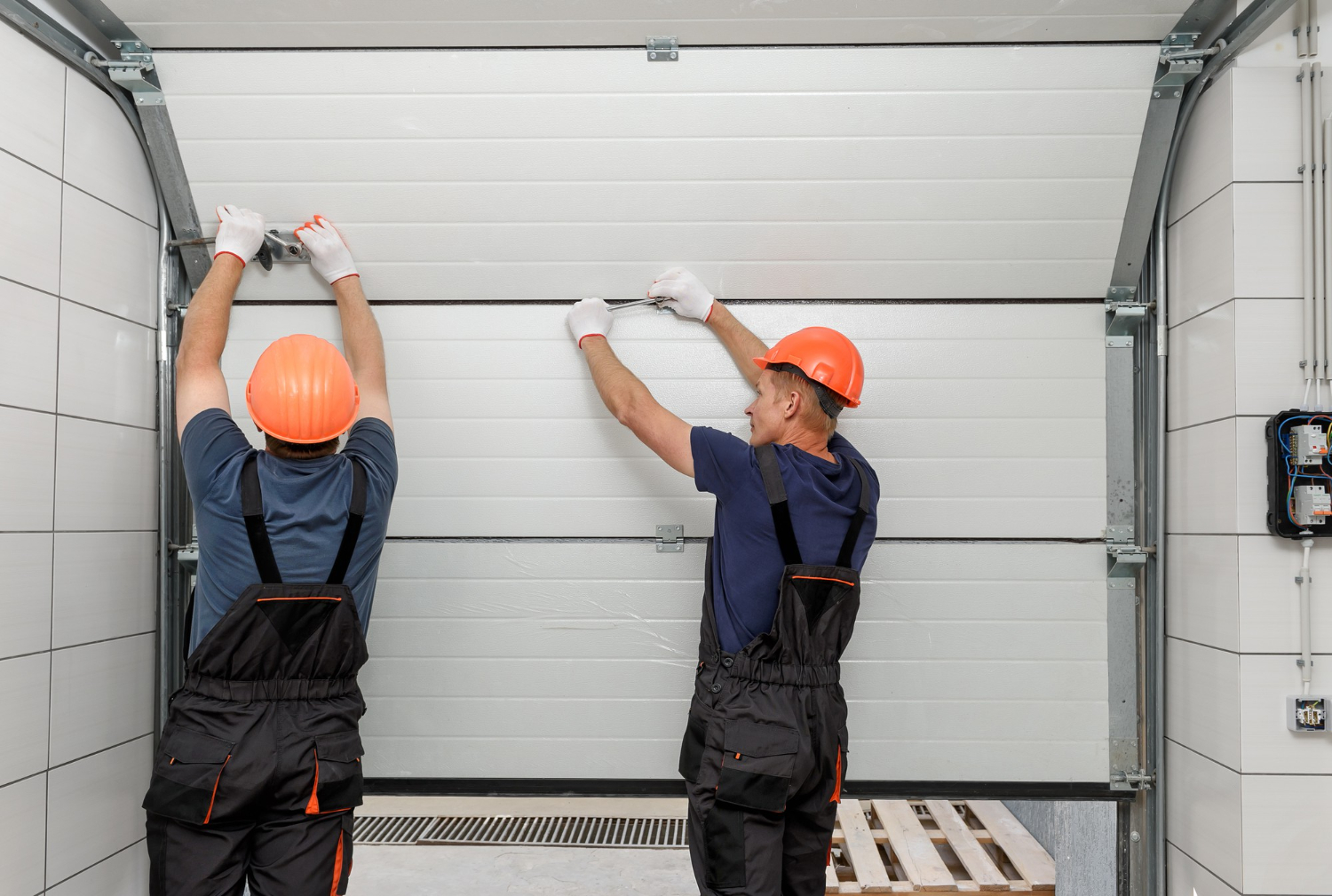
OSHA does not prescribe a specific maintenance schedule for commercial garage doors. However, the General Duty Clause’s requirement to maintain a hazard-free workplace effectively mandates that employers implement a maintenance program adequate to identify and correct safety deficiencies before they cause harm.
Industry best practices for commercial garage door maintenance in high-cycle commercial environments include quarterly inspections covering track alignment, roller condition, cable integrity, spring tension, opener calibration, and safety sensor function. Semi-annual service may be adequate for lower-cycle applications, though seasonal inspections are recommended in climates with significant temperature variation, a category that includes the entire Hudson Valley region.
Documentation is equally important. OSHA inspectors evaluating a workplace injury involving a garage door will look for evidence that the employer maintained the door system in safe operating condition. Detailed service records, including inspection dates, findings, repairs performed, component conditions, and safety test results create a defensible maintenance record that demonstrates due diligence. The absence of maintenance records is, in itself, evidence of a deficiency that OSHA can cite under the General Duty Clause.
Hudson Valley Overhead Doors & Operators, a Rhinebeck-based commercial door service provider operating across Dutchess County and the surrounding region, has noted that many of their commercial clients were not maintaining adequate documentation of their garage door maintenance before engaging professional service. According to the team, the most common gap is not the absence of maintenance itself but the absence of records that prove it was performed, a distinction that matters significantly in the context of an OSHA investigation or personal injury claim.
Most Common OSHA-Related Garage Door Violations
Based on industry inspection data and enforcement patterns, the following represent the most frequently cited conditions related to commercial garage door systems in workplace settings.
Non-Functional Entrapment Protection
Safety sensors that have been damaged, misaligned, bypassed, or disconnected are the single most common finding. In warehouse environments, floor-level photo-eye sensors are particularly vulnerable to impact from forklifts and pallet jacks. Once a sensor is damaged, the door operates without its primary entrapment protection, a condition that persists until the sensor is repaired or replaced. This is the garage door equivalent of disabling a machine guard, and it carries similar enforcement consequences under OSHA.
Doors That Do Not Close Fully
A commercial garage door that stops short of full closure due to track misalignment, worn cables, spring imbalance, or opener limit drift creates both a security gap and a potential safety hazard. Partial closure can obstruct pedestrian pathways, create trip hazards at the door threshold, and leave the opening vulnerable to unauthorized access. From an OSHA perspective, incomplete closure is evidence that the door system is not being maintained in safe operating condition.
Missing or Non-Functional Manual Release
Every automatic commercial garage door must have a manual release mechanism that allows the door to be opened or closed by hand in the event of a power failure or opener malfunction. This mechanism must be accessible, functional, and clearly identified. Doors with jammed, rusted, or missing manual release handles, or with release mechanisms that have been painted over, obstructed by equipment, or removed, fail to meet both OSHA egress requirements and NFPA life safety standards.
Unguarded Power Transmission Components
Older chain-drive openers, exposed jackshaft operators, and industrial door systems with external gear assemblies may have unguarded moving parts that violate OSHA’s mechanical power transmission guarding standards. While modern roll-up gates for commercial properties and current-generation sectional door operators are typically designed with fully enclosed housings, legacy systems in older buildings frequently lack adequate guarding.
Electrical Deficiencies
Exposed wiring, deteriorated conduit, improperly grounded operators, and non-compliant junction box installations are common on older commercial door systems. These conditions violate OSHA’s electrical safety standards and present shock, electrocution, and fire hazards.
How Roll-Up Gate Systems Address OSHA Compliance Concerns
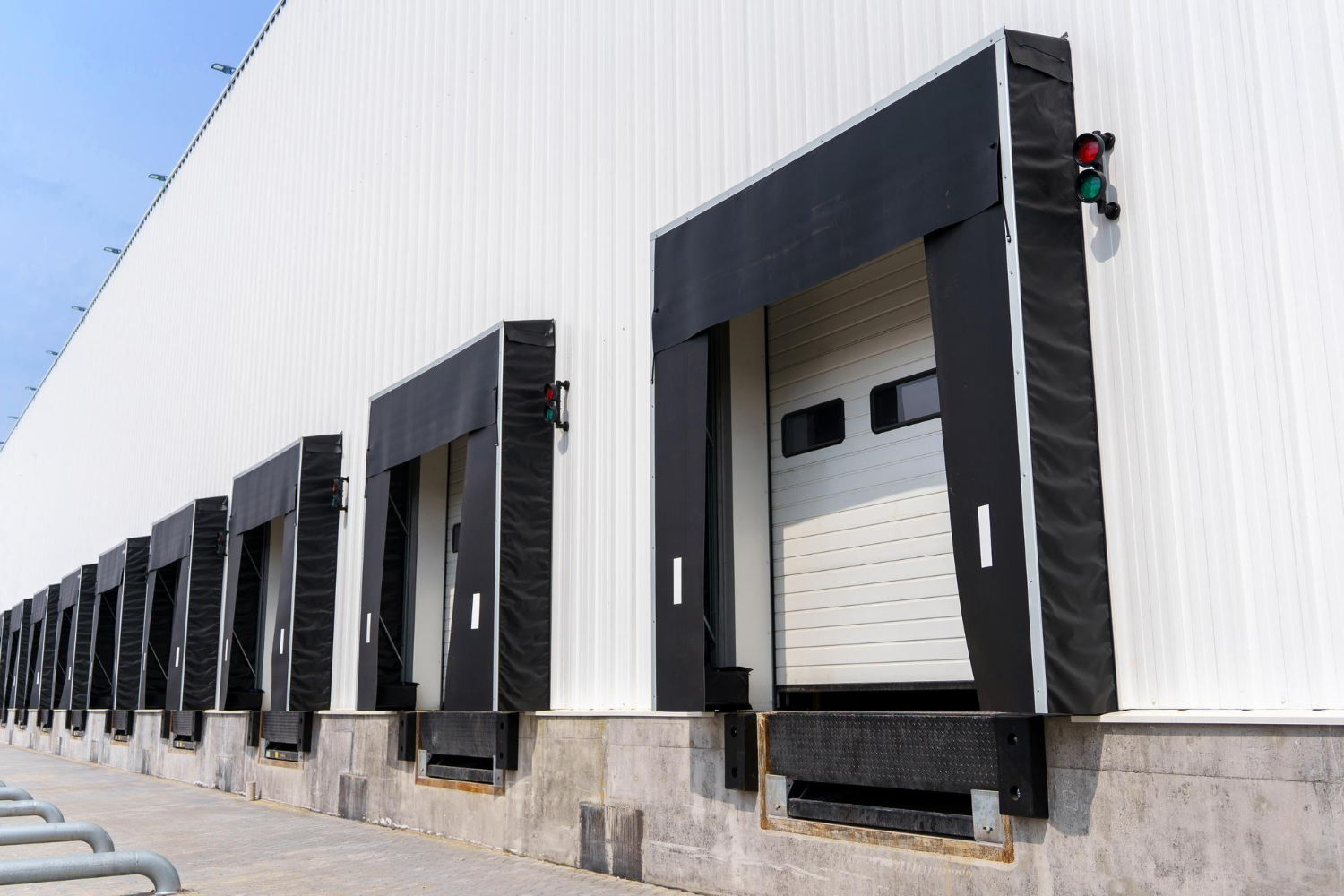
The growing adoption of roll-up gates for commercial properties in warehouse, retail, and mixed-use environments is driven in part by the compliance advantages these systems offer over traditional sectional overhead doors.
Roll-up gates eliminate the track-and-roller system that is the source of many sectional door maintenance failures and associated safety hazards. The coiling mechanism is housed above the opening in a protective enclosure, reducing exposure to impact damage and environmental degradation. Modern roll-up gate operators include integrated entrapment protection, photo-eye sensors, monitored safety edges, or both, as standard equipment, addressing the most critical OSHA compliance requirement from the point of installation.
For high-cycle warehouse environments where warehouse garage door safety is a persistent operational concern, roll-up gate systems offer additional advantages: fewer discrete wear components, longer intervals between service events, faster cycle times that reduce the period of exposure at the opening, and simpler maintenance protocols that are easier to document consistently. These characteristics support the kind of structured, documented maintenance program that OSHA enforcement expects.
Industry Perspective on OSHA Compliance Readiness
Experienced commercial door service providers observe consistent patterns in how businesses approach, or fail to approach, OSHA compliance for their garage door systems.
Hudson Valley Overhead Doors & Operators has noted that the majority of commercial properties they service for the first time have at least one OSHA-relevant deficiency in their garage door systems. The most common findings are non-functional safety sensors, deferred maintenance that has allowed component degradation to reach a hazardous level, and missing or incomplete maintenance documentation. According to the experts, these deficiencies are rarely the result of intentional neglect, they reflect a widespread lack of awareness that commercial garage doors are subject to workplace safety regulation at all.
The team emphasizes that compliance is not a one-time achievement. It is an ongoing process that requires regular inspection, timely repair, and consistent documentation. A door system that is compliant today can develop citation-worthy deficiencies within a single season if maintenance is deferred, particularly in the Hudson Valley’s demanding climate. Commercial garage door installation and subsequent maintenance should be approached as a continuous compliance obligation, not a one-time project.
What Property Owners Need to Know
Does OSHA have specific regulations for commercial garage doors?
Short answer: OSHA does not maintain a standalone garage door standard, but the General Duty Clause and several specific standards, covering walking surfaces, powered equipment, electrical safety, mechanical guarding, and egress, directly apply to commercial garage doors in any Dutchess County or Hudson Valley workplace where employees operate near or interact with overhead door systems.
Detailed explanation: The General Duty Clause requires employers to provide workplaces free from recognized hazards. A malfunctioning garage door with disabled sensors, damaged components, or incomplete closure, constitutes a recognized hazard that OSHA can cite regardless of whether a specific garage door regulation exists. Specific standards under 29 CFR 1910 address the electrical, mechanical, and egress-related aspects of commercial door systems. Compliance with garage door safety standards requires attention to this full regulatory framework.
What happens if a commercial garage door injures someone and the safety sensors were not working?
Short answer: The employer faces OSHA citations, financial penalties, and significant personal injury liability. In Dutchess County and the Hudson Valley, where seasonal conditions accelerate sensor degradation, non-functional entrapment protection is the single most common OSHA-relevant finding on commercial garage door inspections, and the most consequential when an injury occurs.
Detailed explanation: OSHA penalties for serious violations can reach tens of thousands of dollars per citation, with willful violations carrying substantially higher penalties. Beyond OSHA, the injured party may pursue civil litigation, and the absence of functioning safety equipment, combined with the absence of maintenance records documenting regular testing, dramatically weakens the employer’s defense. The CPSC maintains incident data documenting the severity of garage door entrapment injuries, reinforcing why safety reverse system testing is considered a non-negotiable element of commercial garage door maintenance.
How often should commercial garage doors be inspected to meet OSHA requirements?
Short answer: OSHA does not prescribe a specific inspection frequency, but industry best practice, and the standard of care that OSHA enforcement effectively requires is quarterly inspection for high-cycle commercial doors in Dutchess County and the Hudson Valley, with seasonal checks before and after winter to catch climate-driven degradation that is common across New York’s northeastern climate zone.
Detailed explanation: Each inspection should cover track alignment, roller and cable condition, spring tension and balance, opener calibration, safety sensor function, manual release operation, and electrical integrity. Detailed documentation of every inspection, including findings, repairs performed, and component conditions, creates the maintenance record that OSHA inspectors look for when evaluating whether an employer met their General Duty Clause obligation. The absence of records is itself a compliance gap that experienced providers of Dutchess County property security solutions consistently flag during initial property assessments.

 Dubb
Dubb